

BEYOND THE CHESSBOARD: What every parent should know about chess and child development?
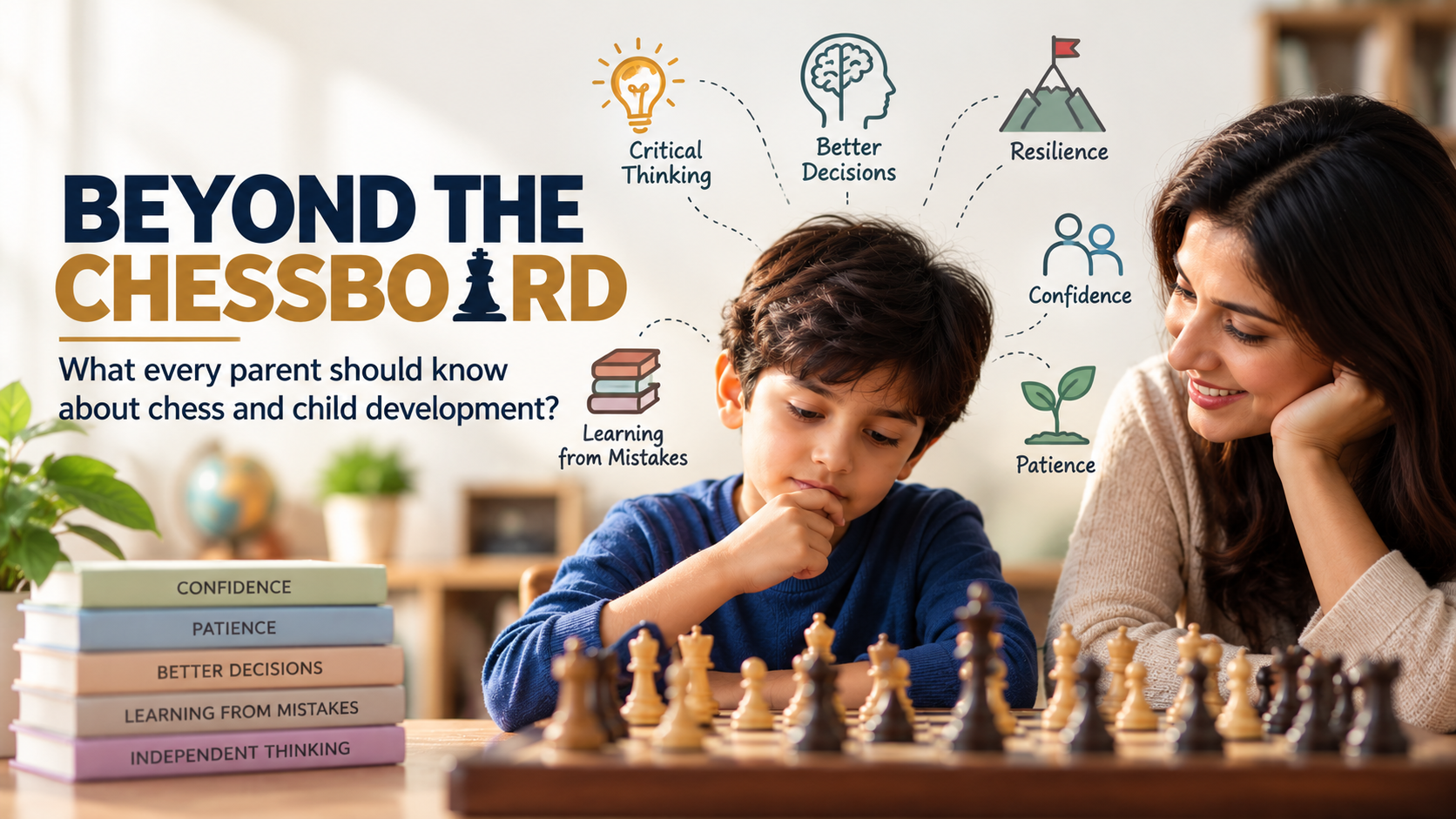
Every parent wants the best for their child in all aspects of life, as they want them to be confident, patient and independent thinkers. They want them to make better decisions, learn from their mistakes and handle challenges with maturity. But when we choose an extracurricular activity for them, how often do we think beyond the skill they will learn? Or how is it going to be beneficial for long-term development?
In today’s competitive world, a child’s progress is often measured through grades, certificates, trophies and achievements. While these milestones have their place, some aspects of development are less visible and cannot always be captured through a report card. The ability to think before acting, approach challenges with patience, and learn from mistakes are equally valuable experiences in a child’s growing years. These qualities develop over time through a child’s experiences and the environment they are surrounded with that helps them in their overall holistic development.
This is where extracurricular activity comes into the picture. Beyond providing children with an opportunity to explore their interests, these activities can introduce them to situations where they must make decisions, solve problems, work with others and navigate their challenges. However, the value of an activity lies not simply in enrolling a child but also in how they experience it, the guidance they receive and the opportunities they have to learn along the way. This raises an important question for parents: How do we choose activities that offer children the opportunity to grow, rather than simply engrossing them in some activity?
One activity that offers a particularly interesting perspective on learning and development is chess. At first, we might imagine it as a game of strategy, tactics and competition, which is a valid statement. Yet, every game presents a child with a series of decisions like which move to make, which possibilities to consider, when to be patient and how to respond when things do not go as planned. These factors make chess more than an exercise in learning moves. They create opportunities for children to practice critical thinking, reflecting on their decisions, enhancing cognitive development and engaging with challenges in a structured environment.
Every move in chess involves a decision. A child must evaluate the position, consider different possibilities, and anticipate how their opponent might respond. Moving a piece without thinking through the consequences can lead to a mistake, while taking a moment to calculate a position may reveal an opportunity they would otherwise have missed. This reflects an important concept that is learning to think before acting. Over time, chess lessons can encourage children to develop a deliberate approach to decision-making. They learn to evaluate a position by self-talking and asking questions such as, “What happens if I make this move?” or “What could my opponent do next?” This process makes them introduce to the importance of considering alternatives and thinking about consequences before acting.
For parents, this presents an interesting learning opportunity. Children are constantly faced with decisions in their everyday life; whether they are solving a difficult problem or managing their time, making decisions is part and parcel of life. Although the ability to think carefully during a chess game does not automatically translate into every area of life, chess provides a structured setting in which children can practice evaluating choices and reflecting on their decisions.

Imagine a child who has been playing well throughout a game but suddenly overlooks an opponent’s threat and loses a valuable piece. The child might feel frustrated, demotivated or disappointed, yet this moment can become an important part of the learning process. When children analyse their games, they have the opportunity to review and understand where they went wrong, understand what better could have been played in a particular position and consider what they might do differently next time. This process connects to metacognition: the ability to reflect on one’s own thinking and evaluate the decisions that led to an outcome. The way adults respond to these situations also matters. When every mistake is treated as a failure, children may become more concerned about avoiding criticism than understanding what happened. In contrast, constructive feedback can help them approach mistakes with curiosity and help them understand that one mistake or one lost game does not define their ability to learn and improve.
One of the most interesting aspects of chess is that children rarely know exactly how a game will unfold. A promising position can change in a single move, an opponent can introduce an unexpected challenge, and a carefully considered plan might be needed to execute the position well. These situations offer children opportunities to experience uncertainty, reconsider their choices and adapt when circumstances change. They learn that having a plan is important, but recognising when a plan is no longer working is equally valuable.
For parents, this raises an important question: Are we preparing children only to succeed when things go according to the plan or are we also helping them navigate situations when they do not? Chess cannot prepare a child for every uncertainty in life, but it can provide a structured environment in which they can practice adapting their thinking when faced with unexpected challenges.
The next time your child finishes a chess game, ask them not only, “Did you win?” but also, “What did you learn today?”
-Prisha Kapadia
COO & Director of Chess-inSchools & E-learning
