Across the Board from Sir Nigel Short: A Memory to Cherish
Meeting Grandmaster Nigel Short again during my recent visit to Samarkand, after more than sixteen years, brought back some wonderful memories. Here was a legendary player, a former World No. 2, whom I had first met in 2006—and against whom I had the unforgettable opportunity to play four years later!
Our renewed meeting took me back to an airport arrival, a conversation about cricket, and a chess game whose result has always mattered far less to me than the words that followed it.
An airport welcome and a shared love of cricket
My first meeting with Sir Nigel was during the Commonwealth Chess Championship in 2006. I had been assigned to receive him at the airport and assist with his transportation arrangements throughout the tournament.
I still remember sitting beside him in the cab, scarcely able to believe that I was travelling with a former World No. 2!
Any initial nervousness soon disappeared. We struck a chord almost immediately and discussed many things, especially cricket.
I can vouch for the depth of his knowledge of the game. His understanding, recollection and observations would hold their own in a conversation with some of the best-known cricket pundits. I remember telling him that he would make an excellent cricket commentator!
In the years that followed, I also enjoyed reading his Facebook posts. What particularly appealed to me was the clarity with which he expressed his thoughts. Whatever the subject, his writing gave me something to think about.
An unexpected invitation in Kuala Lumpur
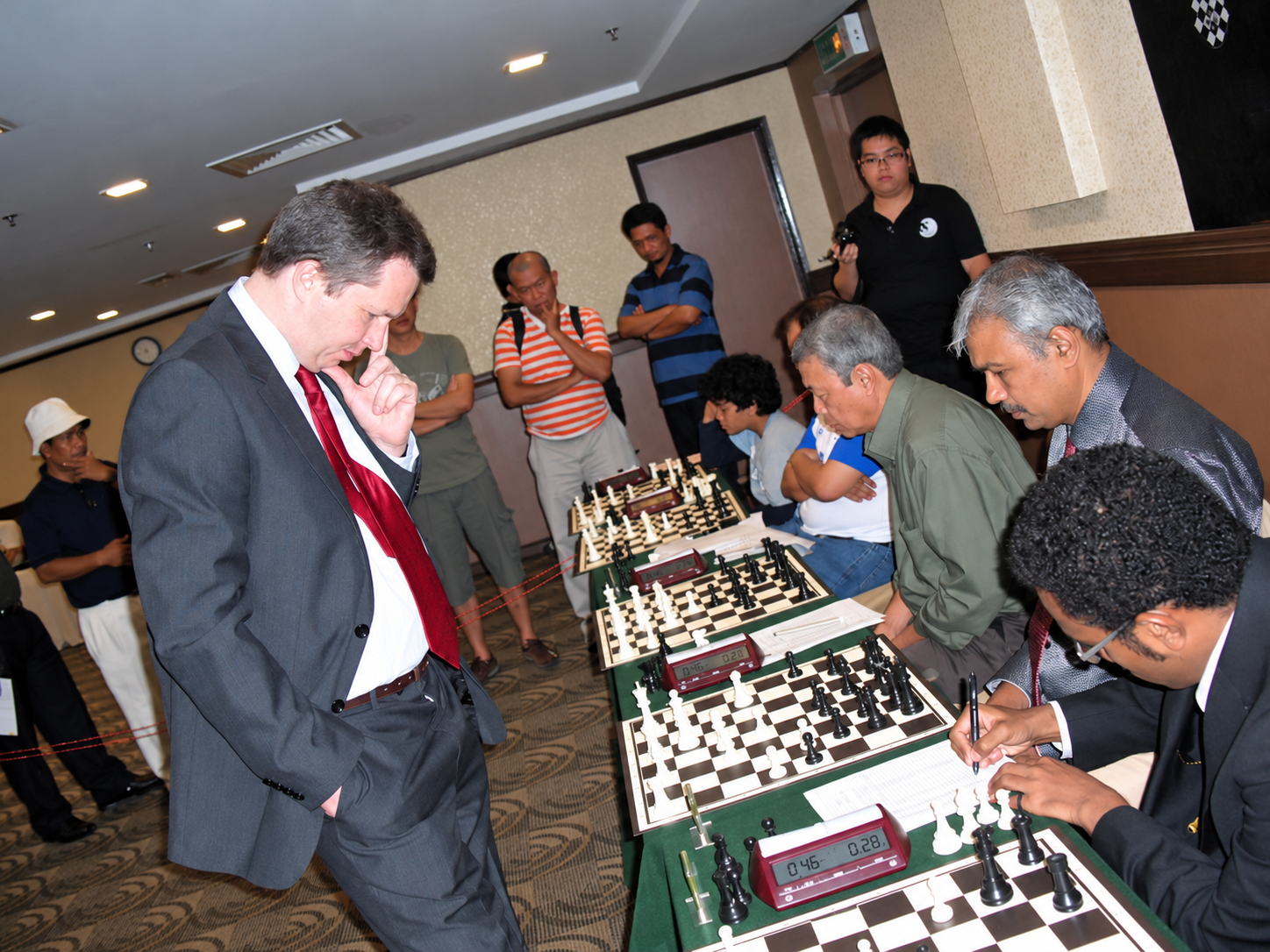
Our paths crossed again in April 2010, when my late friend, FT Peter Long, invited me to join the organising and arbiters’ team for the KL Open in Malaysia.
On the morning of 10 April, a rest day, Peter asked whether I would like to participate in Sir Nigel’s clock simultaneous display.
I could hardly believe my ears.
“Is it possible?” I asked.
Peter assured me that it was. Suddenly, an opportunity I had never imagined was becoming a reality.
Sir Nigel would take on ten players simultaneously, almost all of us FIDE-rated, with each player having one hour on the clock. Peter wondered whether an hour would be enough for us!
As I discovered, his concern was well-founded!
Facing a great player—with the Dragon!
I had the black pieces. Sir Nigel opened with 1.e4, and I chose the Sicilian Defence, steering the game into the Dragon Variation.
I knew how formidable he could be against the Dragon. I had seen games in which he had dismantled Black’s position with remarkable force. Yet that was part of the attraction: if I was going to face such a great player, I wanted to play an opening I knew and give it my best.
As I wrote in my original notes, surviving twenty-five moves with something still to play for would itself feel like a bonus!
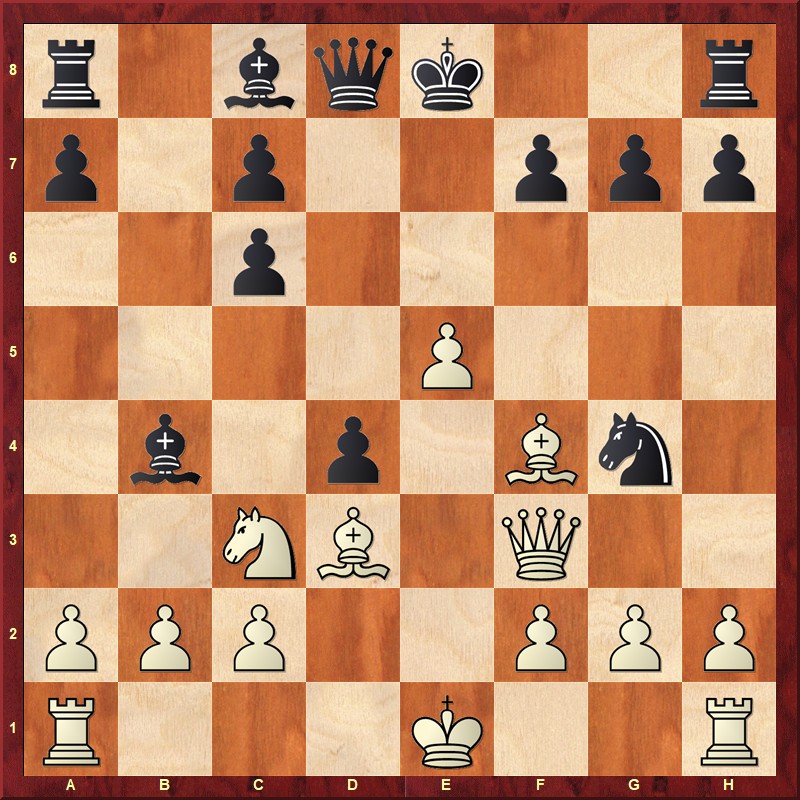
After 13.Kb1, I spent considerable time considering 13…Ne5, but hesitated and chose 13…a6 instead. Later, my young friend and roommate, Niranjan Navalgund, showed me that …Ne5 was indeed playable, with an exchange sacrifice offering Black active counterplay.
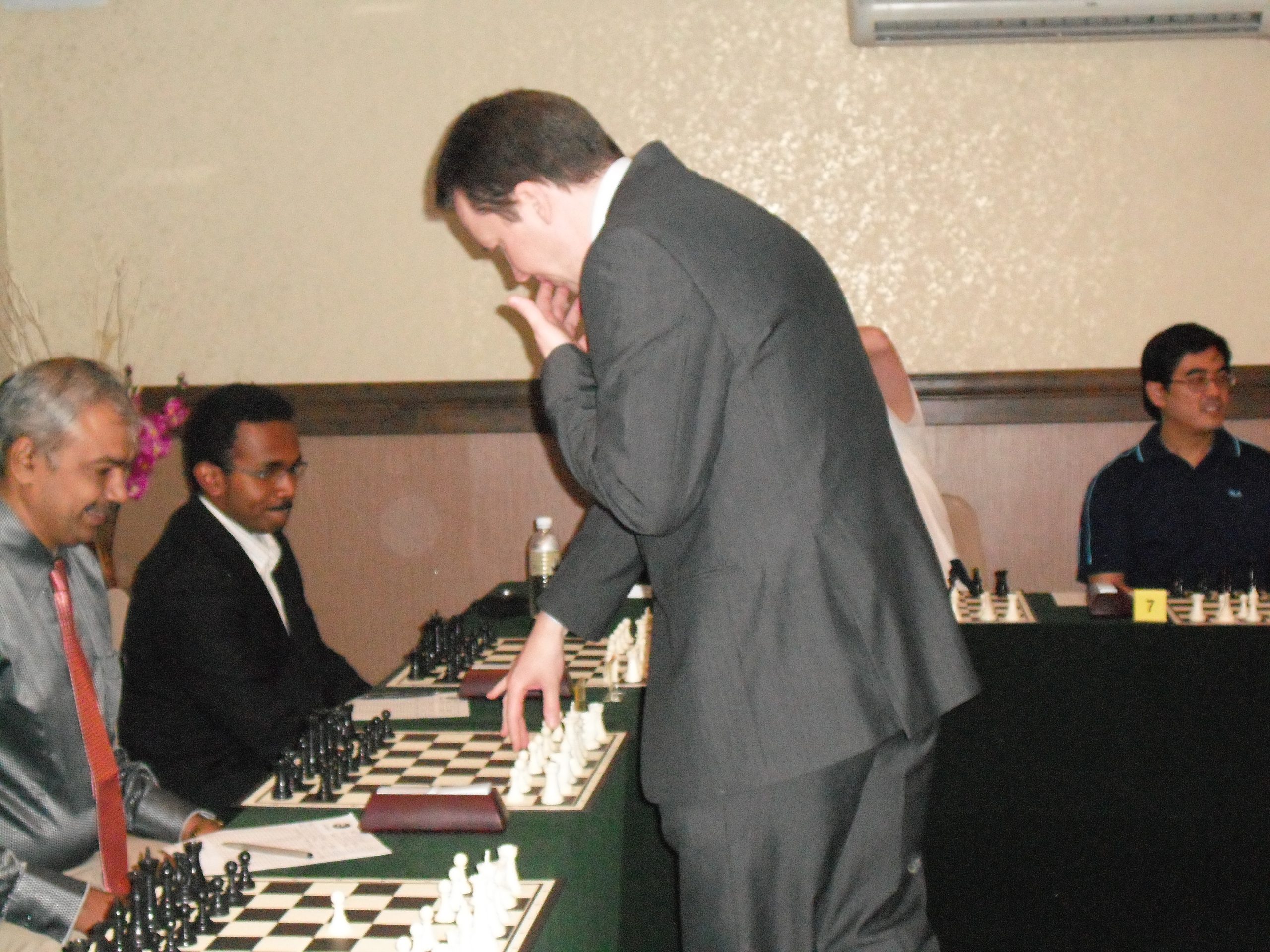
In the game, I managed to exchange queens and reach a position which, according to my subsequent Fritz analysis, was only slightly better for White. I had survived the opening battle—but was now struggling with the clock.
After 28.Nc4, believing that I could not avoid losing a pawn, I resigned.
The words I remember most
To my pleasant surprise, Sir Nigel felt that I had stopped too soon.
As I recorded in my notes, he told me:
“Praful, I feel it’s a premature resignation. There is still a lot of fight left!!”
Those words have stayed with me ever since.
Coming from a player of his stature, that observation meant a great deal. I had lost the game, but to hear him say that there was still a fight to be had was a compliment I would cherish for a lifetime.
When I met him again in the lift afterwards, I thanked him and told him that he had given me a wonderful memory to treasure.
Meeting him again in Samarkand brought it all back with remarkable freshness: the excitement of Peter’s invitation, the tension at the board, the ticking clock, and Sir Nigel’s generous assessment afterwards.
The score records a defeat. My memory holds something much richer—the privilege of playing a legendary grandmaster, and the encouragement he offered when the game was over!
The game
White: GM Nigel Short (2686) Black: Praful Zaveri (2004) Event: KL Clock Simultaneous Display Venue: Kuala Lumpur, Malaysia Date: 10 April 2010 Opening: Sicilian Defence, Dragon Variation (B76) Time control: One hour per player Result: 1–0
e4 c5
Nf3 d6
d4 cxd4
Nxd4 Nf6
Nc3 g6
Be3 Bg7
f3 O-O
Qd2 Nc6
g4 Bd7
O-O-O Rc8
h4 h5
g5 Ne8
Kb1 a6
Nd5 e6
Nxc6 Rxc6
Nb4 Rc8
Bd4 Bxd4
Qxd4 Qc7
c3 Qc5
Be2 Qxd4
Rxd4 a5
Nc2 Bc6
Ne3 Kg7
a3 f6
Rg1 f5
exf5 gxf5
Rd2 f4
Nc4 1–0
Black resigned here. The following continuation appears in my annotated file as subsequent Fritz analysis; it was not played:
Even the analysis leaves pieces on the board and a contest to be fought—a fitting reminder of Sir Nigel’s words!
—Praful Zaveri
Photograph captions
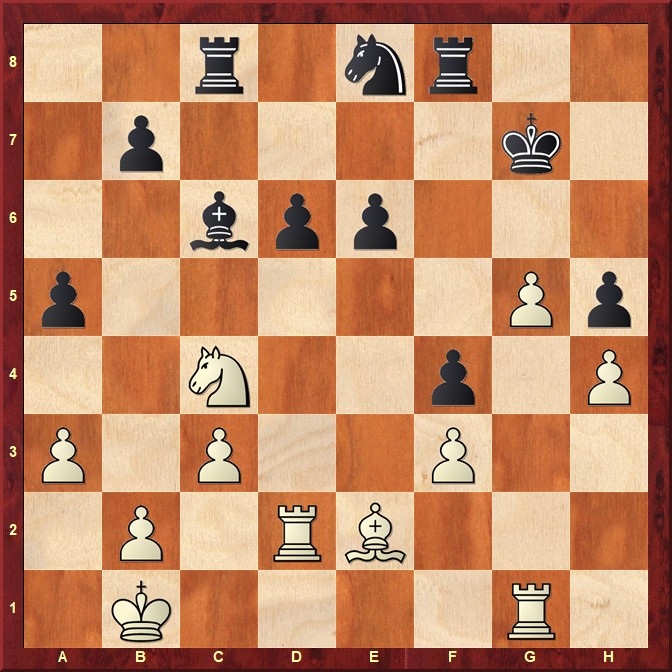
Kuala Lumpur, 2010: Sir Nigel Short during the clock simultaneous display on 10 April 2010—an unforgettable opportunity to face a legendary grandmaster.
Even the greatest minds can overlook a beautiful idea! What reveals their greatness is how they respond when they discover it!!
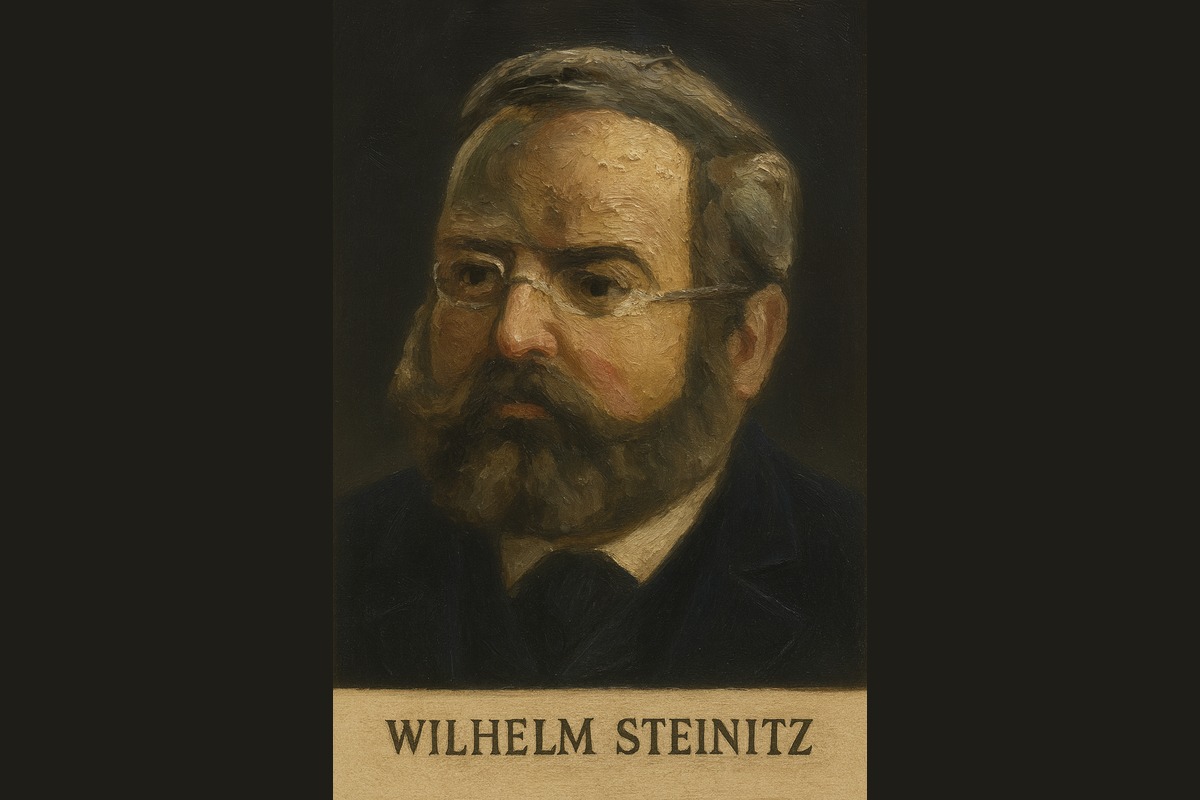
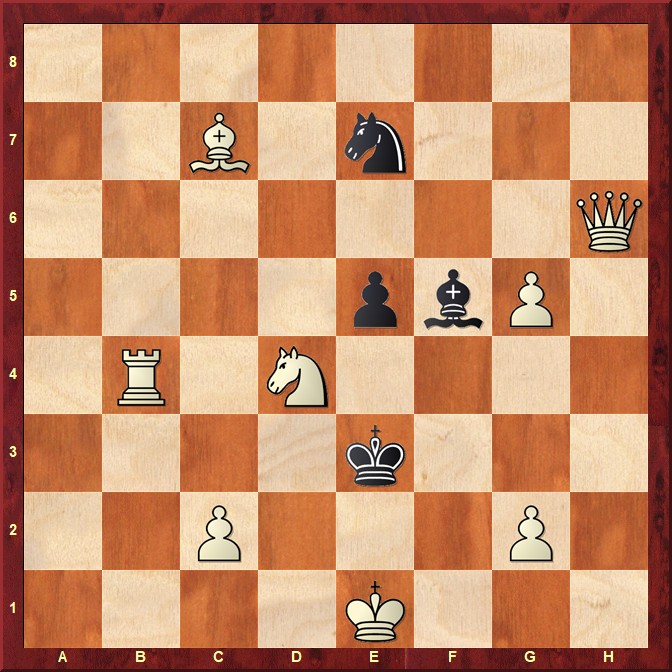
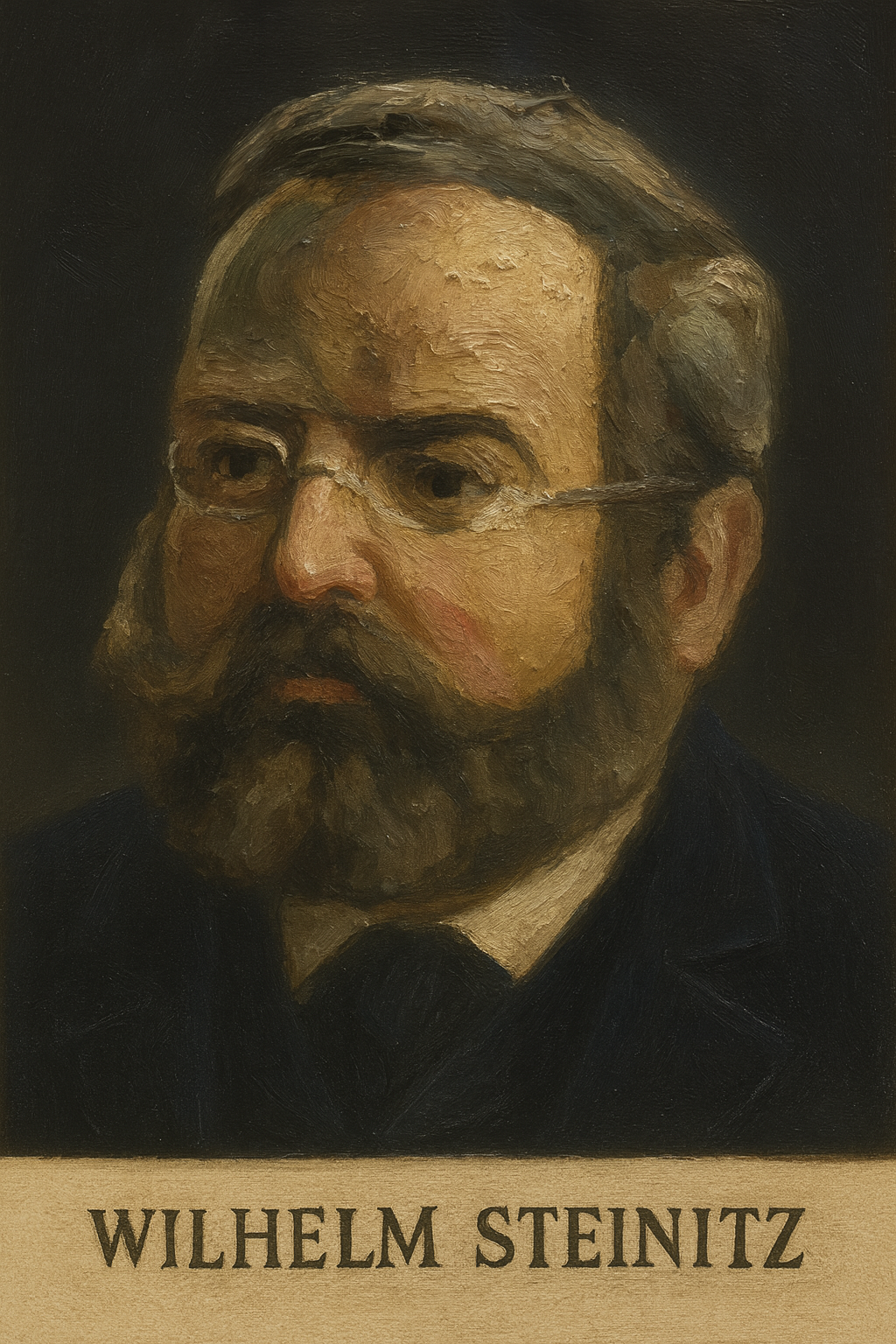
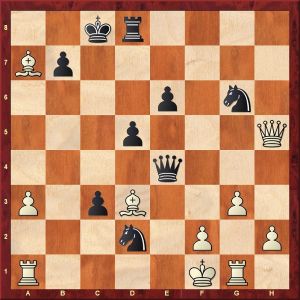
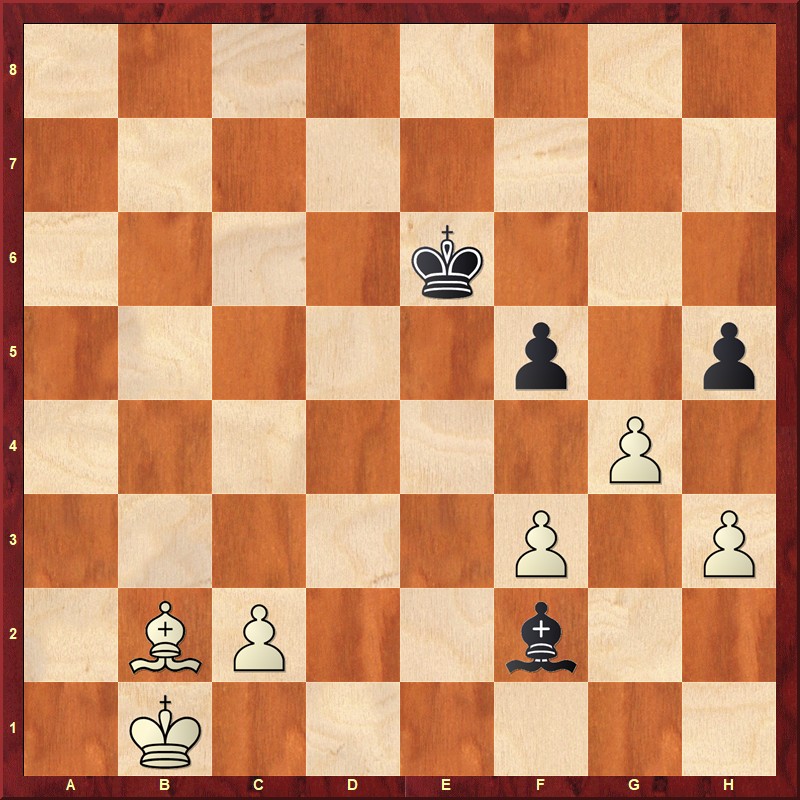
Wilhelm Steinitz, the first World Chess Champion, enjoyed solving chess problems as his “evening dessert”. But a two-move composition by Walter Pulitzer proved unexpectedly difficult.
WHITE TO PLAY & MATE IN 2 (WALTER PULITZER, 1895)
After struggling for more than fifteen minutes, Steinitz began to suspect that the problem contained an error. He looked up the solution—and discovered that the error lay in his own judgment!
His response is a wonderful lesson in humility:
“I thought that no two-move nut could be too hard for my evening dessert. However, after puzzling in vain for over a quarter of an hour, I came to the conclusion that there must be a mistake about it, and therefore looked for the key; and sure enough, there was a mistake—namely, my own! The problem is sound, original, difficult and beautifully constructed. Altogether a gem! So far as I can remember, this is the first time (probably in thirty-five years) that I have failed to solve a two-mover problem within fifteen minutes.”
Here was a World Champion openly acknowledging his mistake and generously applauding the composer whose creation had defeated his efforts!
For our young students—and for all of us—there is something precious in that response. Expertise does not make us infallible. We continue to grow when we can admit an error, appreciate another person’s brilliance and remain willing to learn!!
Now it is your turn!
White to play and mate in two moves. Composer: Walter Pulitzer Published by 13 July 1895.
Give yourself fifteen minutes. Find White’s first move and check that, whatever Black replies, White can deliver checkmate on the next move.
We are keeping the key move hidden so that you can enjoy discovering this gem for yourself!
And if it leaves you puzzled, remember: you are in distinguished company!!😊♟️
Historical note: The problem and Steinitz’s commentary appeared in the Evening Star on 13 July 1895. They were later reproduced on page 60 of the April 1907 issue of ‘The Chess Player’s Scrap Book’, the short-lived journal edited by Emanuel Lasker.
Remembering Ramesh Kaka: An Indian Olympian, a Shared Heritage and a Memory Worth Preserving
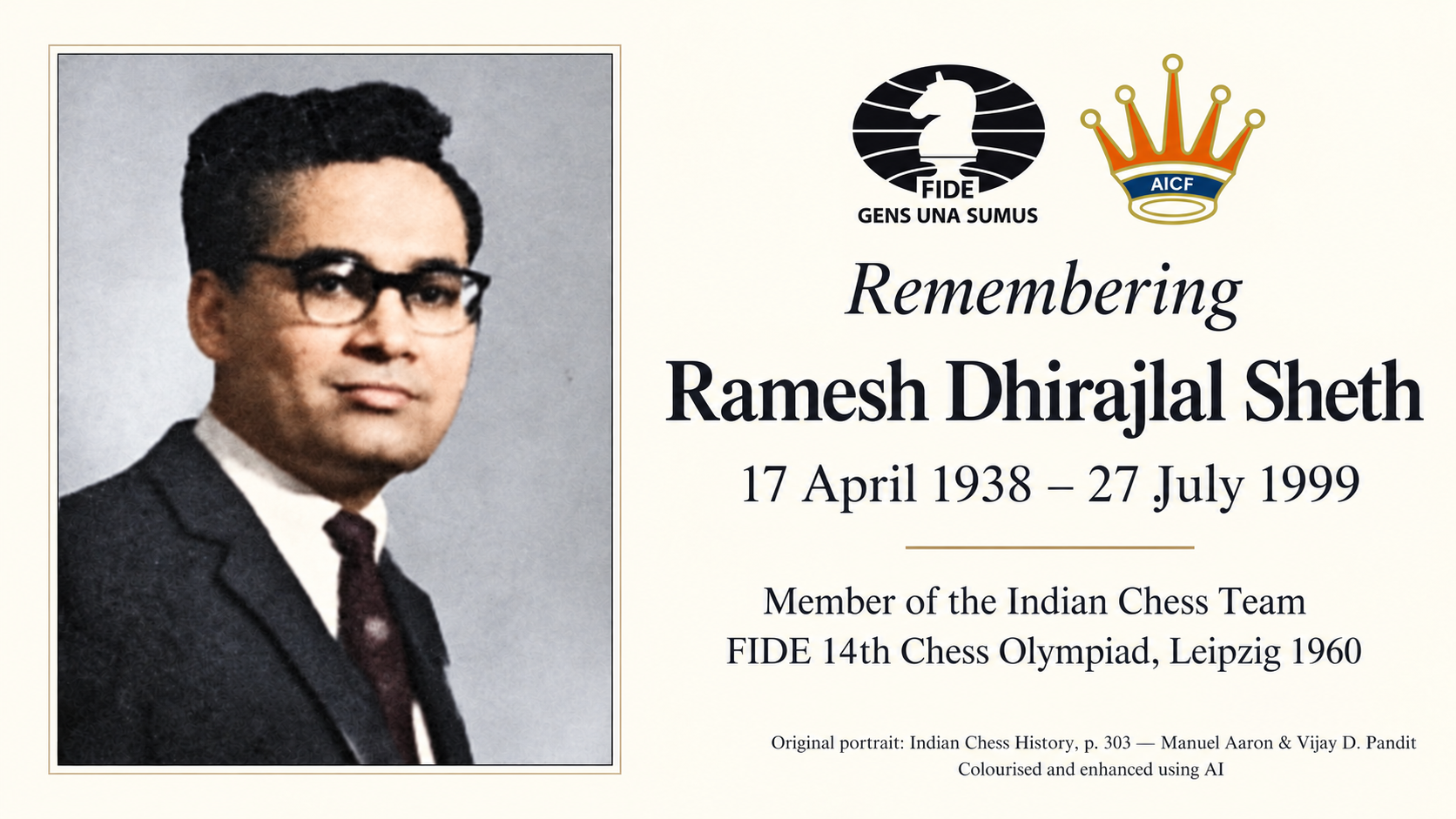
Ramesh Dhirajlal Sheth | 17 April 1938 – 27 July 1999 By Praful Zaveri
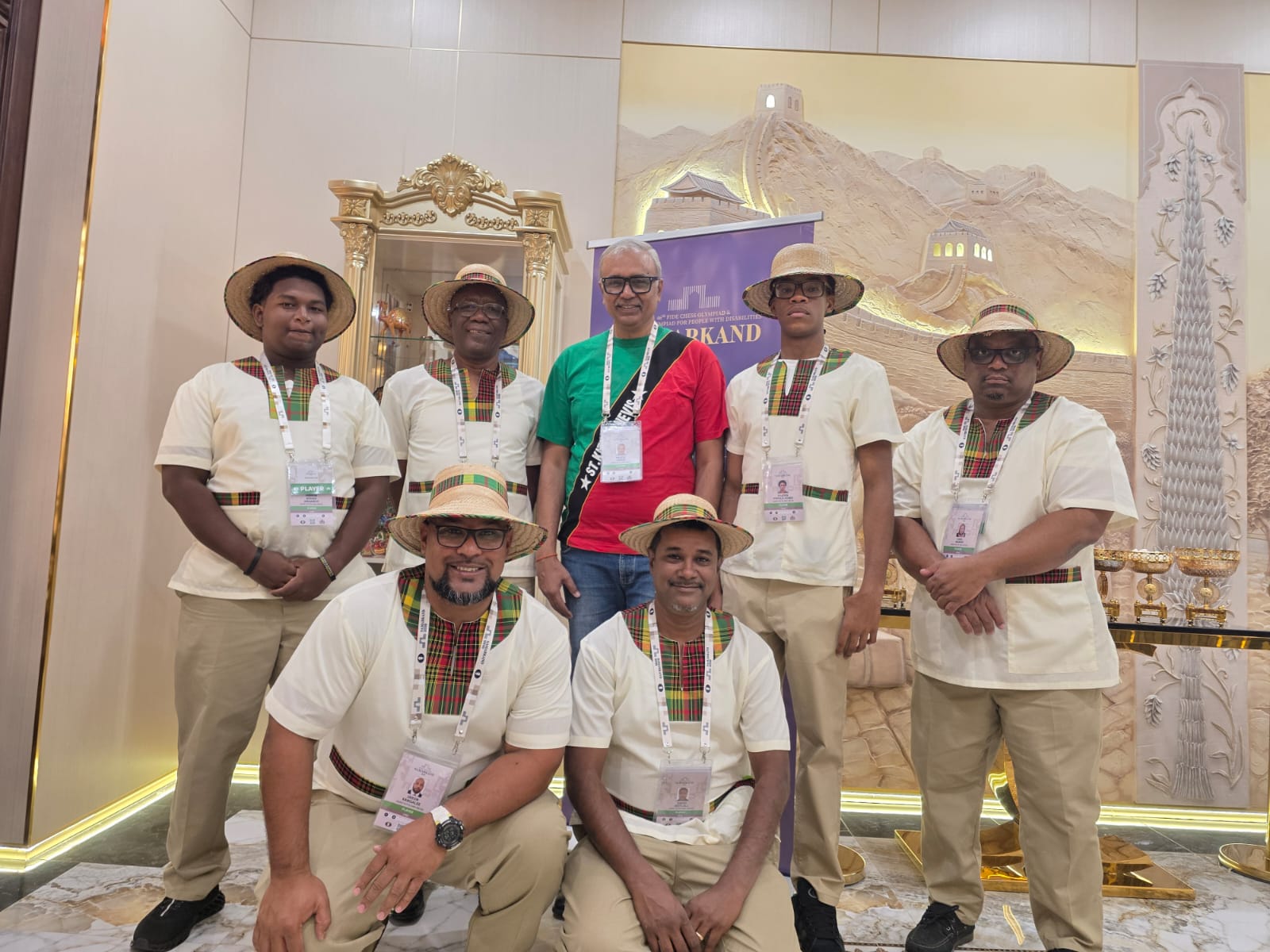
Having recently had the honour of serving as Coach and Captain of the St. Kitts and Nevis Open team at the 46th FIDE Chess Olympiad in Samarkand, Uzbekistan, my thoughts turned to another Olympian—a stalwart from our own community who represented India at the 14th Chess Olympiad in Leipzig, East Germany, in 1960: Shri Ramesh Dhirajlal Sheth.
Sixty-six years separated our Olympiad journeys. I never had the opportunity to meet him, yet the connections between us make his story deeply personal to me.
We are both Gujaratis and belong to the Dasha Sorthiya Vanik (DSV) community. We were both born in Mumbai and share roots in Bhavnagar. My mother came from Bhavnagar, and the families of my maternal uncles continue to live there. It was through these connections that I eventually came to know something of Rameshbhai’s life beyond the chessboard.
Through his nephew, the late Shri Madhukarbhai Sheth, he became, affectionately, “Ramesh Kaka” to me.
Madhukarbhai’s father and Rameshbhai were brothers. Naturally, Madhukarbhai referred to him as his Kaka—his paternal uncle. As we spoke about him, I too began to call him Ramesh Kaka. An enquiry about a former Indian Olympian gradually became a personal wish to preserve the memory of someone connected to my own heritage.
A friendship that led me to his story
My search began in 2012, when International Master IM Manuel Aaron Sir asked whether I could help trace his old teammate.
Aaron Sir and Ramesh Kaka had represented India together at Leipzig and shared a warm friendship. Aaron Sir knew of his connection with Bhavnagar and Bombay, but contact had been lost after Ramesh Kaka moved overseas. While working on Indian Chess History with Vijay D. Pandit, IM Aaron hoped to learn more about the later life of his friend.
With four maternal uncles from Bhavnagar, I felt there might be someone within our family circle who could help. Those connections eventually led me to Madhukarbhai.
Finding him brought a name from India’s chess history closer to home. It also provided a family connection through which Manuel Aaron Sir could learn something more about his friend.
Madhukarbhai did what he could to keep his Kaka’s memory alive. He shared the information and recollections available to him, helping us piece together parts of a life that had taken Ramesh Kaka far from India. Although the family’s contact with him had been limited, his efforts gave us a precious link to those distant years.
A brief career with lasting achievements
According to Indian Chess History, Ramesh Sheth was born on 17 April 1938 in Kandivli, Mumbai. His family roots were in Bhavnagar in Gujarat, while his competitive chess flourished in Bombay.
His years at the forefront of Indian chess spanned 1957 to 1961. It was a relatively brief period, but one marked by strong performances.
In 1957, he finished second in the Bombay State Championship, behind Nawab Ali and ahead of Rusi Madon. He also secured sixth place in that year’s National Championship at Poona. His best national result came in Delhi in 1959, where he finished fifth.
The following year, he earned the honour of representing India at the Leipzig Chess Olympiad.
He also contributed to Bombay’s victory in the 1960 Inter-Association Championship in Madras. Playing on the second board, he remained undefeated and scored 6½ points from eight games.
Leipzig: facing the world’s leading players
India had first participated in a Chess Olympiad at Moscow in 1956. Leipzig belonged to those early years of our country’s international team chess journey, when opportunities to compete abroad were limited and the gulf between Indian players and the leading chess nations was considerable.
India’s four-player team comprised IM Manuel Aaron, Ramchandra Bhargava Sapre, Mulk Raj Wahi and Ramesh Dhirajlal Sheth. Ramesh Kaka played on Board Four throughout the tournament, completing all 20 games.
The Indian team advanced to Final B and finished 24th overall. One of its most memorable individual achievements was Aaron Sir’s victory over former World Champion Max Euwe in the opening preliminary round.
In the next round, India encountered the formidable Soviet Union. Aaron faced former World Champion Mikhail Botvinnik, Sapre played Paul Keres, Wahi met Viktor Korchnoi, and Ramesh Kaka sat across the board from Tigran Petrosian.
The Soviets won the match 4–0 and subsequently won the Olympiad, ahead of the United States and Yugoslavia. Mikhail Tal was the reigning World Champion at the time.
For Ramesh Kaka, the encounter with Petrosian deserves particular remembrance.
Petrosian was already an outstanding grandmaster and the reigning Soviet champion. Three years later, he would defeat Botvinnik to become the ninth World Chess Champion, holding the title from 1963 to 1969.
Ramesh Sheth played Black against him in the second preliminary round. The game began as a Queen’s Indian Defence and continued for 41 moves before Petrosian won.
The surviving score shows Petrosian building a broad pawn centre, expanding on the kingside and bringing his rooks into the attack. Ramesh Sheth sought counterplay on the queenside, including the advance of his b-pawn and activity along the open files. Eventually, Petrosian’s pressure prevailed; the recorded game ends with 41.Qf3.
For us today, the game preserves a remarkable connection: an Indian player whose later life became difficult to trace once tested himself against a man destined to become World Champion!
His opponent list also included the experienced Dutch master Lodewijk Prins, Argentina’s Osvaldo Bazán and Poland’s Jerzy Kostro and Andrzej Filipowicz. These encounters place his Olympiad contribution within the wider international chess world of his time.
Ramesh Sheth’s complete Leipzig record
Results below are shown from Ramesh Sheth’s perspective. “P” denotes the preliminary group and “B” denotes Final B.
Game
Stage / round
Opponent
Country
Ramesh’s colour
Result
1
P–1
Lodewijk Prins
Netherlands
Black
Loss — 0
2
P–2
Tigran Petrosian
Soviet Union
Black
Loss — 0
3
P–3
Edgar de Castro
Philippines
White
Win — 1
4
P–4
Karl Janetschek
Austria
Black
Loss — 0
5
P–5
Gian Piero Mercuri
Italy
White
Draw — ½
6
P–6
Osvaldo Bazán
Argentina
Black
Draw — ½
7
P–7
Jerzy Kostro
Poland
White
Draw — ½
8
P–8
Daniel de Oliveira
Portugal
Black
Loss — 0
9
P–9
Bernard Angles d’Auriac
Monaco
White
Win — 1
10
B–1
Guðmundur Lárusson
Iceland
Black
Win — 1
11
B–2
Emanuel Guthi
Israel
White
Loss — 0
12
B–3
Héctor Jiménez Rojas
Chile
Black
Loss — 0
13
B–4
Raúl de Cárdenas
Cuba
White
Draw — ½
14
B–5
Ilmari Niemelä
Finland
Black
Loss — 0
15
B–6
Andrzej Filipowicz
Poland
White
Draw — ½
16
B–7
Sigfred From
Denmark
Black
Draw — ½
17
B–8
Pedro Puig Pulido
Spain
White
Loss — 0
18
B–9
Kristian Sköld
Sweden
Black
Draw — ½
19
B–10
Ragnar Hoen
Norway
White
Loss — 0
20
B–11
Werner Groiss
Austria
Black
Win — 1
Stage
Games
Wins
Draws
Losses
Points
Preliminary group
9
2
4
3
4/9
Final B
11
2
3
6
3½/11
Total
20
4
7
9
7½/20 — 37.5%
His 7½ points equalled Sapre’s total, making them the joint highest scorers in the Indian team.
Remembering him through a victory
Among his four wins, the game against Iceland’s Guðmundur Lárusson offers a particularly striking way to remember his chess.
Playing Black in the first round of Final B, Ramesh Sheth used the French Defence. White’s queen captured pawns on the kingside, while Black developed active counterplay against the white king. The finish brought together his queen, bishop and knights, ending in checkmate on move 23.
Guðmundur Lárusson–Ramesh Dhirajlal Sheth Leipzig Chess Olympiad, 1960 — Final B, Round 1 French Defence — 0–1
There is something moving about recovering such a game decades later. We may know little about his final years, but we can still follow his moves and see the combination he brought to the board!
A life that travelled beyond chess
Leipzig changed the course of Ramesh Kaka’s life in another way.
Indian Chess History records that a German family whom he befriended during the Olympiad helped arrange a scholarship for his higher studies two years later. He subsequently obtained a doctorate in steel structures in Leipzig and migrated to Canada.
During his German stay, he continued to send Aaron chess books by Luděk Pachman. I find this detail particularly touching. Amid his studies and a new life abroad, he remembered his friend and the game that had brought them together.
Madhukarbhai told me that Ramesh Kaka married after moving to Canada and had no children. Beyond these fragments, much of his later life remains unknown. The book records that he passed away in Florida, USA, on 27 July 1999.
I wish we had been able to learn more about his work, his home, his friendships and whether he continued to play chess in those later years. Those questions remain with me.
With Madhukarbhai’s passing, we have also lost the family member through whom I came to know Ramesh Kaka. His efforts to preserve his uncle’s memory now place a responsibility on those of us who received that story.
A photograph, twenty games and a place in our memory
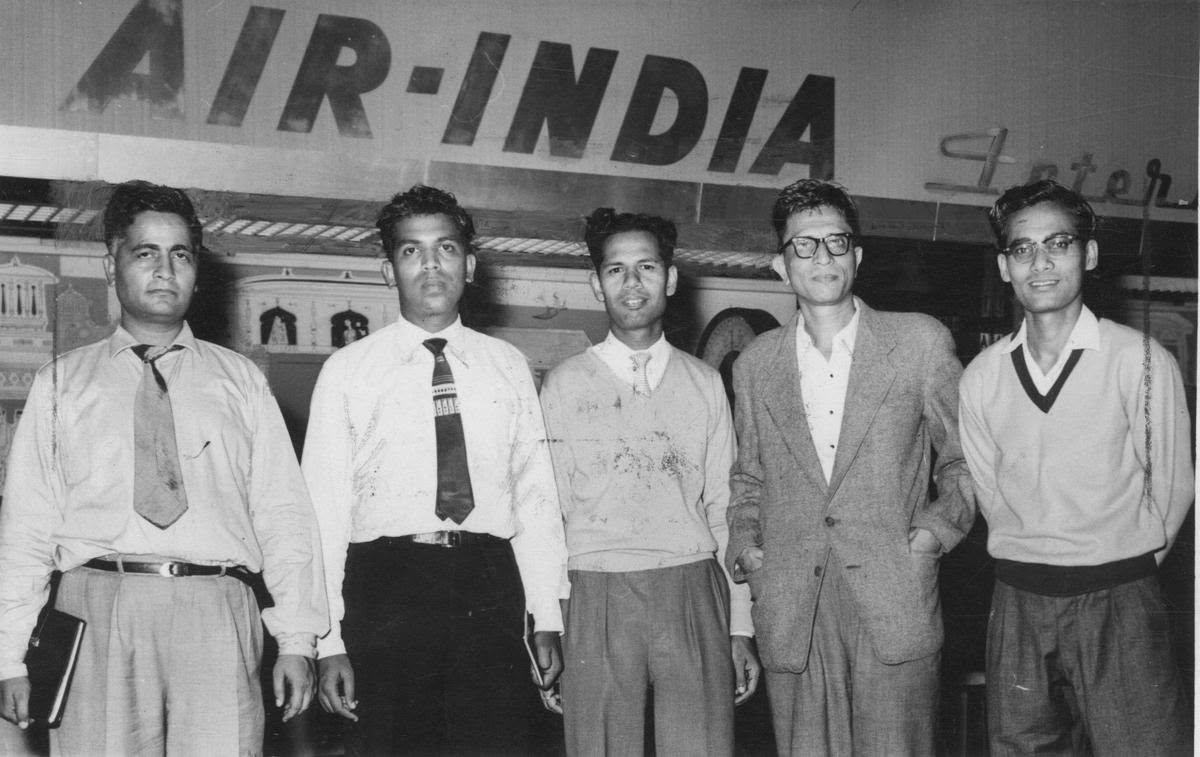
The team photograph accompanying this tribute adds another precious fragment to the story. Shared in the Madras Local History group on Facebook, it shows the Indian chess delegation before its journey to the 1960 Leipzig Olympiad and brings us closer to the people behind the tournament records.
I am grateful to the group for making this photograph available. I have also posted an enquiry there, inviting members to share further information about the Indian team beyond what has been chronicled by Manuel Aaron. A photograph, a letter or a personal recollection could help us recover another part of this shared chess history.
The photograph deserves to be preserved alongside the games and the recollections of those who knew these players. Together, these fragments help us remember a generation whose contribution can otherwise slip quietly out of view.
Perhaps that is why, after my own Olympiad experience in Samarkand, I feel an even stronger need to write this tribute. I know what it means to be part of an Olympiad—the anticipation, the responsibility, the companionship and the memories one carries home.
Ramesh Kaka experienced his own journey decades before mine. He represented India, faced a future World Champion and contributed to our country’s early international chess history.
Our shared Gujarati heritage, our DSV community and our Bhavnagar roots first drew me towards him. His achievements, Aaron Sir’ affectionate recollections and Madhukarbhai’s efforts gave me further reasons to remember him.
To the Indian chess fraternity, I offer this tribute with a request: if anyone possesses photographs, letters, tournament records or memories of Ramesh Dhirajlal Sheth, please help us preserve them. Information about his years in Germany, Canada and the United States would be especially valuable.
Ramesh Kaka, I never met you. Yet, through Aaron’s memories and Madhukarbhai’s efforts, I came to feel a connection with you. I wish there had been an opportunity to sit across a chessboard, listen to your stories and hear about Leipzig in your own words!
That opportunity is now beyond us. Remembering you is still within our hands.
With affection and respect, I offer this tribute to your memory—and remember Madhukarbhai with gratitude for helping keep it alive.
Photo credit: Madras Local History group on Facebook. Indian chess delegation before its journey to the FIDE 14th Chess Olympiad, Leipzig, 1960. Original photographer unidentified.
Sources: Indian Chess History by IM Manuel Aaron and Vijay D. Pandit, pages 303–304; OlimpBase’s Leipzig 1960 results and game archive; FIDE’s biography of Tigran Petrosian; my conversations with Manuel Aaron and the late Shri Madhukarbhai Sheth.
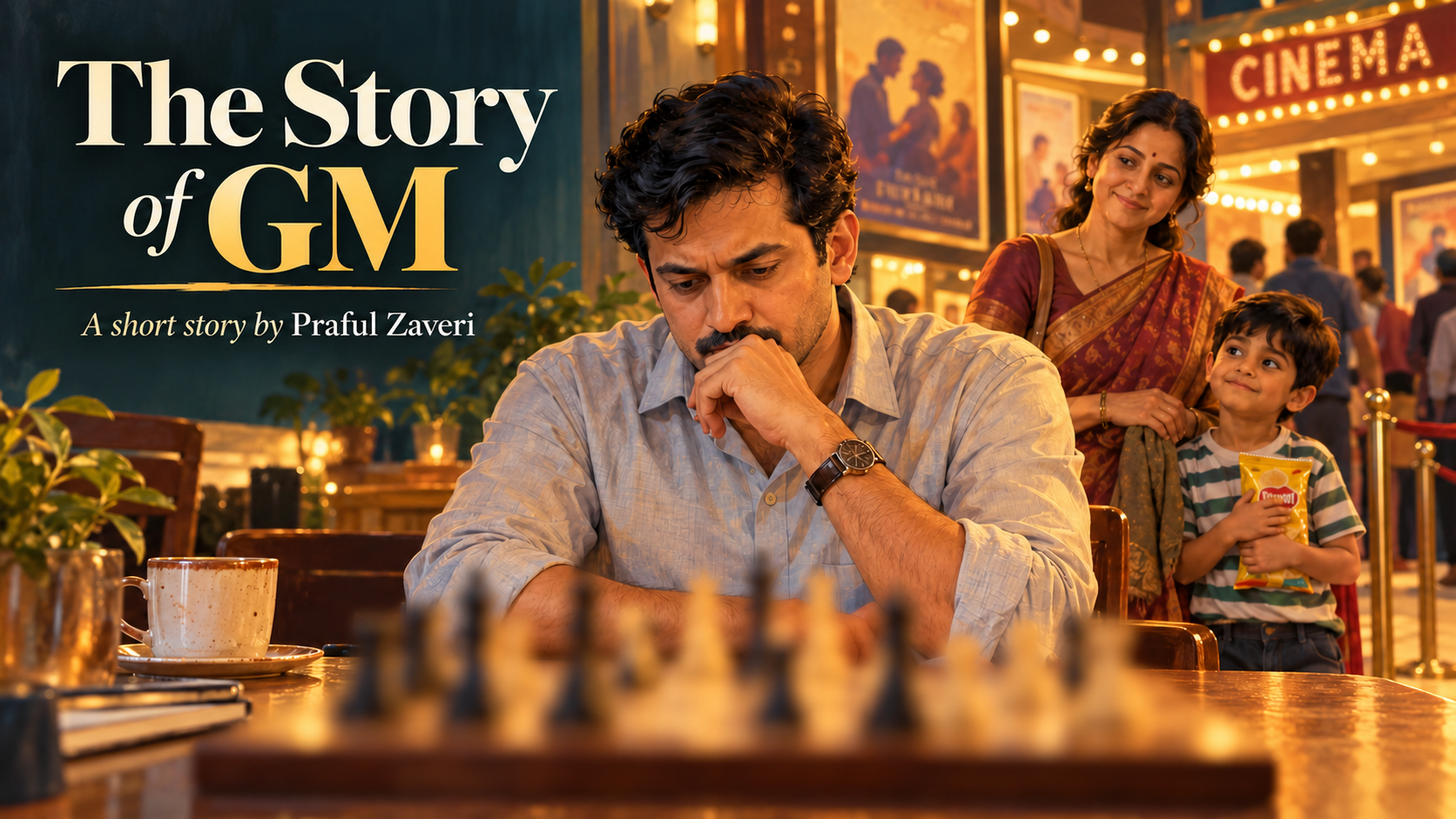
Most readers know me through my books on chess training. However, I have also tried my hand at short stories—with chess, naturally, at their heart!
“The Story of GM”, which I penned in 2008, is one such attempt. It follows Govind Mohan Lal, affectionately known as “GM” in the chess circuit, whose fascination with a missed winning move follows him well beyond the tournament hall.
I am pleased to share this light-hearted story with you. If you have ever continued analysing a game long after leaving the chessboard, you may find something familiar in GM’s predicament!
The Story of GM
This is the story of Govind Mohan Lal, affectionately known as ‘GM‘ in the Chess Circuit!
He had had a bad day in the office, and he was livid with himself. He had drawn his crucial 6th-round game against his old foe, which had pushed him into joint 2nd spot with a score of 5 points. Had he won that game, he would have propelled himself to the top of the table. And, with 3 rounds remaining, he would have been the favourite to win this championship.
How could he draw such a game, which was nothing but home preparation from the white side of the Scotch Opening? After 15 moves, he had his opponent on his toes, and the writing was on the wall. With the country in the grip of IPL fever and the newspapers forgetting about the existence of other sports, he could still imagine himself making the headlines the next day, probably on the same page as the RR team!
Alas! One moment of indiscretion, and his dreams were falling apart. Moreover, he was furious that he was forced to share 2nd spot with his opponent from the last round, his longtime Chess friend but enemy within!
He could not fathom the thought of his opponent playing Chess!! A mere mortal who was created by God just to punish him for some of his misdeeds in his last birth!! So, whenever the opportunity presented him with a chance to play against his opponent, either in tournaments or off-hand games, he played with the full vigour of a gladiator!!
To a certain extent, he had been successful with a score of +2, but the last 3 games prior to the current clash had been a near disaster. He had no answer to his strong Berlin Defense, and he sometimes felt that he was playing against Kramnik! With Black, he had tried KID and had been almost successful, but somehow, he felt that his opponent had learned enough Black magic to prevent him from winning! He was not superstitious, but playing against this opponent made him search for some Black magic ‘Limbu’, which he (his opponent) might have stashed in some remote corner of the tournament hall!!
As such, when he learnt of the critical 6th-round pairing, he decided to change his repertoire from the Ruy Lopez to a surprise Scotch, which he had never played before and which his opponent would never have expected him to play!
With the help of his monsters, Fritz and Chessbase, he went through the recent advances in this variation, but some inner intuition signalled to him that he should adopt some obscure line – a line which was beyond the chess understanding of his opponent. As such, he decided on the Scotch Four Knights variation.
He reached the tournament hall quite early and found that the peaceful serenity of the place calmed his jumping nerves. He decided to set his own clock, as he wanted to prevent his opponent from performing any tricks on him!
His opponent, with an aura of confidence, arrived just before the scheduled time, and they both shook hands. The games started, and to show positive body language, he nearly fixed the pawn on the e4 square and pressed his clock with slightly more pressure! He was now praying that his opponent would play e5, and after a few seconds’ pause, which seemed like an eternity, his opponent obliged! And, after the usual 2.Nf3 Nc6, he played 3.d4! and watched with satisfaction the surprise on his opponent’s face; his opponent had been expecting 3.Bb5.
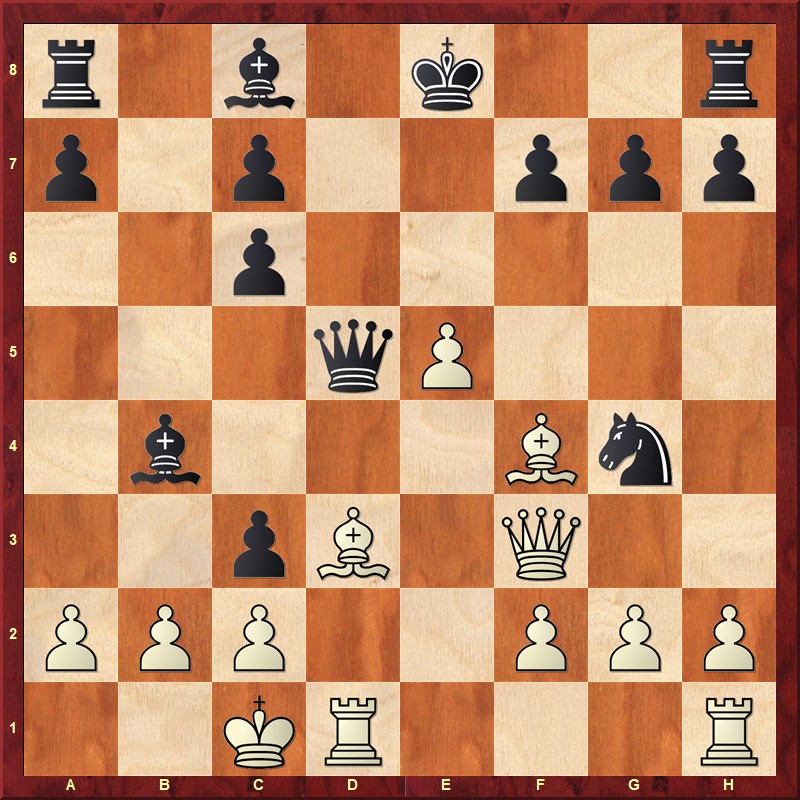
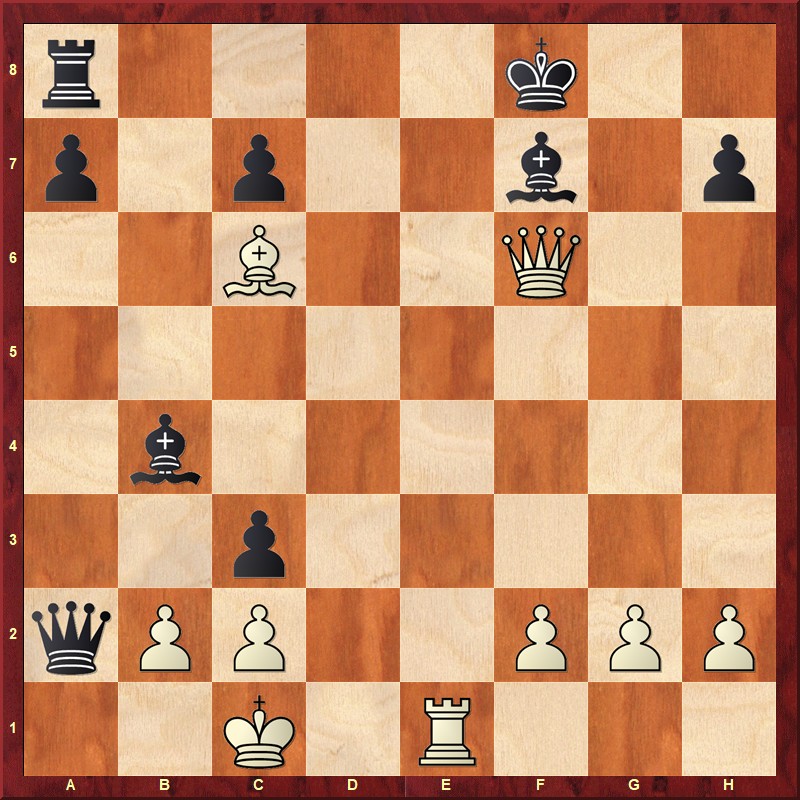
The game continued as per his exact home preparation: 1.e4 e5 2.Nf3 Nc6 3.d4 exd4 4.Nxd4 Nf6 5.Nc3 Bb4 6.Nxc6 bxc6 7.Bd3 d5 8.e5?! Ng4 9.Bf4 d410.Qf3!
He changed gear and was now playing the game in lightning mode – rapidly replying to his opponent’s moves, pressing the clock with a sure but acceptable punch. His opponent was perspiring now and could feel the heat of the position on the board! Now confident of his victory, he also felt the urge, like Gary Kasparov, to get up from his chair after every move, rush towards the exit door and close it with a bang so that the spectators and other players would be attracted to his game, which surely deserved to be watched. But the tournament hall had only one door, and he realized that if he were to do this, he would be expelled by the no-nonsense Chief Arbiter!
10…dxc3 11.0–0–0 Qd5
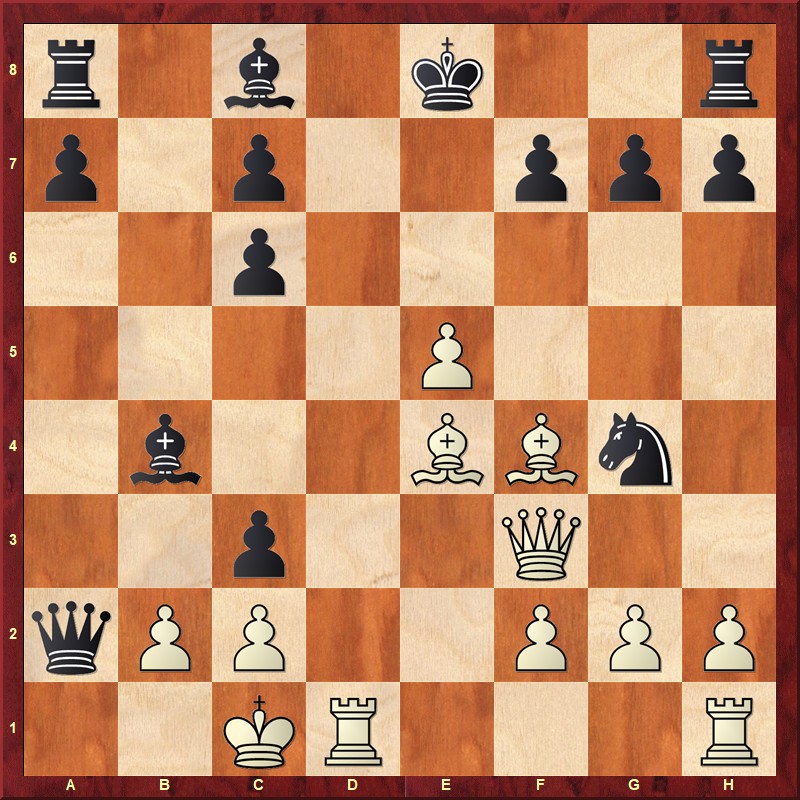
12.Be4 Qxa2 and the opponent had ‘Mate in One’!
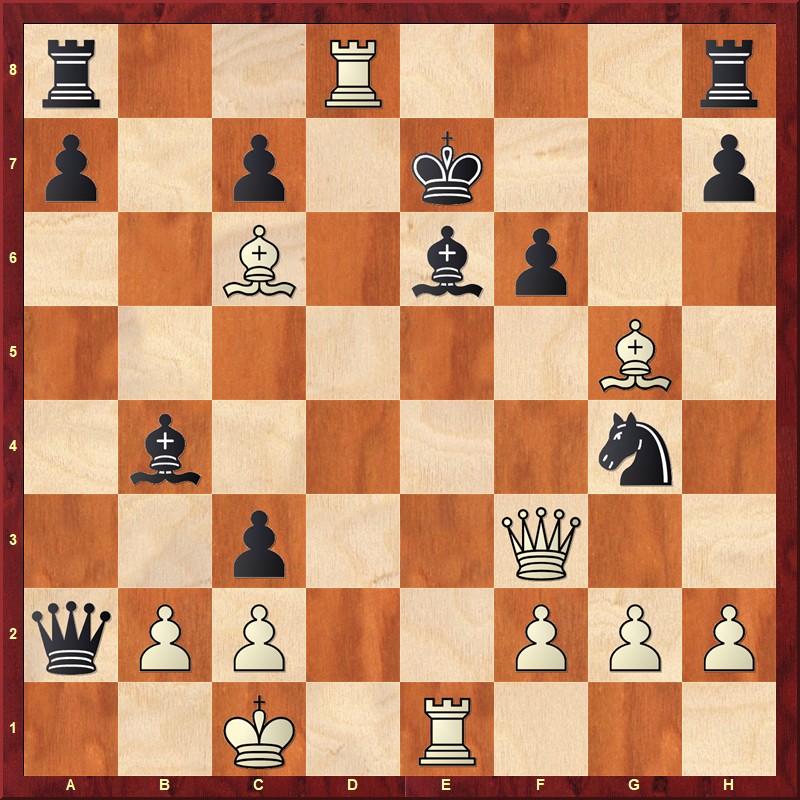
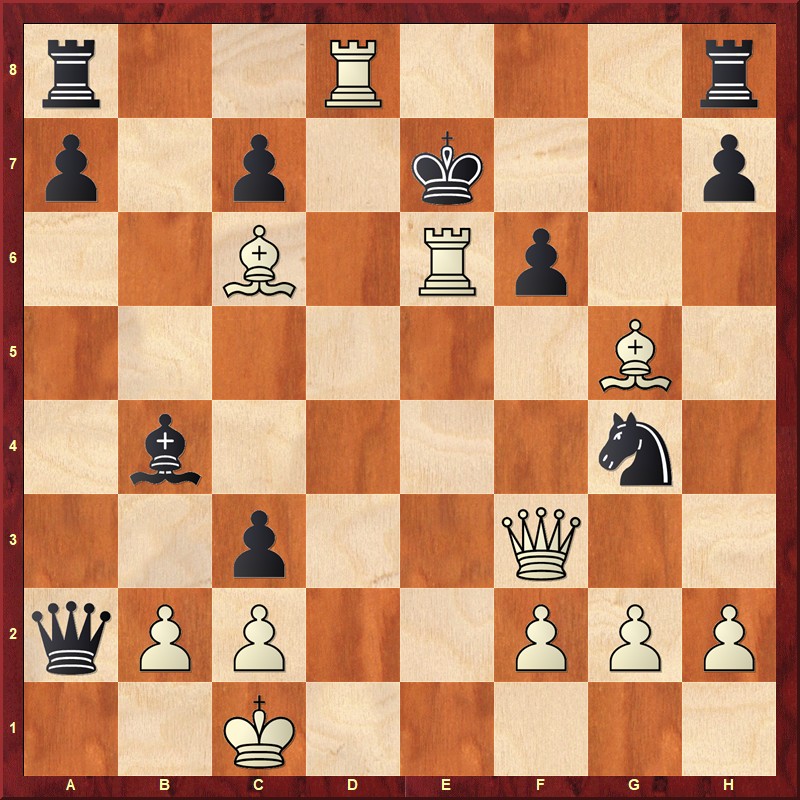
But then came 13.Bxc6+ Kf8 14.Rd8+ Ke7 15.Bg5+ f6 16.exf6+ gxf6 17.Re1+ Be6
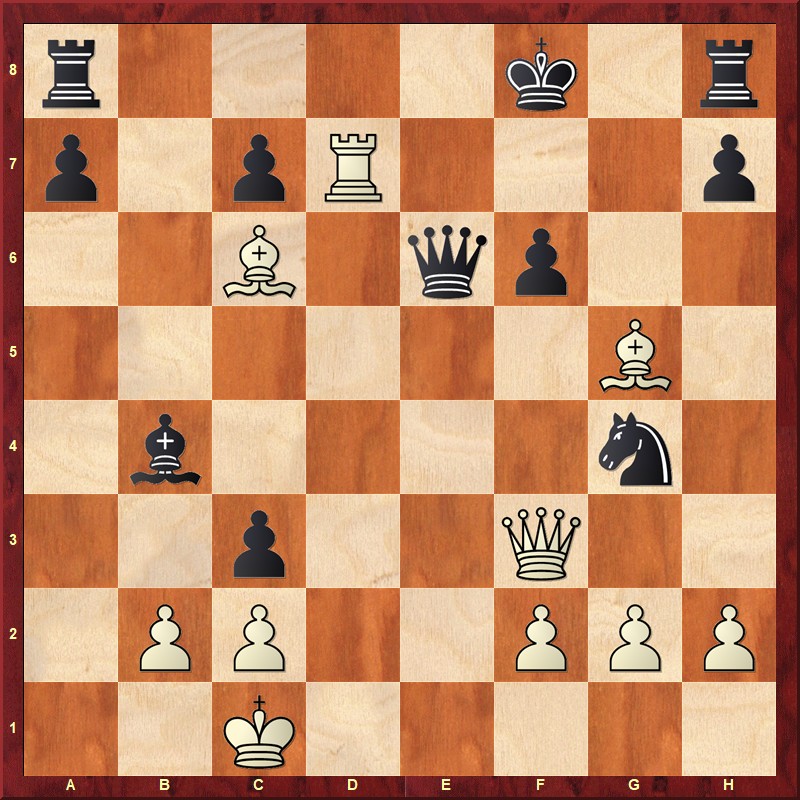
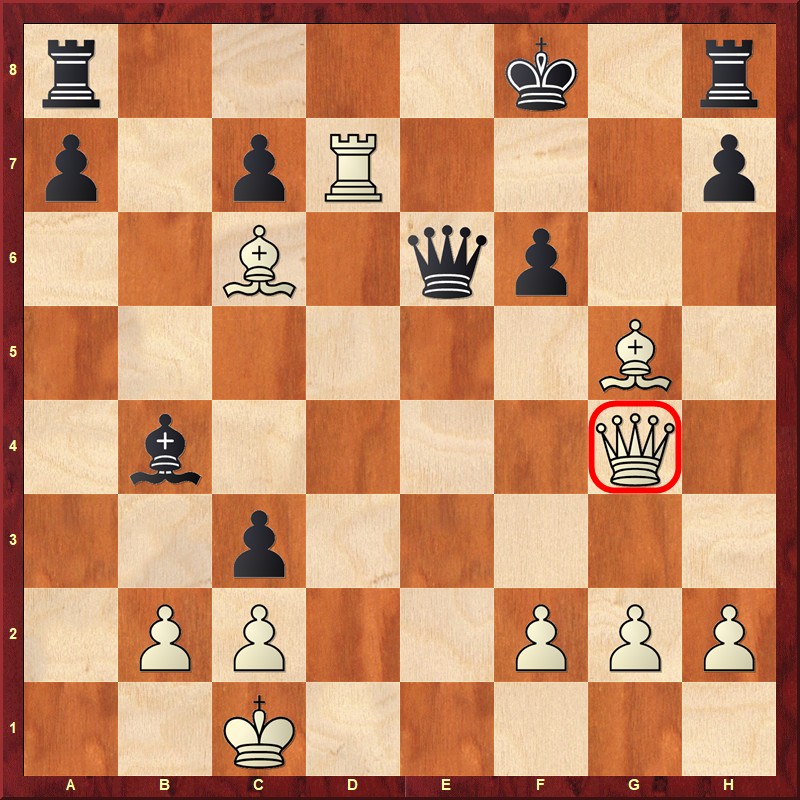
And here his home preparation ended, but this was a position he could not lose. At this point, he spent nearly 50 minutes on his clock before finding the winning move – 18.Rd7+!!
And this was the first time he saw a wry smile on his opponent’s face?! The game continued: 18…Kf8 19.Bh6+ Nxh6 20.Qxf6+ Nf7
Now he realized why his opponent was smiling – he had escaped with a draw!! 21.Rxf7+ Bxf7 22.Qxh8+ Bg8 23.Qf6+ Bf7 24.Qh8+ Bg8 25.Qf6+ Bf7 ½–½
His opponent offered a post-mortem analysis, but he was frustrated and left the tournament hall in a jiffy.
Back home, he was pondering over the game to find out where he had gone wrong and was contemplating spending the entire evening analysing the game thoroughly, but his wife had other ideas!
She was an expert at reading his face and knew instantly that the result of today’s game was not positive! Not that she was bothered by the result, as she was of the opinion that her buddy was engaged in an activity which was a sheer waste of time.
Their eight years of marriage had been a near disaster, and had it not been for the 6-year-old Chintu, she would have taken the first available train to her parents’ place in Kolkata!
A simpleton but an educated girl, she was over the moon when she learnt that she was to marry this great Chess player. She imagined that her husband, like Dada, must be all over the sports pages of various newspapers and chased by autograph hunters!! But her dream was short-lived and died a premature death once she learnt that Chess had no takers. Of course, he earned a reasonable salary from his job as a sports quota recruit in a Public Sector undertaking and had a nice flat, a car and other luxuries; however, the glamour was certainly missing!
“It’s been ages since we’ve seen a movie and had a dinner outing. Chintu wants to see his favourite movie, ‘OSO’, and I have already booked the tickets for the 10 PM show at Fame Adlabs. We will start at 8, have our dinner at Rajdhani at 9 and then let Chintu play some games at the Mall.”
This was more of an order, but he was drained of all his energy and decided not to enter into an argument. It also presented him with the opportunity to ponder over the game during the 15 km drive from his residence to the Shopping Mall/Multiplex and, of course, the three-hour movie!
He went through the motions of having a nice dinner and spending quality time with his family; however, as soon as the movie started, he switched himself to ‘Chess Engine’ mode.
While the entire cinema hall was engrossed in the hit song and dance number belted out by King Khan, he went into overdrive to find the winning move he had missed. However, he couldn’t find it, and the movie ended.
On their way back, the car needed refilling, and he drove it to the nearest petrol pump. At this juncture, Chintu demanded wafers, and his wife took Chintu to the gas station’s Cafeteria while he continued with his exploration.
Eureka! Just as he finished paying the attendant, the winning move flashed across his mind, and in the growing excitement, he started his car!!
18.Rxe6+ !! And he started rechecking his analysis.
While he was satisfied that he had reached a logical conclusion, at the same time he was kicking himself for having missed the brilliant 18.Rxe6+!!
The frenzy made him drive nearly 5 km, and all of a sudden, a question flashed in his mind: “Am I travelling with someone, or am I alone?”
And, to his horror, he recollected the entire sequence of going to the cinema with his wife and son, his journey back home after the movie, the need to refill the car, Chintu’s demand for wafers and his wife getting out of the car to buy wafers from the gas station’s cafeteria!!
(GM reversed his journey towards the petrol pump, and we do not know what fate awaited him, but as in most Bollywood movies, we hope it was a ‘Happy Ending’!!)
Author’s Note
I wrote “The Story of GM” in 2008, taking a brief detour from chess instruction into fiction. The chess positions are drawn from two actual encounters: Van Scheltinga–Cortolever (Amsterdam, 1954) and Furmston–Poletayev (correspondence chess). Govind Mohan Lal and his adventures, however, belong entirely to my imagination!
Those who love chess will know how a missed move can linger in the mind long after a game has ended. I hope GM’s little adventure has brought a smile to your face—and perhaps reminded you of a moment when you, too, left the chessboard but took the game along!!
Checkmate @ Crimson: Indian Chess School Makes Its First Move into Corporate Chess
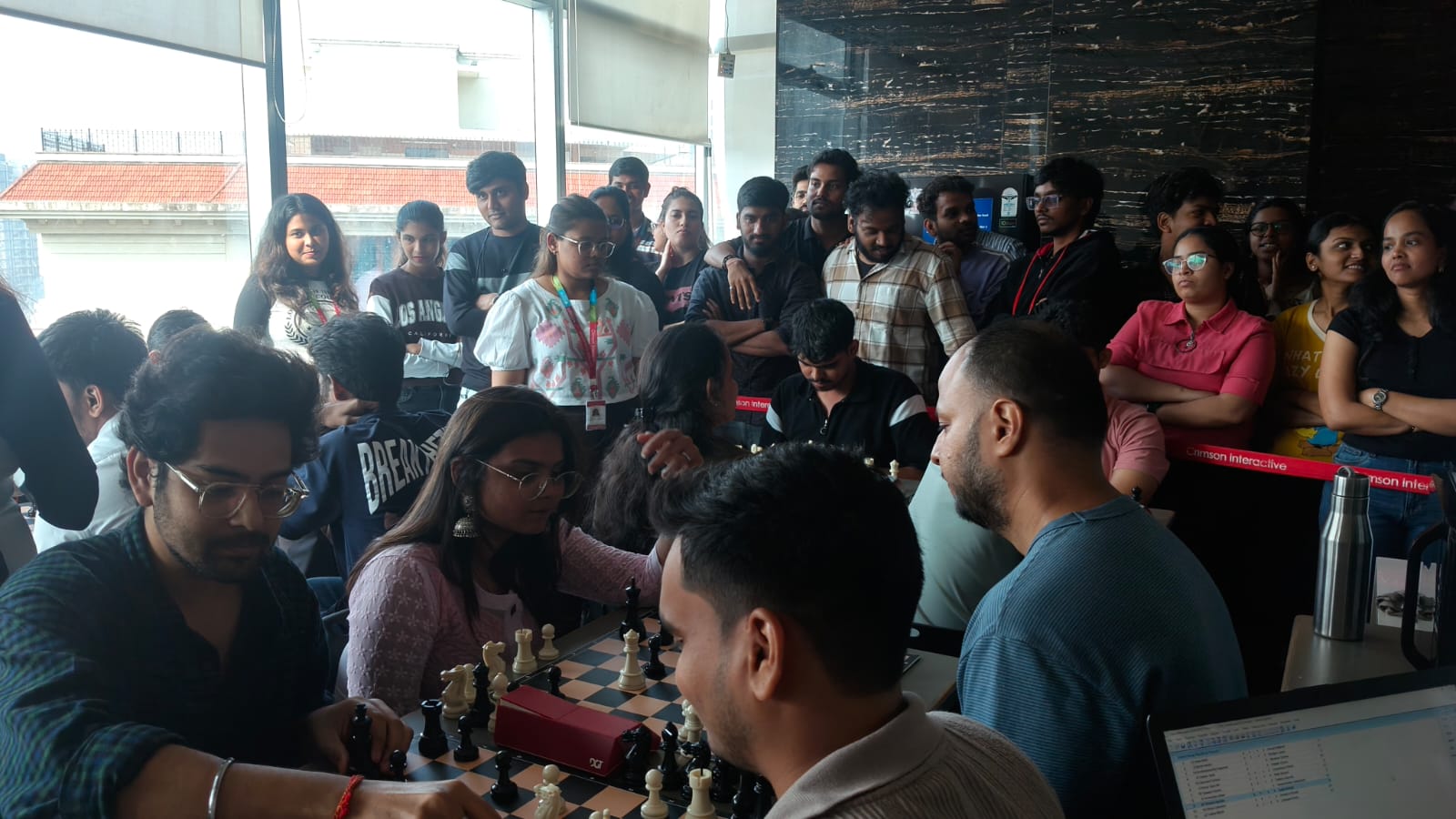
Indian Chess School (ICS) marked a new milestone on 1 October 2026 by conducting its first corporate chess tournament, “Checkmate @ Crimson,” at Crimson Interactive.
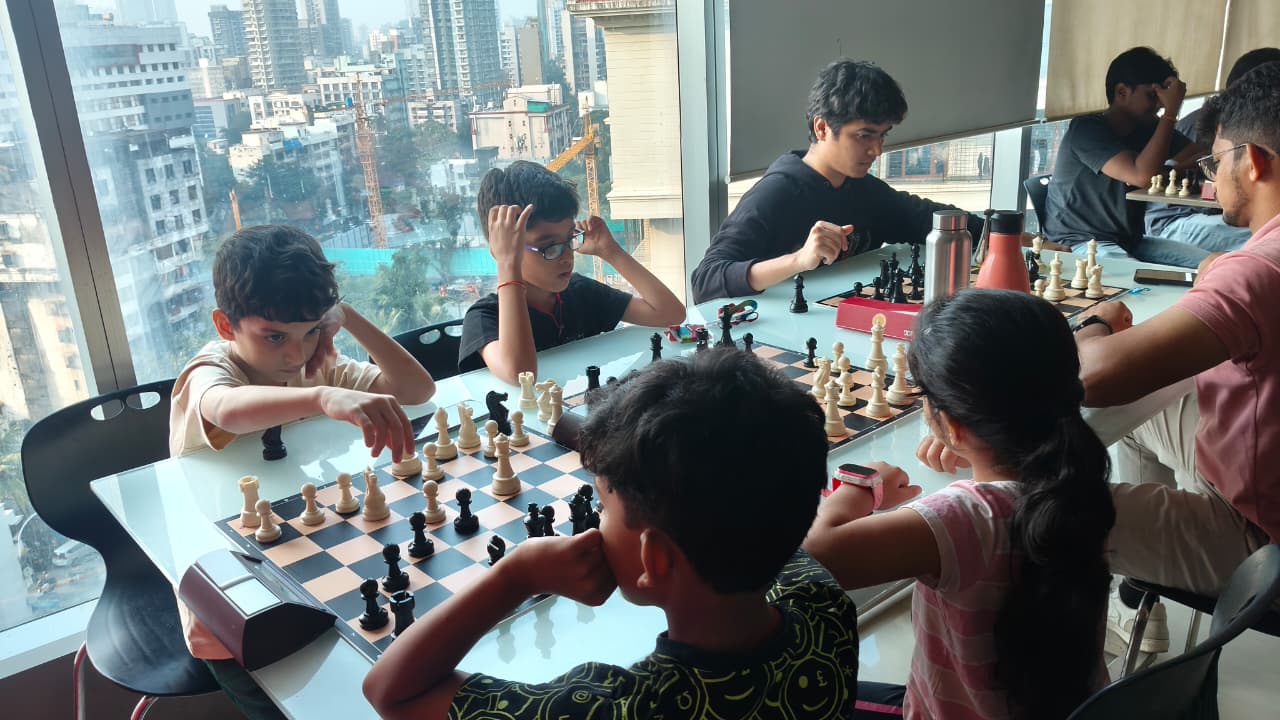
The event welcomed 22 employees and six children, bringing together colleagues and their families through a shared enjoyment of chess. It also marked the beginning of ICS’s foray into organising chess tournaments for the corporate workforce, drawing on its extensive experience in chess training and tournament management.
From Intern to Chief Arbiter: A Special Homecoming
Leading the event was Prisha Kapadia, Chief Operating Officer of Indian Chess School, who represented ICS as the Chief Arbiter and took responsibility for organising and conducting the tournament.
For Prisha, the occasion had a special personal connection. Just a year earlier, she had spent two months at Crimson Interactive as an intern. Returning to the same organisation to lead its corporate chess event made this milestone particularly memorable.
Her responsibilities included explaining the rules, monitoring multiple boards, ensuring fair play, coordinating arrangements and keeping the tournament moving smoothly. She also captured moments from the event, documenting this new chapter in the ICS journey.
We warmly appreciate Prisha’s initiative, commitment and leadership in bringing this event to life.
Chess for Colleagues and Their Children
One of the most rewarding aspects of “Checkmate @ Crimson” was seeing chess become a meeting point for colleagues and their families.
Employees took a break from their usual work to challenge one another over the board, while the children’s participation added a family dimension to the occasion. Together, the 28 participants made this first corporate event especially memorable.
The evening concluded with felicitations, and Participation Certificates were awarded to all employees and children who took part.
Employees’ Section: Final Standings
The employees’ tournament concluded after five rounds, with Allan Fernandes securing first place with a perfect score of five points.
Ronak Agrawal took first place in the children’s section, followed by Ram Mittal and Zayden Bharucha.
Rank
Player
1st
Ronak Agrawal
2nd
Ram Mittal
3rd
Zayden Bharucha
4th
Veerr Mittal
5th
Arna Mittal
6th
Annika Kapadia
Congratulations to the leading players in both sections and to every participant for their enthusiasm for chess.
Taking Chess into the Corporate World
With this first event, Indian Chess School is opening a new avenue for companies seeking engaging activities for their employees and families.
Chess offers a natural setting to practise planning, concentration and decision-making while enjoying a competitive game. A workplace tournament also gives colleagues an opportunity to connect through a shared interest.
ICS aims to bring its expertise to corporate chess events—from planning suitable formats and coordinating arrangements to conducting pairings, explaining rules and providing professional officiating. Events can be planned around an organisation’s schedule and the playing experience of its participants, with opportunities to include employees’ children.
Our goal is to help companies create enjoyable, professionally conducted chess tournaments that employees and their families look forward to participating in.
Our Thanks to Crimson Interactive
We sincerely thank Crimson Interactive and the People of Crimson team, with special appreciation to Moushmi Maradia, for inviting Indian Chess School, welcoming chess into the workplace and trusting us to conduct the event.
We thank all the employees and children who participated in this memorable first corporate tournament.
Our appreciation also extends to the ICS team—Swayam Ubale, Babli Gupta and Kailash Patil—for their support, and to Prisha Kapadia for leading this milestone event.
“Checkmate @ Crimson” is our first move in a promising new journey. We look forward to bringing chess to more workplaces and creating many more such experiences.
Bring Chess to Your Workplace
Connect with Indian Chess School to explore a chess tournament for your employees and their families.
Some losses feel strangely personal, even when the person belongs to the whole world.
The passing of Sir Jeffrey Archer, my favourite author, has left me deeply saddened. Over the years, I have read and collected his books and admired his extraordinary gift for storytelling — the seemingly simple plots, the carefully placed clues, the suspense and, above all, those wonderful twists that so often arrived when you least expected them.
But my association with Jeffrey Archer went a little beyond being one among his millions of readers. I was fortunate enough to meet him personally, and years later, chess created another memorable connection between us.
A treasured meeting in Mumbai
In 2014, I had the good fortune of meeting Jeffrey Archer during his visit to Mumbai.
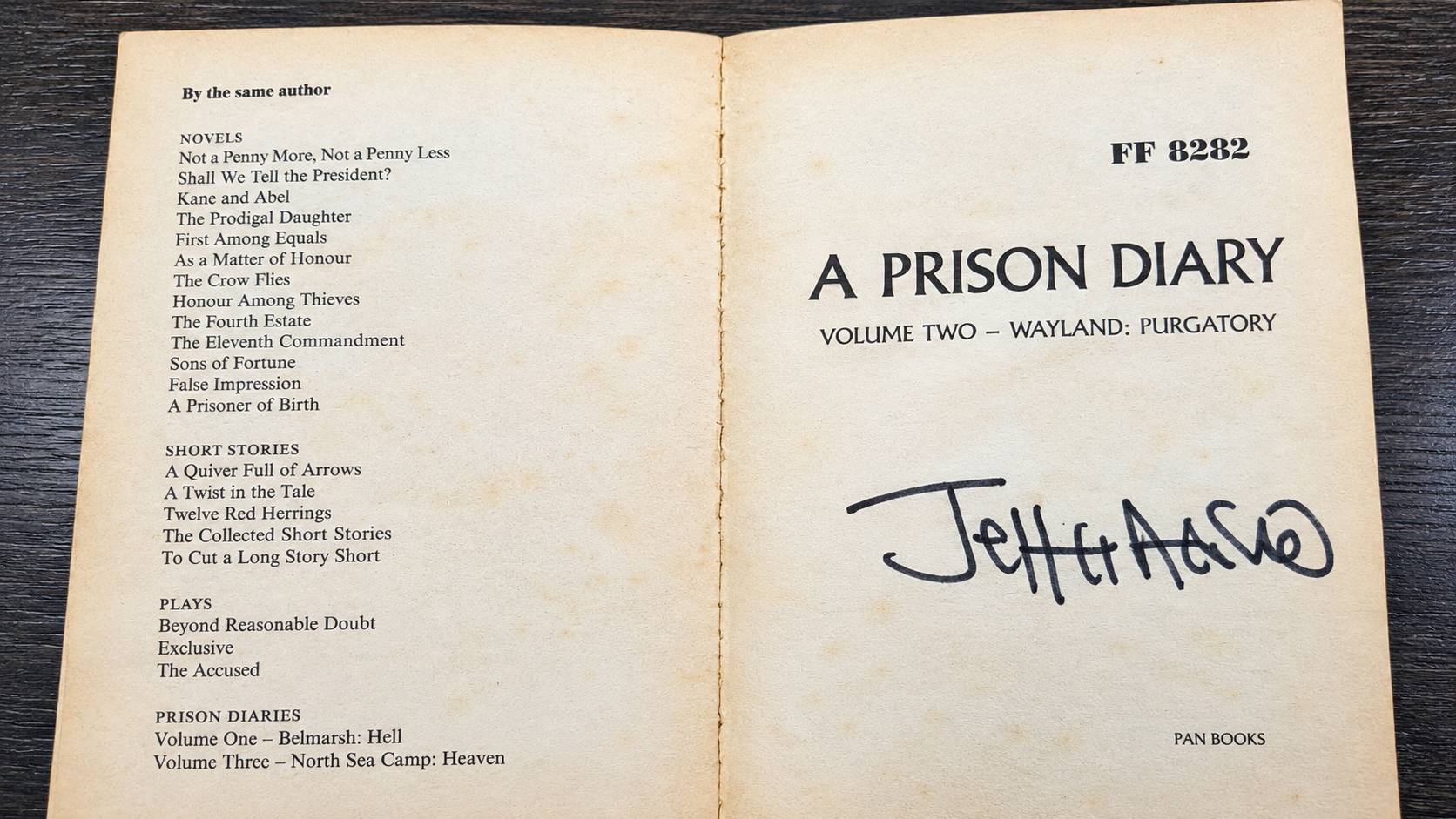
For someone who had admired his writing for years, meeting my favourite author was an unforgettable experience. I carried with me my copy of A Prison Diary: Volume Two – Wayland: Purgatory, and he graciously autographed it for me.
That signed book has remained one of the treasured possessions in my collection.
Today, his familiar signature on its ageing pages means infinitely more. It takes me back to that brief encounter in Mumbai and reminds me that sometimes the people we know through their words can, even through a short personal meeting, leave a lasting memory.
Jeffrey Archer and Chess — another special connection
There was another reason why Jeffrey Archer’s writing held a particular fascination for me.
As someone who has spent practically my entire life with chess, I was naturally delighted whenever I discovered the game appearing in the work of my favourite author!
And chess appeared in his stories more than once!!
Perhaps the best known to chess lovers is Checkmate, a delightful story in which a chess champion encounters an attractive young woman across the chessboard. He thinks he understands the game being played — both on and away from the board — only to discover that he himself has been an unsuspecting pawn in a much cleverer game.
It has everything one associates with Jeffrey Archer: confidence, calculation, deception and, finally, the unexpected twist.
But Checkmate was not his only brush with our game.
In The Red King, from Cat O’ Nine Tales, an English lord is desperately searching for the one missing piece required to complete a valuable antique chess set — the Red King. What follows, naturally, is a tale involving ingenuity, deception and another characteristically Archer conclusion.
There is also The Endgame, from To Cut a Long Story Short. Interestingly, the story opens over a chessboard, with Cornelius Barrington playing his old friend and solicitor Frank Vintcent and contemplating the approaching checkmate. The chess game becomes a fitting introduction to the much larger “endgame” that is about to unfold.
Perhaps chess suited Jeffrey Archer’s writing so naturally because the two have so much in common:
Strategy. Calculation. Deception. Sacrifice. The apparent advantage. The unexpected move. And finally, the twist that changes everything.
They are ingredients of a fascinating game of chess.
And they were ingredients that Jeffrey Archer mastered as a storyteller.
An email I never expected
In 2018, Indian Chess School was working on an ambitious project very close to my heart — the launch of a monthly chess magazine.
My dream was to create something more than a conventional magazine containing games, results and tournament reports. I wanted it to present chess in all its richness — its history, personalities, literature, culture, fascinating facts and, of course, instruction.
One of the proposed columns was called “Pen Power in Chess”, which would feature outstanding short stories and articles connected with chess.
There was one story I very much wanted to feature in our inaugural issue:
Jeffrey Archer’s Checkmate.
I decided to take a chance.
On 25 October 2018, I wrote to Sir Jeffrey through his official website. I introduced myself and Indian Chess School, explained our proposed magazine and requested permission to reproduce Checkmate.
I knew I was writing to one of the world’s most successful authors. I therefore sent the request more in hope than expectation.
What happened next pleasantly surprised me.
I received a prompt reply from his Personal Assistant, Alison Prince:
“Jeffrey is happy to give you permission to print his short story, CHECKMATE in this chess magazine only.”
The permission naturally came with the stipulation that the story could not be reproduced elsewhere or online and that the appropriate author and book credits should be given.
The email concluded simply:
“Best of luck with the magazine.”
Those may have been only a few words, but they meant a great deal to me.
Here was an internationally celebrated author, whose books I had read and collected for years, graciously agreeing to allow a chess magazine being planned by Indian Chess School in Mumbai to reproduce one of his stories.
I immediately wrote back expressing my gratitude and asking Alison to convey my sincere thanks to Sir Jeffrey.
I also mentioned something that made the correspondence particularly personal:
I had been fortunate enough to meet him in Mumbai and possessed an autographed copy of his A Prison Diary.
The magazine that never appeared
Unfortunately, despite all our preparations and enthusiasm, our proposed chess magazine could not take off in 2019.
And therefore, Checkmate was never published.
It has always remained one of those unfinished dreams.
But perhaps I should not call it unfinished.
The dream remains!!
Indian Chess School may yet bring out its chess magazine. And whenever that first issue eventually sees the light of day, it is my wish that Checkmate by Jeffrey Archer finds its rightful place in that inaugural issue, subject, of course, to reconfirming the necessary publication permission with his estate or publisher.
It would be a small tribute to the great storyteller who so graciously said “Yes” to us all those years ago.
A remarkable circle
Looking back today, I find the connections rather poignant.
I admired Jeffrey Archer as a reader.
I collected his books.
I met him personally in Mumbai and had my copy of A Prison Diary: Volume Two – Wayland: Purgatory autographed by him.
His experiences during imprisonment would later provide inspiration for stories in Cat O’ Nine Tales, the collection that includes the chess-connected The Red King.
And years later, through Indian Chess School, I approached him for permission to publish another of his chess stories — Checkmate — and received his gracious consent.
Literature and chess had somehow crossed paths repeatedly!!
For me, that makes the memory all the more special.
The storyteller lives on
To the world, Jeffrey Archer was one of the most widely read storytellers of his generation. His books travelled across countries, cultures and languages and entertained millions upon millions of readers.
To me, however, there will always be something more personal.
He will remain my favourite author — the writer whose books occupied a special place on my bookshelf; the celebrated storyteller whom I was fortunate to meet in Mumbai; the man whose autograph I proudly preserve; and the author who graciously permitted Indian Chess School to publish his wonderful chess story Checkmate.
The final page of his own extraordinary journey may have been turned.
But great storytellers never entirely leave us.
They remain on our bookshelves.
They remain in the characters they created.
They remain in the stories we read again and again.
And sometimes, they remain in something as simple and precious as a signature on an ageing page of a much-loved book!!
Rest in Peace, Sir Jeffrey Archer.
Your stories will continue to surprise, delight and inspire generations of readers — and somewhere, a game of Checkmate still awaits its first move in the pages of an Indian Chess School magazine.
Carl Adams and Kaeden Fyfield-Jones Earn Their First FIDE Ratings at the Chess Olympiad!!
It gives me immense pleasure to share another memorable outcome from the 46th FIDE World Chess Olympiad 2026 in Samarkand, Uzbekistan.
Two players from the St. Kitts and Nevis Open Team — Carl Victor Adams and Kaeden Fyfield-Jones — have earned their first FIDE Standard Ratings following their performances at the Olympiad.
This achievement is particularly satisfying because earning FIDE ratings for our unrated players was one of the objectives we had set before travelling to Samarkand.
From Newcomers to FIDE-Rated Players
St. Kitts and Nevis arrived at the Olympiad as one of the least experienced teams in the competition. The team had very limited exposure to international classical chess, and we knew from the outset that competing on the world’s biggest team-chess stage would be an enormous challenge.
But results were not our only measure of success.
Before the Olympiad, I had spoken about the opportunity to work with these players and our desire to help the unrated members of the team begin their international chess journey and, hopefully, earn their first FIDE ratings.
Today, seeing Carl and Kaeden officially FIDE rated makes that objective a reality.
The Promise Was Visible in Samarkand
Even during the difficult opening rounds, I could see that the results did not tell the complete story.
In my earlier report, “St. Kitts and Nevis Show Promise Despite Tough Start at Chess Olympiad,” I had written about the team’s limited tournament experience but also highlighted the promise being shown by the players.
Carl and Kaeden were among those who particularly impressed me during the competition. Their performances showed that the ability was there; what the players needed was greater tournament exposure, systematic training and opportunities to play stronger opposition.
The publication of their first FIDE ratings is therefore a tangible outcome of their Olympiad experience.
Carl Victor Adams — 1731
Playing on the demanding top board for St. Kitts and Nevis, Carl Victor Adams demonstrated patience, determination and the ability to fight long games against experienced international opposition.
One of the memorable moments of our campaign came in Round 3, when Carl defeated Christian Guanzon in a marathon 104-move encounter. It was precisely the kind of fighting performance that demonstrated what Carl was capable of.
His first FIDE Standard Rating of 1731 provides an excellent benchmark from which to continue his chess journey.
Kaeden Fyfield-Jones — 1536
Young Kaeden Fyfield-Jones, born in 2009, was another player who impressed me greatly in Samarkand.
Kaeden showed considerable potential during the Olympiad. There were moments when his ability to create opportunities against stronger and more experienced opposition became clearly visible.
His first FIDE Standard Rating of 1536 is an encouraging beginning. Being still very young, he has considerable time to develop his game, and with systematic training and regular tournament exposure, I believe he has the potential to progress much further.
And There Is More Talent Waiting
While Carl and Kaeden have achieved this milestone, I would also like to mention the other members of the St. Kitts and Nevis team.
There is considerable untapped talent in the squad. Nohar, in particular, impressed me immensely. Although he did not manage to secure his FIDE rating at this Olympiad, he is extremely talented, and I believe it is only a matter of time — and the right tournament opportunities — before he too becomes a FIDE-rated player.
The important task now is to provide these players with more opportunities to compete in rated tournaments and continue their development.
A Beginning, Not a Destination
A first FIDE rating is not the destination. It is the beginning of a new journey.
For Carl and Kaeden, 1731 and 1536 now become benchmarks against which they can measure their future progress.
The next challenge is to work harder, compete regularly, analyse their games seriously and continue improving. I hope earning their first FIDE ratings will give both players even greater motivation to set ambitious goals for themselves.
A Special Thank You to Ms. Della Stanley
I would also like to express my sincere gratitude to Ms. Della Stanley, Head of the St. Kitts and Nevis Chess Federation, for placing her trust and confidence in me and inviting me to serve as Coach-cum-Captain of the St. Kitts and Nevis Open Team at the 46th FIDE World Chess Olympiad.
Working with the team was a wonderful experience for me. I am particularly grateful to Della for keeping faith in me and giving me the opportunity to contribute to the development of these players.
Her commitment to creating more opportunities for the players, particularly exposure to rated tournaments and international competition, is extremely important for the future.
Under her inspirational and dedicated leadership, St. Kitts and Nevis chess is moving in the right direction, and I sincerely look forward to continuing our association and contributing towards the long-term development of the players and the growth of a strong chess culture in the country.
A Milestone to Celebrate
My heartiest congratulations to Carl Victor Adams and Kaeden Fyfield-Jones, their families, Ms. Della Stanley and the entire St. Kitts and Nevis Chess Federation.
For a developing chess nation, every new FIDE-rated player represents another step forward.
For Carl and Kaeden, the journey has only begun.
Congratulations, Carl and Kaeden! May 1731 and 1536 be the first numbers in a long journey of progress on the 64 squares!!
The Chess Course Featured as “Book of the Month” in UK’s ChessMoves
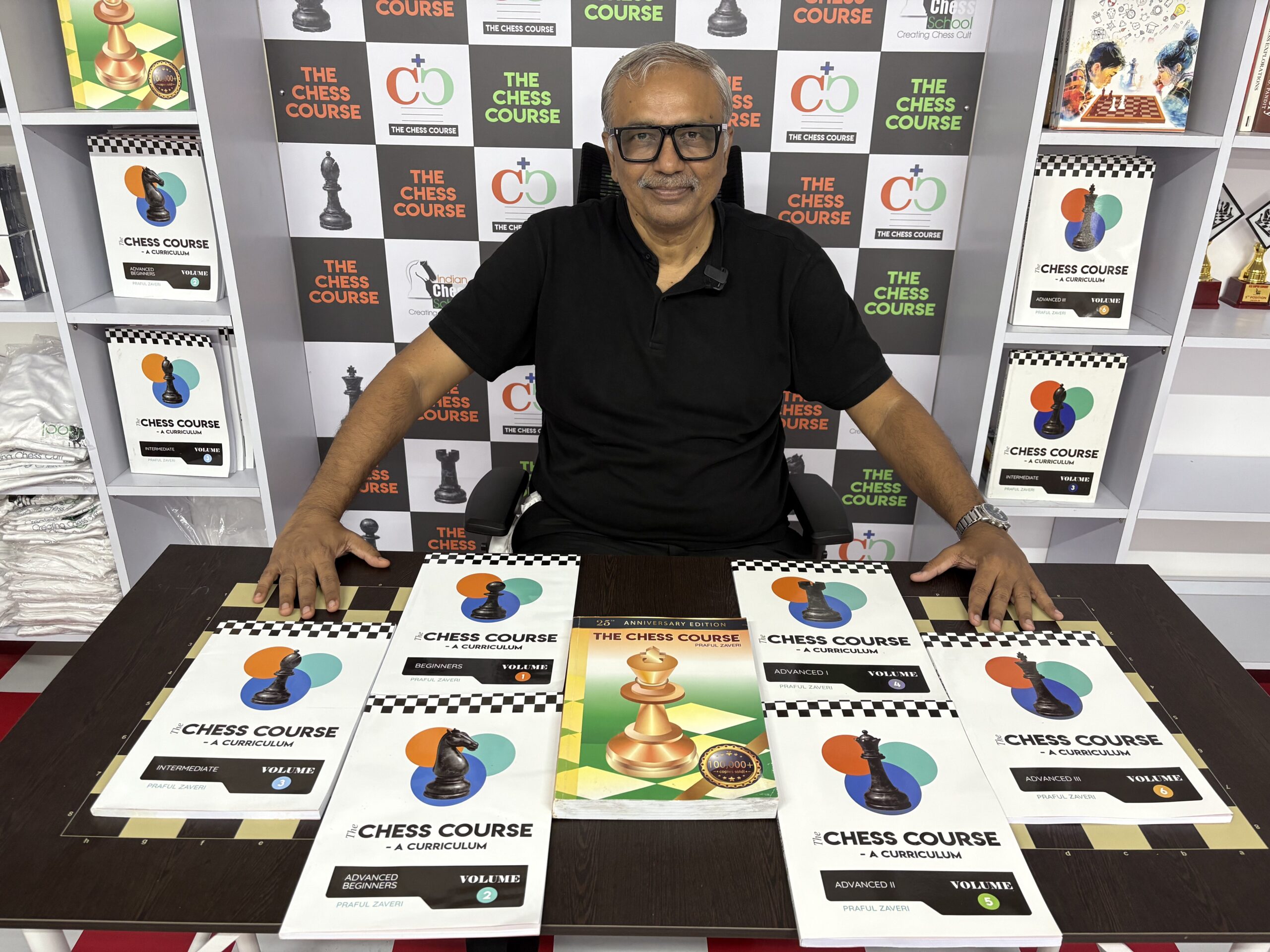
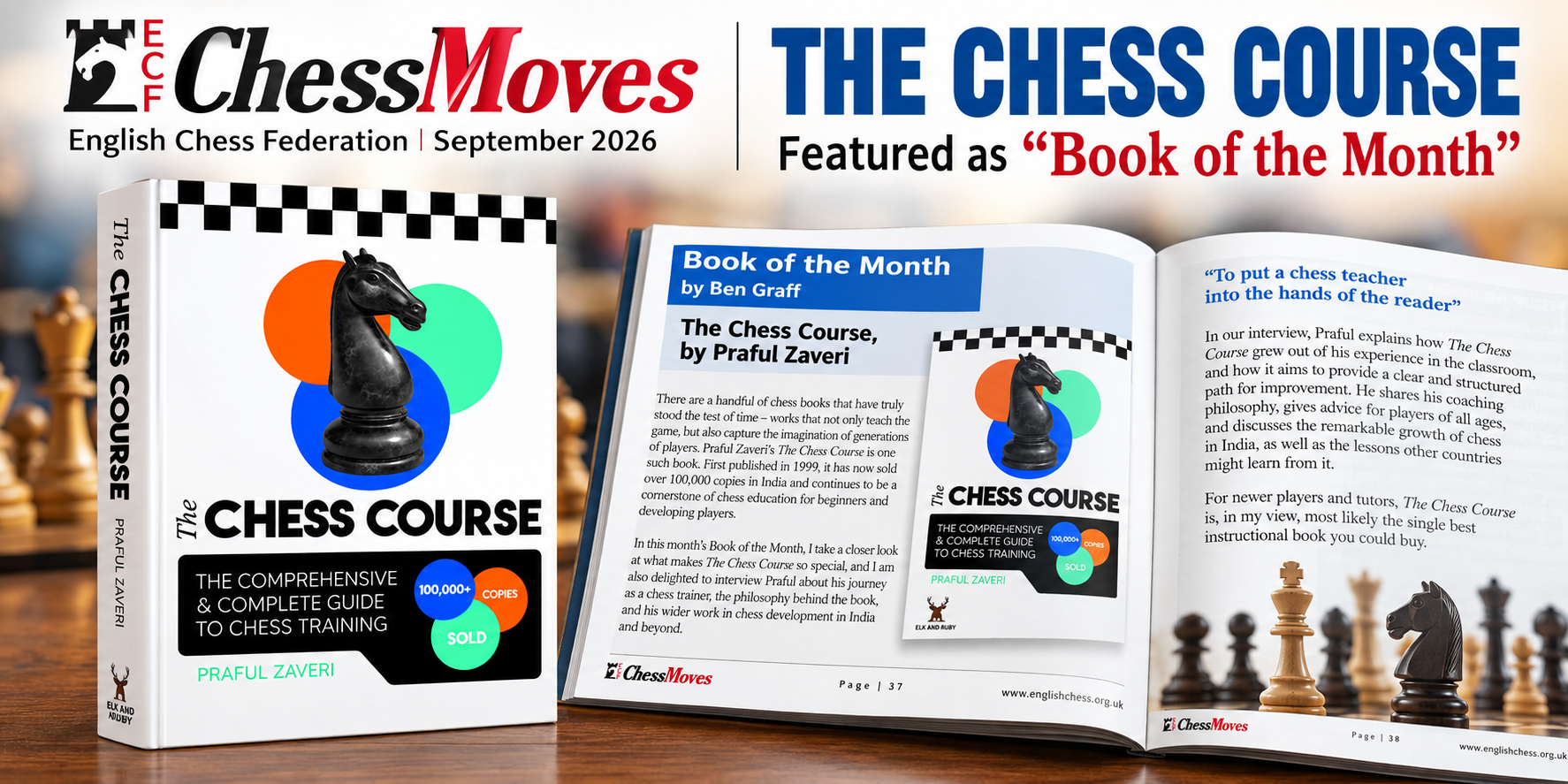
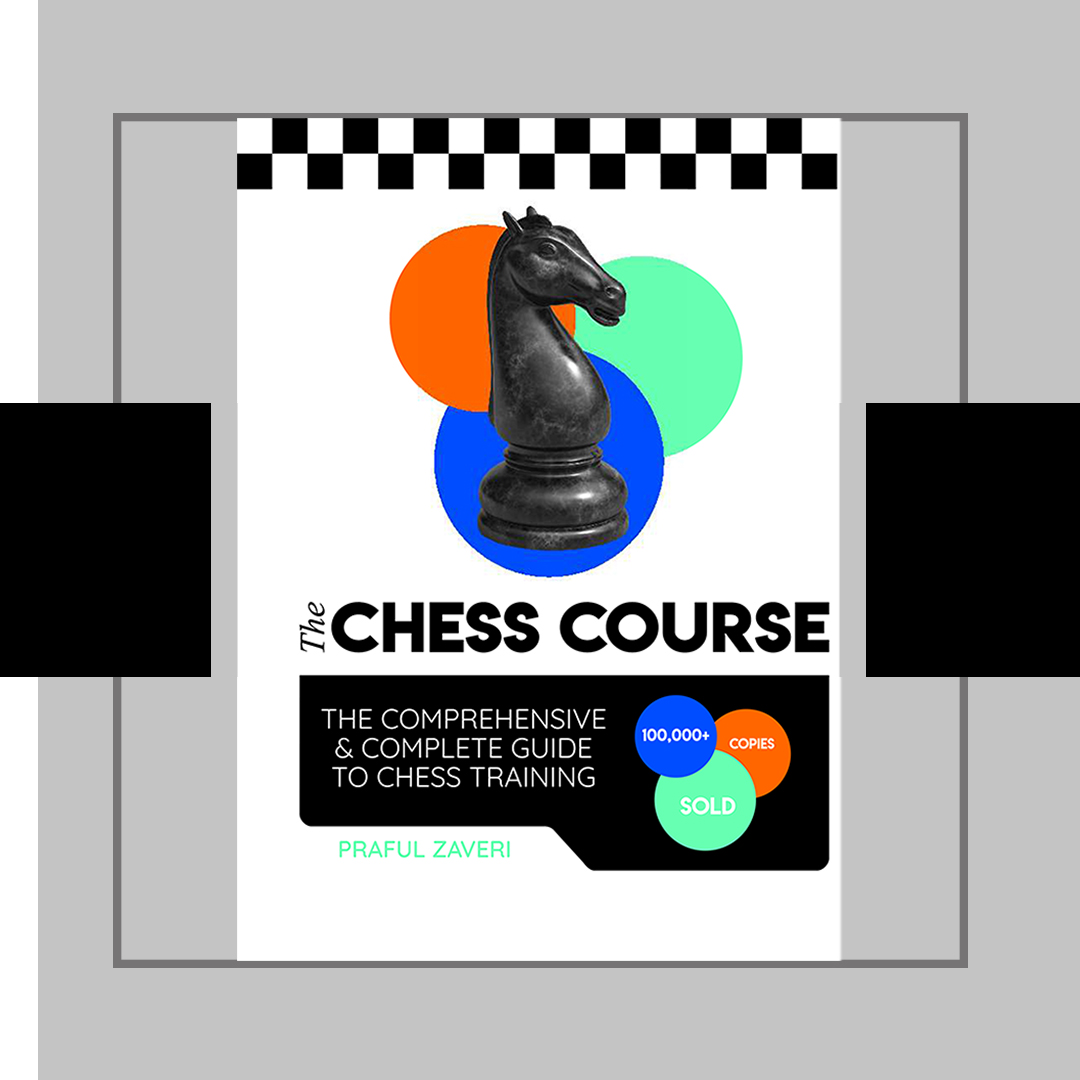
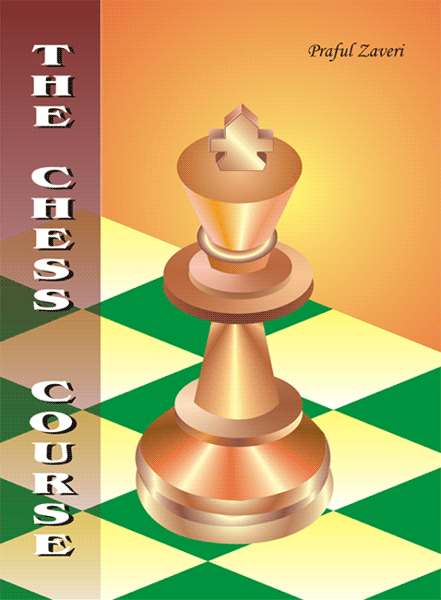
It is a moment of immense satisfaction for me personally, and for everyone associated with Indian Chess School, to see my book The Chess Course featured as the “Book of the Month” in the September 2026 edition of ChessMoves, the e-magazine of the English Chess Federation.
The feature has been written by Ben Graff and combines his review of The Chess Course with an extensive interview covering my journey as a chess trainer, the philosophy behind the book, chess development in India and my thoughts on how players of all ages can continue to improve.
Ben’s generous assessment of the book is deeply gratifying. He writes that The Chess Course belongs among the relatively small number of instructional books that have captured the imagination and helped generations learn the game. He also notes that, despite the enormous number of chess training books available today, The Chess Course has crossed 100,000 copies and continues to receive critical appreciation.
Perhaps the comment that touched me most was his conclusion that for newer players and tutors, The Chess Course is “most likely the single best instructional book you could buy.” ChessMoves-September-26
The Journey from a Classroom in Mumbai
The interview gave me an opportunity to look back at a journey that began when I started coaching chess in 1995.
What began as a passion for teaching gradually developed into an effort to create a structured method of chess education. This eventually led to the establishment of Indian Chess School, through which we have taught more than 5,000 students, trained over 100 chess trainers and introduced structured chess programmes in more than ten schools in Mumbai.
During the interview, I explained the philosophy that has guided my coaching throughout these years:
“Chess must be taught step by step, with a clear structure and purpose.”
A concept, in my view, should first be understood, then demonstrated through carefully chosen examples, and finally reinforced through exercises and practical play.
That philosophy ultimately became the foundation of The Chess Course.
Putting a Chess Teacher into the Hands of the Reader
One sentence from my interview was chosen by ChessMoves to introduce the feature:
“That became the purpose of The Chess Course: in a sense, to put a chess teacher into the hands of the reader.”
That perhaps describes the book better than anything else I could say about it.
The Chess Course grew out of lessons, examples and exercises developed for my own students over many years. These were continuously refined according to what worked in the classroom and what did not.
The book is therefore not intended simply to be read. It is designed as a complete learning programme.
It is divided into six progressive sections comprising 75 training sessions. My recommendation to readers is to begin at the start, study each lesson carefully, attempt the exercises that follow, check the answers and honestly assess their performance. Students can then record their marks in the Course Completion Report. ChessMoves-September-26
There is No Substitute for Hard Work
Ben also asked me what advice I would give players who want to improve and whether adults can continue improving at chess.
My answer was simple: there is no substitute for hard work.
Whatever one’s age or playing strength, improvement comes through consistent and purposeful effort – studying one’s own games, especially losses, identifying weaknesses, working on calculation and fundamental positions, and playing regularly in serious competition.
Age should never become a psychological barrier. Chess history itself contains examples of players who developed comparatively late, including the great Mikhail Chigorin. Improvement itself has no age limit.
India’s Chess Revolution
The interview also gave me an opportunity to discuss the extraordinary growth of chess in India.
Viswanathan Anand was the great catalyst who made generations of Indian children believe that reaching the very top of world chess was possible. Today, players such as Gukesh, Praggnanandhaa and Divya Deshmukh are providing fresh inspiration.
But champions alone do not create a chess culture. India also has a robust competitive structure, with national championships across age groups and a huge number of FIDE-rated tournaments providing young players with regular competitive opportunities.
In discussing British chess, I recalled the formidable tradition represented by players such as Nigel Short, John Nunn and Michael Adams, while also pointing to the exciting new generation represented by Shreyas Royal and Bodhana Sivanandan.
The central message is one I strongly believe in: talent needs opportunity.
Chess Has Given Me Far More Than I Could Give Back
Towards the end of the interview, I was asked for my final thoughts on chess and chess development.
My answer came from the heart:
“Chess has given me far more than I could ever give back to it.”
Even after more than three decades as a coach, author and organiser, I still experience the same excitement when a child understands a chess idea for the first time.
Champions inspire us, but lasting chess cultures are built at the grassroots – through good teachers, structured learning, schools, clubs and regular opportunities to play.
Ultimately, chess is much more than sixty-four squares and thirty-two pieces. It teaches us to think before we act, accept responsibility for our decisions, respect our opponents and begin again after defeat.
These are lessons not merely for becoming better chess players, but perhaps for becoming better human beings as well. ChessMoves-September-26
My Gratitude
I extend my heartfelt thanks to Ben Graff for his extremely generous review and for giving me the opportunity to share my journey and thoughts with the readers of ChessMoves.
My sincere thanks also go to Ilan Rubin and Elk and Ruby Publishing House for taking The Chess Course to readers across the UK, Europe and the USA. There can be few greater satisfactions for a chess trainer and author than seeing lessons that began in a classroom in Mumbai reaching chess enthusiasts thousands of miles away.
The complete feature, including Ben Graff’s review and my interview, can be read in the September 2026 edition of ChessMoves.
♟️ INDIA ON THE PODIUM IN BOTH SECTIONS AT THE 46th CHESS OLYMPIAD!
We may not have been able to defend the historic double gold won at Budapest 2024, but India has once again returned from the Chess Olympiad with plenty to celebrate!
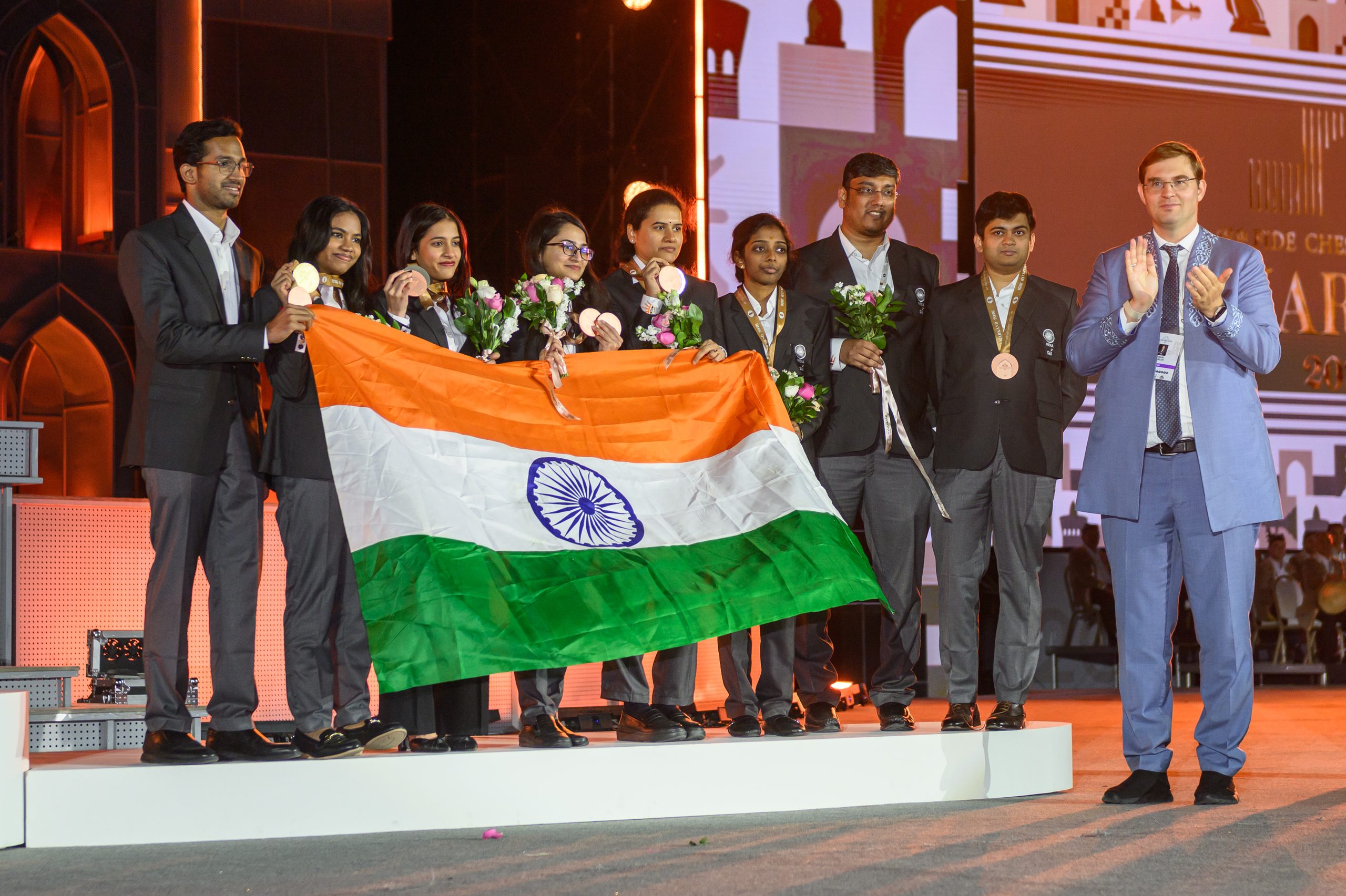
At the 46th FIDE Chess Olympiad in Samarkand, India finished on the podium in both sections:
The margins at the top were extremely small. In the Open section, hosts Uzbekistan produced a superb performance to win gold with 20 match points. India and Germany finished with 18 points each, with India taking silver on tiebreak.
OPEN PODIUM 🥇 Uzbekistan – 20 points 🥈 India – 18 points 🥉 Germany – 18 points
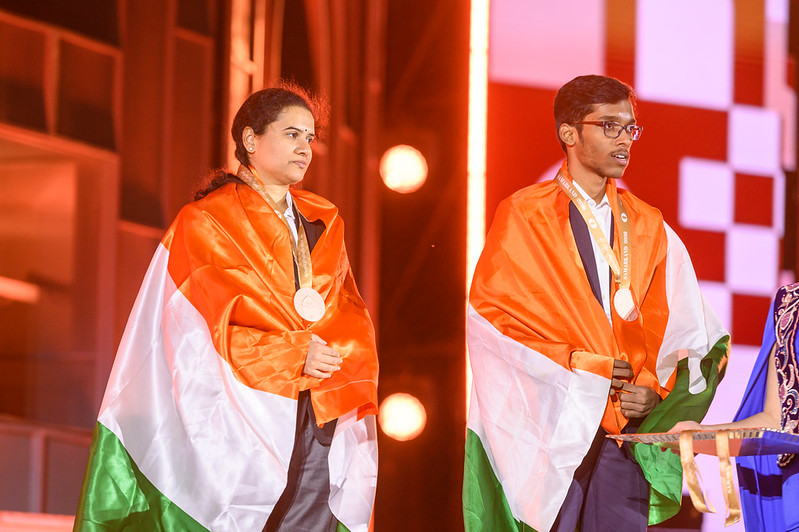
One of the most encouraging signs for India was the return to strong form of World Champion D. Gukesh. Playing on Board 4, Gukesh scored an excellent 8.5/11 to win the individual Silver Medal. His form comes at an important time with his World Championship title defence just two months away.
R. Praggnanandhaa, solid as ever on the demanding top board, added an individual Bronze Medal.
In the Women’s section, there may be a little disappointment as India entered the Olympiad as the top seeds and defending champions. Nevertheless, finishing with a team bronze in such a fiercely contested Olympiad is another podium finish for Indian chess.
WOMEN’S PODIUM 🥇 China – 20 points 🥈 Kazakhstan – 18 points 🥉 India – 17 points
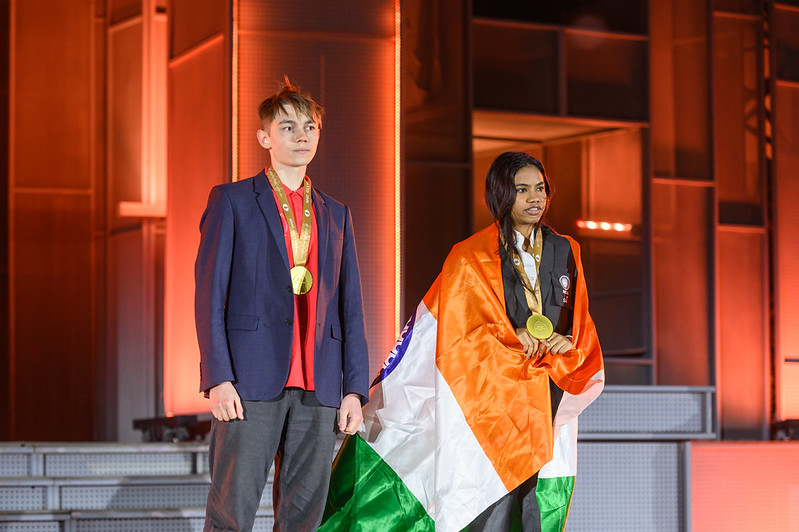
The find of the Olympiad for India was undoubtedly IM Savitha Shri B, who produced a phenomenal 8.5/9 on Board 5 — eight wins, one draw and no losses — to capture the individual GOLD MEDAL! 🥇
India also collected three more individual medals in the Women’s section:
🥉 R. Praggnanandhaa – Bronze, Board 1 🥈 D. Gukesh – Silver, Board 4
That makes it two team medals and six individual board medals for India! 🇮🇳
And there is another achievement to celebrate — India retained the Nona Gaprindashvili Trophy for the best combined performance across the Open and Women’s sections, making it three consecutive Olympiads that India has won this prestigious honour.
Budapest 2024 gave us an unforgettable double gold. Samarkand 2026 has given us another reminder of the extraordinary depth of Indian chess!!
Congratulations Team India! 🇮🇳♟️
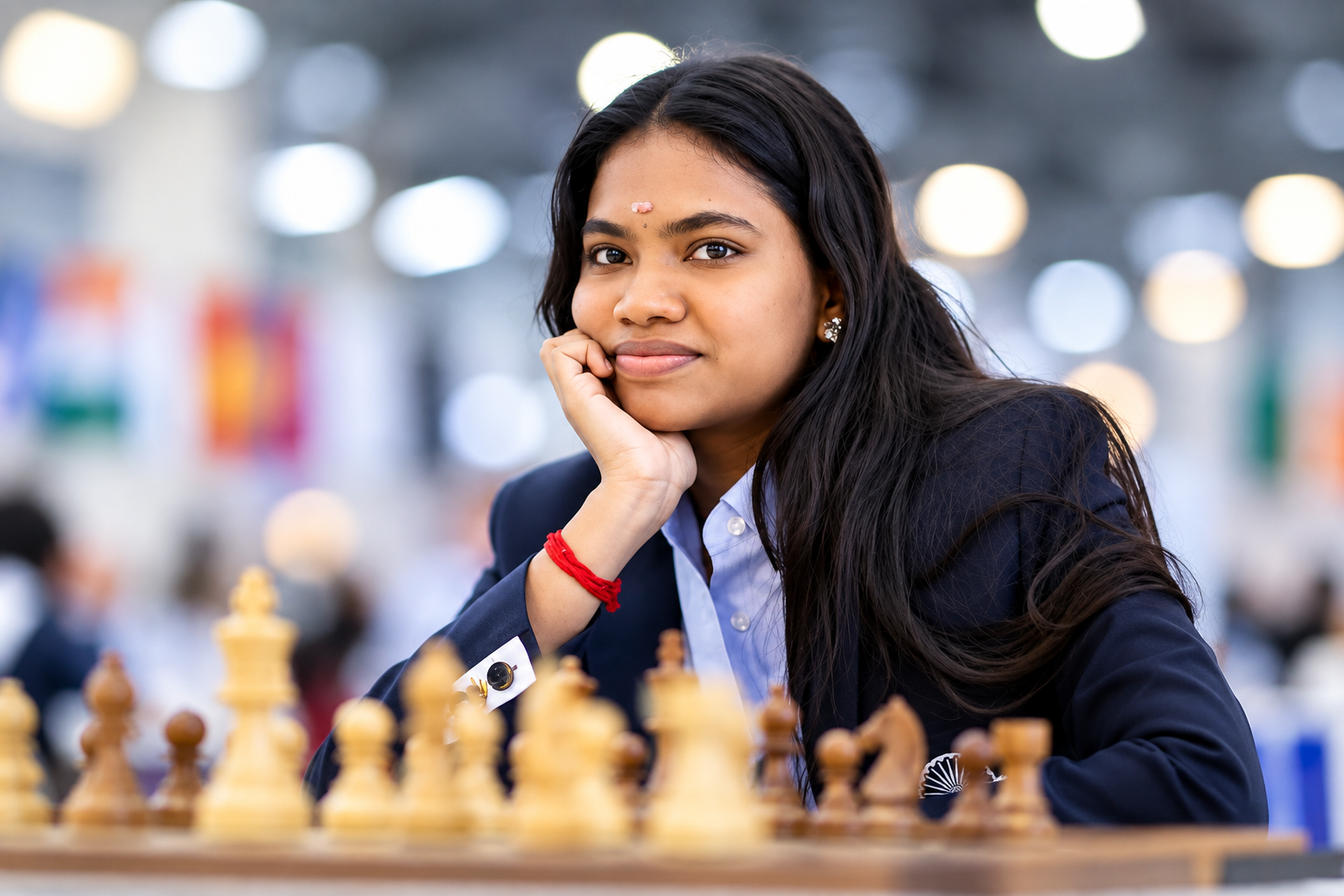
📸 Photo: IM Savitha Shri B — India’s individual Gold Medal winner on Board 5
25 Years of The Chess Course – Part 1: How It All Began
The story of how simple classroom notes planted the seed for a book that would go on to sell more than 1,00,000 copies
Some journeys begin with a carefully drawn-out plan. Others begin almost by accident.
The journey of The Chess Course belongs to the latter.
When I started chess training in 1995, I had no ambition to become an author. In fact, the thought of writing a chess book had never crossed my mind.
All I wanted to do was teach chess as well as I possibly could.
It Started With a Simple Thought
I have always believed in striving for perfection in whatever I do.
When I started training students in 1995, one thought came to my mind: if I taught a particular chapter in class, shouldn’t my students also have proper notes that they could take home, revise and refer to later?
The idea was simple.
Putting it into practice in the mid-1990s was not.
Today, a chess trainer can create a position, add annotations, export diagrams and prepare professional-looking study material within minutes. At that time, I had no idea how to produce even a single page containing chess diagrams and explanatory text.
So I began experimenting.
Fritz, a Floppy Disk and Print Screen!
Around the same period, I obtained a copy of Fritz, the chess-playing computer program, on a floppy disk.
I started using the program and gradually discovered a rather rudimentary way of creating chess diagrams.
I would set up the required position on the computer screen and use the Print Screen function to capture it. The diagram would then be saved as a bitmap image, which I could print.
That solved one part of the problem.
The next challenge was adding the lesson itself.
For the explanatory text, I began using Microsoft Word. With a combination of the chess diagrams and my written explanations, I was eventually able to prepare an A4 page containing three chess diagrams along with notes.
Looking back from today’s world of sophisticated chess software and publishing tools, the process sounds almost primitive.
But to me, that first page was special.
I had created my first chess note!
From One Page to Nearly 200
I continued preparing notes for the chapters I taught.
A typical chapter consisted of around 18 chess positions spread over six A4 pages. Once a chapter was completed, I would make photocopies according to the number of students in my class and distribute them.
The students liked the notes.
That encouraged me to continue.
One lesson became another. One chapter became another. Slowly, the collection kept growing.
By the end of 1998, I had accumulated nearly 200 pages of chess lessons.
And then the success of the notes created an unexpected problem.
Whenever a new student joined my classes, he or she naturally wanted the notes from the lessons that had already been taught. I would have to search through my growing collection, locate the relevant pages, print them and make photocopies again.
As the volume of material increased, this became increasingly difficult to manage.
Yet even then, I was thinking about how to organise my teaching material.
I was still not thinking about writing a book.
Then Came a Suggestion I Had Never Expected
At the time, I was working at the Sports Desk of the Life Insurance Corporation of India (LIC).
My friend and colleague, International Master Vishal Sareen, happened to see the chess notes I had prepared.
After going through the material, he made a suggestion that took me completely by surprise.
“Why don’t you bring this out as a book?”
I laughed.
The suggestion seemed almost absurd to me.
I was a modest chess player. I did not even have a FIDE rating at the time. I asked Vishal not to make fun of an ordinary chess player by suggesting that I should write a chess book.
His reply was something I would never forget:
“Prafulbhai, I have not seen better content than this for a chess player who wants to start his chess journey.”
For nearly four years, I had looked at those pages simply as notes for my students.
Vishal Sareen looked at the same pages…
and saw a book!
That suggestion would soon change the course of my life in chess!
To be continued…
In Part 2: What happened when I finally took Vishal’s suggestion seriously? How did hundreds of individual classroom notes begin taking the shape of a structured book? And there is an interesting story behind how the book eventually got its name — The Chess Course.