

THE BATTLE FOR THE WORLD CHESS CROWN
Chapter 1: Two Young Minds, One Crown
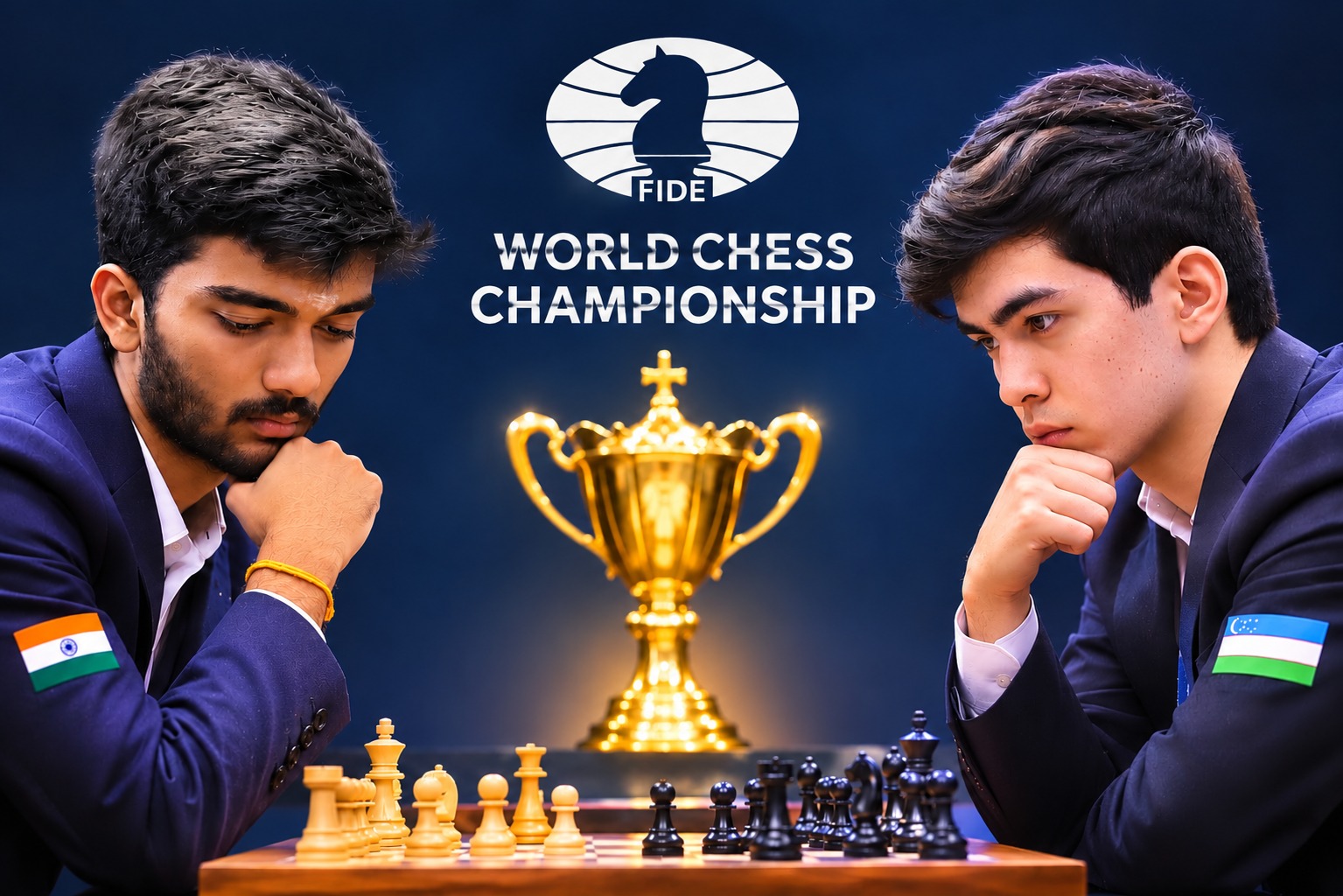
140 years after the first World Chess Championship, two 20-year-olds from India and Uzbekistan prepare to battle for the most coveted crown in chess.
By Praful Zaveri
When Wilhelm Steinitz, aged 49, and Johannes Zukertort, aged 43, sat across a chessboard in New York on January 11, 1886, to contest the first official World Chess Championship, little would they have imagined that 140 years later, two 20-year-olds from Asia would battle for the very crown they had fought for.
The combined age of the two contestants in 1886 was 92 years. In Geneva, it will be just 40!
In its glorious history spanning 140 years, the classical World Chess Championship crown has adorned the heads of just 18 individuals — Wilhelm Steinitz, Emanuel Lasker, José Raúl Capablanca, Alexander Alekhine, Max Euwe, Mikhail Botvinnik, Vasily Smyslov, Mikhail Tal, Tigran Petrosian, Boris Spassky, Bobby Fischer, Anatoly Karpov, Garry Kasparov, Vladimir Kramnik, Viswanathan Anand, Magnus Carlsen, Ding Liren and the reigning champion, Dommaraju Gukesh.
These champions have represented countries including Austria, Germany, Cuba, Russia, France, the Netherlands, the erstwhile Soviet Union, the United States, India, Norway and China, a remarkable journey across continents and generations.
For India, the country that gave chess to the world, it is a matter of immense pride to have produced two world champions — Viswanathan Anand, the architect of India’s modern chess revolution, and Gukesh, its most spectacular young ambassador.
For much of the twentieth century, the chess world was dominated by the Soviet Union. Today, the emergence of India and Uzbekistan as global chess powerhouses signifies a remarkable shift in the balance of power.
On December 12, 2024, the chess world witnessed an emotional moment in Singapore when an 18-year-old Gukesh defeated China’s Ding Liren in the final game of their match, becoming the youngest undisputed World Chess Champion in history and breaking a record held by the legendary Garry Kasparov for nearly four decades.
Two years later, the young man who hunted for the crown must now protect it.
However, the road to his first title defence has been anything but smooth. A string of disappointing performances saw Gukesh’s rating and world ranking tumble, prompting many critics to write him off. Questions were raised about whether the young champion could withstand the pressure of defending his crown.
But champions are not merely defined by their victories. They are defined by their ability to rise after setbacks.
And Gukesh did precisely that!
At the 46th FIDE Chess Olympiad in Samarkand, Uzbekistan, in September 2026, Gukesh came roaring back, scoring an impressive 8½ points from 11 games, including seven victories. His fighting performance helped India clinch the team silver medal, while he himself bagged the individual silver medal on Board Four.
It was a timely reminder that writing off Gukesh could be a costly mistake.
I have known Gukesh since he was just nine years old, and if there is one thing I can say with conviction, it is this: Never underestimate this young man!
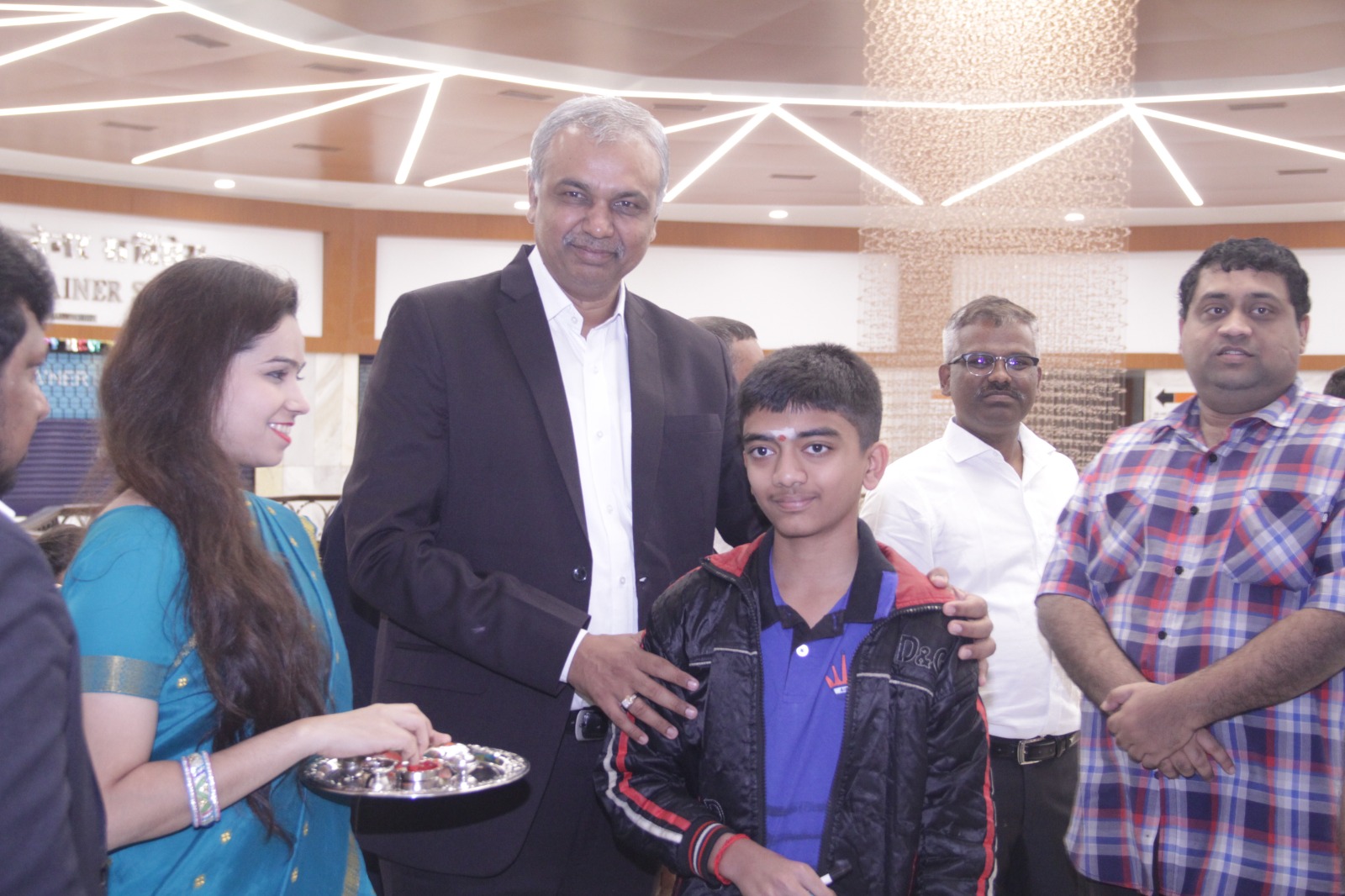
Behind his calm demeanour lies a competitor with nerves of steel, extraordinary resilience and an unshakeable willingness to fight. He does not shy away from complications on the chessboard. On the contrary, he thrives on the challenge of finding his way through them. His greatest strength is not merely his chess knowledge but his refusal to surrender when the odds appear stacked against him.
Standing between Gukesh and a successful defence is Uzbekistan’s Javokhir Sindarov, whose rise to international prominence has a fascinating Indian connection.
It was at the 2022 Chess Olympiad in Chennai that the youthful Uzbek team stunned the chess world by winning the gold medal. The then 16-year-old Sindarov played a crucial role in that historic triumph, scoring 6½ points from 10 games.
Three years later, Sindarov returned to India to conquer the 2025 FIDE World Cup in Goa. He followed it with a magnificent unbeaten performance at the 2026 Candidates Tournament in Cyprus, scoring an impressive 10 points from 14 games to earn the right to challenge the reigning world champion.
The 46th Olympiad in Samarkand further underlined Uzbekistan’s growing supremacy in world chess. The hosts captured the team gold medal, while Sindarov added an individual bronze on Board Two.
Interestingly, the two protagonists of the forthcoming World Championship were part of the gold- and silver-medal-winning teams in Samarkand. Their individual battle in Geneva now promises to add another fascinating chapter to this emerging Asian chess rivalry.
Sindarov arrives in Geneva enjoying a commanding 72-point rating advantage over Gukesh. Yet the Indian champion possesses something his challenger does not — the invaluable experience of having fought and won a World Championship match.
The battlefield for this historic encounter is equally fascinating. The Fondation Martin Bodmer in Cologny, Geneva, houses some of humanity’s priceless manuscripts and literary treasures. Amid centuries of recorded human wisdom, two young minds will attempt to script another chapter of history.
The financial stakes have also undergone a staggering transformation over 140 years. When Steinitz and Zukertort contested the inaugural championship in 1886, the stakes amounted to US$4,000, with US$2,000 contributed by each side.
Fast-forward to Geneva 2026, and the prize fund stands at a whopping US$2.5 million!
Interestingly, the prize distribution is designed to encourage fighting chess. Under the standard arrangement, every decisive victory earns the winner US$200,000, with the remaining prize money divided equally between the contestants.
The opening ceremony will be held at the historic Palais des Nations in Geneva on November 22, while the first of the 14 classical games will commence on November 24 at 7.30 pm Indian time.
Each player will have 120 minutes to complete the first 40 moves, followed by an additional 30 minutes, with a 30-second increment per move beginning from move 41.
In another measure designed to encourage fighting chess, the players cannot agree to a draw before Black has completed his 40th move.
The first player to reach 7½ points will claim the crown. The final classical game, if required, is scheduled for December 11. Should the match end in a 7–7 deadlock, rapid and blitz tie-breaks on December 12 will decide the champion.
But beyond the prize money, the ratings and the records lies a fascinating human drama.
Two years ago, Gukesh travelled to Singapore with a dream of becoming the king of chess. Today, he travels to Geneva carrying the crown and the aspirations of a billion-plus Indians.
Across the chessboard sits a young man who is as hungry for glory as Gukesh was in 2024.
The ratings may favour Sindarov. The recent form book may raise questions about Gukesh. But having watched this young champion grow from a nine-year-old boy into a world-beater, I would caution against judging him by numbers alone.
For Gukesh, no position is lost until the last possibility has been exhausted.
Will the hunter of yesterday successfully defend his kingdom against the hunter of today?
The answers will begin unfolding on November 24.
The next move awaits. So does the next chapter!
About the Author
Praful Zaveri is a FIDE (International Chess Federation)-certified trainer, arbiter and international organiser. He has served as coach of Indian youth chess teams on five occasions and most recently coached the St. Kitts and Nevis team at the 46th FIDE Chess Olympiad in Uzbekistan.
Founder of Indian Chess School, he has trained more than 10,000 children during his distinguished four-decade association with chess. He is also the author of 10 chess books, including the acclaimed The Chess Course, which has sold over 100,000 copies.
He can be reached at prafulzaveri@indianchessschool.com
