• CHECKOUT FOR THE AMAZING RANGE OF NEW PRODUCTS ON OUR ONLINE STORE
  • ICS CENTRE AT BORIVALI (W) NOW OPEN FOR TRAINING & TOURNAMENTS
  • INTRODUCING SOON - CLASSICAL CHESS TOURNAMENTS ON ROUND-ROBIN BASIS AS PER RATING GROUP
  • QUALITY ONLINE CHESS TRAINING AT AFFORDABLE RATES — FREE TRIAL AVAILABLE
  • SUNDAY CHESS FUN @ ICS BORIVALI — PLAY, LEARN, ANALYSE & COMPETE!
Skip to main content

Indian Chess School

Remembering Sir Jeffrey Archer — A Master Storyteller and a Special Connection Through Chess!!

Some losses feel strangely personal, even when the person belongs to the whole world.

The passing of Sir Jeffrey Archer, my favourite author, has left me deeply saddened. Over the years, I have read and collected his books and admired his extraordinary gift for storytelling — the seemingly simple plots, the carefully placed clues, the suspense and, above all, those wonderful twists that so often arrived when you least expected them.

But my association with Jeffrey Archer went a little beyond being one among his millions of readers. I was fortunate enough to meet him personally, and years later, chess created another memorable connection between us.

A treasured meeting in Mumbai

In 2014, I had the good fortune of meeting Jeffrey Archer during his visit to Mumbai.

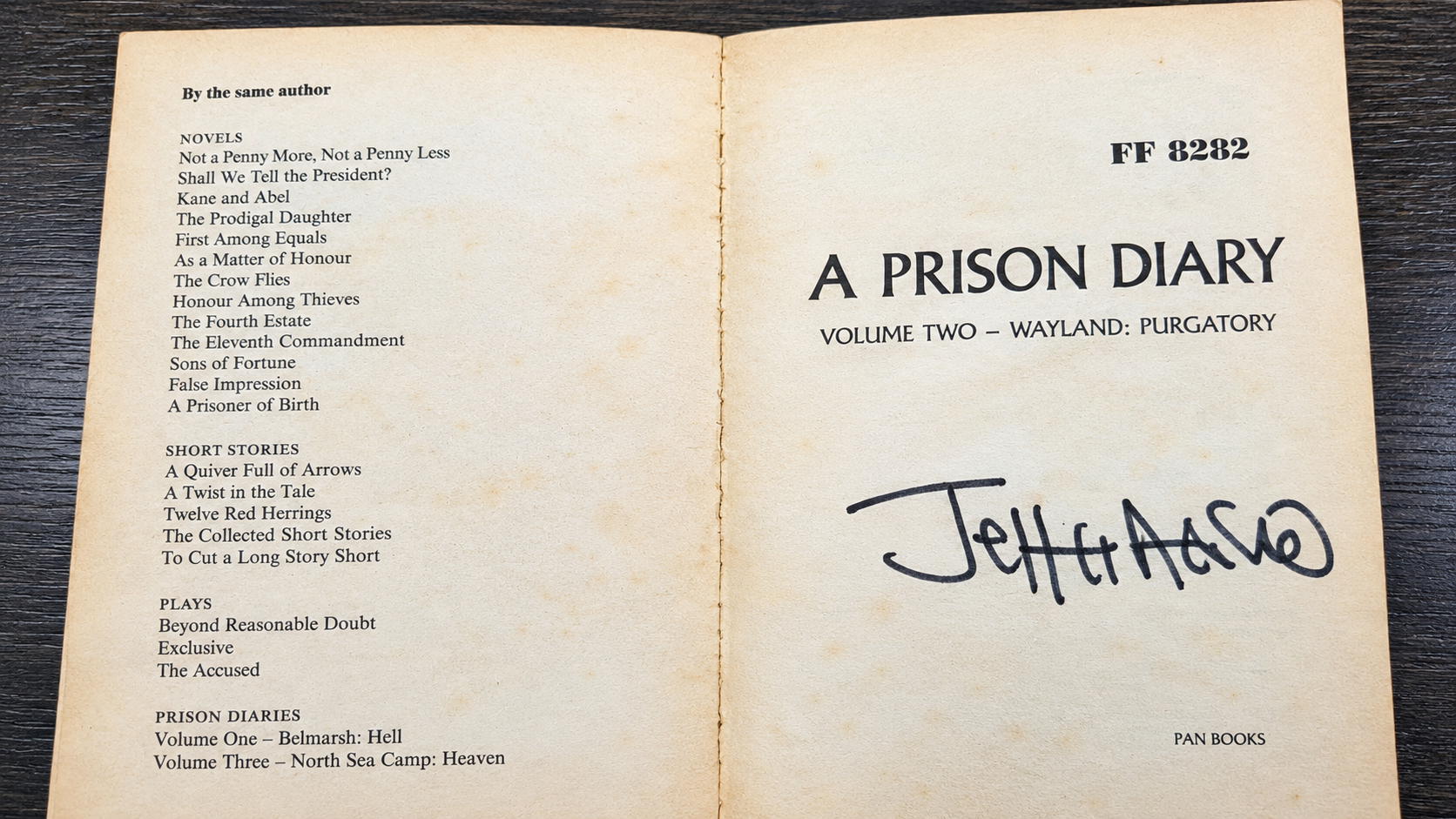
For someone who had admired his writing for years, meeting my favourite author was an unforgettable experience. I carried with me my copy of A Prison Diary: Volume Two – Wayland: Purgatory, and he graciously autographed it for me.

That signed book has remained one of the treasured possessions in my collection.

Today, his familiar signature on its ageing pages means infinitely more. It takes me back to that brief encounter in Mumbai and reminds me that sometimes the people we know through their words can, even through a short personal meeting, leave a lasting memory.

Jeffrey Archer and Chess — another special connection

There was another reason why Jeffrey Archer’s writing held a particular fascination for me.

As someone who has spent practically my entire life with chess, I was naturally delighted whenever I discovered the game appearing in the work of my favourite author!

And chess appeared in his stories more than once!!

Perhaps the best known to chess lovers is Checkmate, a delightful story in which a chess champion encounters an attractive young woman across the chessboard. He thinks he understands the game being played — both on and away from the board — only to discover that he himself has been an unsuspecting pawn in a much cleverer game.

It has everything one associates with Jeffrey Archer: confidence, calculation, deception and, finally, the unexpected twist.

But Checkmate was not his only brush with our game.

In The Red King, from Cat O’ Nine Tales, an English lord is desperately searching for the one missing piece required to complete a valuable antique chess set — the Red King. What follows, naturally, is a tale involving ingenuity, deception and another characteristically Archer conclusion.

There is also The Endgame, from To Cut a Long Story Short. Interestingly, the story opens over a chessboard, with Cornelius Barrington playing his old friend and solicitor Frank Vintcent and contemplating the approaching checkmate. The chess game becomes a fitting introduction to the much larger “endgame” that is about to unfold.

Perhaps chess suited Jeffrey Archer’s writing so naturally because the two have so much in common:

Strategy. Calculation. Deception. Sacrifice. The apparent advantage. The unexpected move. And finally, the twist that changes everything.

They are ingredients of a fascinating game of chess.

And they were ingredients that Jeffrey Archer mastered as a storyteller.

An email I never expected

In 2018, Indian Chess School was working on an ambitious project very close to my heart — the launch of a monthly chess magazine.

My dream was to create something more than a conventional magazine containing games, results and tournament reports. I wanted it to present chess in all its richness — its history, personalities, literature, culture, fascinating facts and, of course, instruction.

One of the proposed columns was called “Pen Power in Chess”, which would feature outstanding short stories and articles connected with chess.

There was one story I very much wanted to feature in our inaugural issue:

Jeffrey Archer’s Checkmate.

I decided to take a chance.

On 25 October 2018, I wrote to Sir Jeffrey through his official website. I introduced myself and Indian Chess School, explained our proposed magazine and requested permission to reproduce Checkmate.

I knew I was writing to one of the world’s most successful authors. I therefore sent the request more in hope than expectation.

What happened next pleasantly surprised me.

I received a prompt reply from his Personal Assistant, Alison Prince:

“Jeffrey is happy to give you permission to print his short story, CHECKMATE in this chess magazine only.”

The permission naturally came with the stipulation that the story could not be reproduced elsewhere or online and that the appropriate author and book credits should be given.

The email concluded simply:

“Best of luck with the magazine.”

Those may have been only a few words, but they meant a great deal to me.

Here was an internationally celebrated author, whose books I had read and collected for years, graciously agreeing to allow a chess magazine being planned by Indian Chess School in Mumbai to reproduce one of his stories.

I immediately wrote back expressing my gratitude and asking Alison to convey my sincere thanks to Sir Jeffrey.

I also mentioned something that made the correspondence particularly personal:

I had been fortunate enough to meet him in Mumbai and possessed an autographed copy of his A Prison Diary.

The magazine that never appeared

Unfortunately, despite all our preparations and enthusiasm, our proposed chess magazine could not take off in 2019.

And therefore, Checkmate was never published.

It has always remained one of those unfinished dreams.

But perhaps I should not call it unfinished.

The dream remains!!

Indian Chess School may yet bring out its chess magazine. And whenever that first issue eventually sees the light of day, it is my wish that Checkmate by Jeffrey Archer finds its rightful place in that inaugural issue, subject, of course, to reconfirming the necessary publication permission with his estate or publisher.

It would be a small tribute to the great storyteller who so graciously said “Yes” to us all those years ago.

A remarkable circle

Looking back today, I find the connections rather poignant.

I admired Jeffrey Archer as a reader.

I collected his books.

I met him personally in Mumbai and had my copy of A Prison Diary: Volume Two – Wayland: Purgatory autographed by him.

His experiences during imprisonment would later provide inspiration for stories in Cat O’ Nine Tales, the collection that includes the chess-connected The Red King.

And years later, through Indian Chess School, I approached him for permission to publish another of his chess stories — Checkmate — and received his gracious consent.

Literature and chess had somehow crossed paths repeatedly!!

For me, that makes the memory all the more special.

The storyteller lives on

To the world, Jeffrey Archer was one of the most widely read storytellers of his generation. His books travelled across countries, cultures and languages and entertained millions upon millions of readers.

To me, however, there will always be something more personal.

He will remain my favourite author — the writer whose books occupied a special place on my bookshelf; the celebrated storyteller whom I was fortunate to meet in Mumbai; the man whose autograph I proudly preserve; and the author who graciously permitted Indian Chess School to publish his wonderful chess story Checkmate.

The final page of his own extraordinary journey may have been turned.

But great storytellers never entirely leave us.

They remain on our bookshelves.

They remain in the characters they created.

They remain in the stories we read again and again.

And sometimes, they remain in something as simple and precious as a signature on an ageing page of a much-loved book!!

Rest in Peace, Sir Jeffrey Archer.

Your stories will continue to surprise, delight and inspire generations of readers — and somewhere, a game of Checkmate still awaits its first move in the pages of an Indian Chess School magazine.

Praful Zaveri
Carl Adams and Kaeden Fyfield-Jones Earn Their First FIDE Ratings at the Chess Olympiad

Carl Adams and Kaeden Fyfield-Jones Earn Their First FIDE Ratings at the Chess Olympiad!!

It gives me immense pleasure to share another memorable outcome from the 46th FIDE World Chess Olympiad 2026 in Samarkand, Uzbekistan.

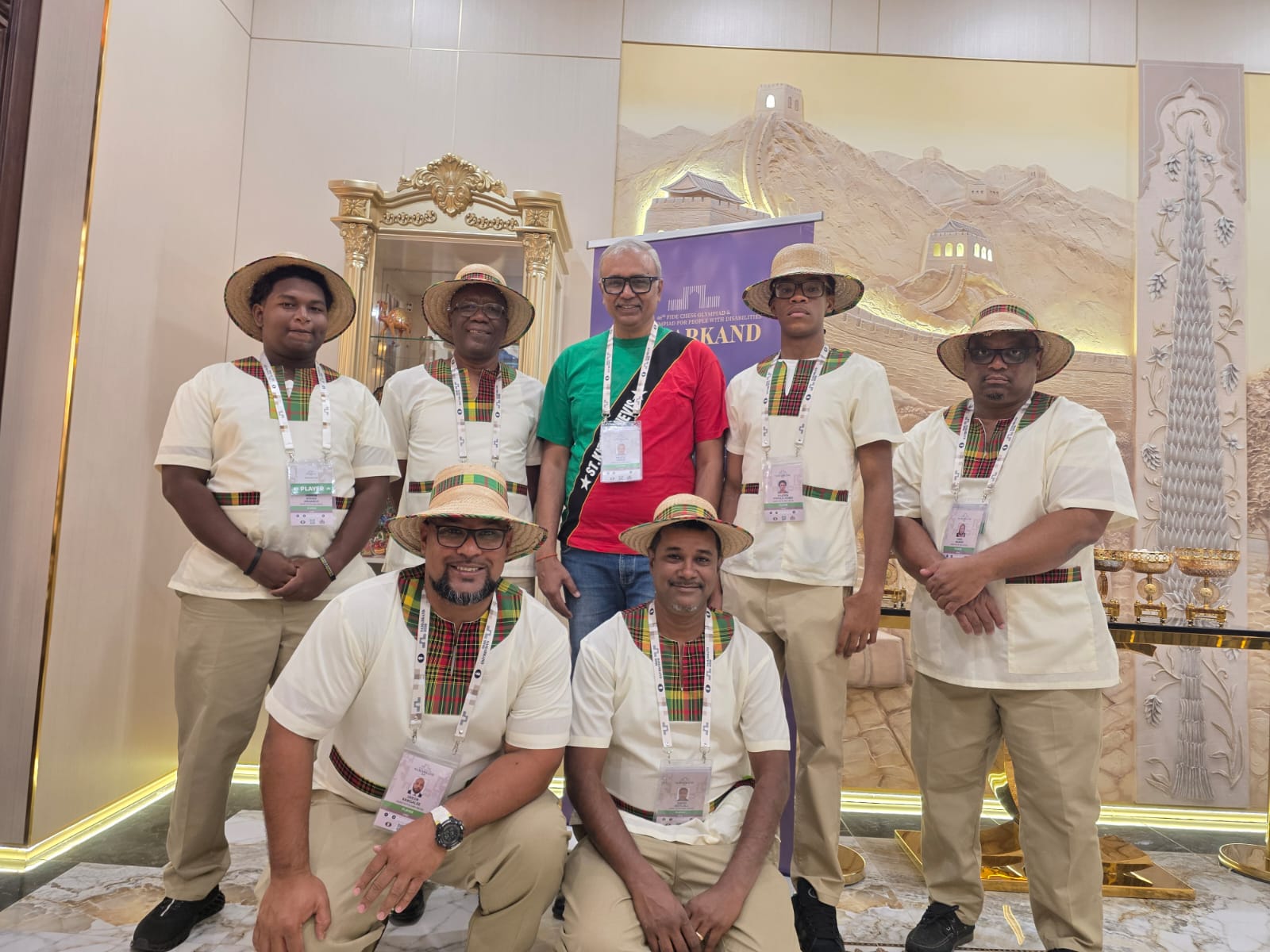
Two players from the St. Kitts and Nevis Open Team — Carl Victor Adams and Kaeden Fyfield-Jones — have earned their first FIDE Standard Ratings following their performances at the Olympiad.

The October 2026 FIDE Rating List now shows:

Carl Victor Adams — FIDE Standard Rating: 1731
FIDE ID: 33200327
View Carl Victor Adams’ official FIDE profile

Kaeden Fyfield-Jones — FIDE Standard Rating: 1536
FIDE ID: 33200181
View Kaeden Fyfield-Jones’ official FIDE rating record

This achievement is particularly satisfying because earning FIDE ratings for our unrated players was one of the objectives we had set before travelling to Samarkand.

From Newcomers to FIDE-Rated Players

St. Kitts and Nevis arrived at the Olympiad as one of the least experienced teams in the competition. The team had very limited exposure to international classical chess, and we knew from the outset that competing on the world’s biggest team-chess stage would be an enormous challenge.

But results were not our only measure of success.

Before the Olympiad, I had spoken about the opportunity to work with these players and our desire to help the unrated members of the team begin their international chess journey and, hopefully, earn their first FIDE ratings.

Today, seeing Carl and Kaeden officially FIDE rated makes that objective a reality.

The Promise Was Visible in Samarkand

Even during the difficult opening rounds, I could see that the results did not tell the complete story.

In my earlier report, “St. Kitts and Nevis Show Promise Despite Tough Start at Chess Olympiad,” I had written about the team’s limited tournament experience but also highlighted the promise being shown by the players.

Read the earlier report on the Indian Chess School website

Carl and Kaeden were among those who particularly impressed me during the competition. Their performances showed that the ability was there; what the players needed was greater tournament exposure, systematic training and opportunities to play stronger opposition.

The publication of their first FIDE ratings is therefore a tangible outcome of their Olympiad experience.

Carl Victor Adams — 1731

Playing on the demanding top board for St. Kitts and Nevis, Carl Victor Adams demonstrated patience, determination and the ability to fight long games against experienced international opposition.

One of the memorable moments of our campaign came in Round 3, when Carl defeated Christian Guanzon in a marathon 104-move encounter. It was precisely the kind of fighting performance that demonstrated what Carl was capable of.

His first FIDE Standard Rating of 1731 provides an excellent benchmark from which to continue his chess journey.

Kaeden Fyfield-Jones — 1536

Young Kaeden Fyfield-Jones, born in 2009, was another player who impressed me greatly in Samarkand.

Kaeden showed considerable potential during the Olympiad. There were moments when his ability to create opportunities against stronger and more experienced opposition became clearly visible.

His first FIDE Standard Rating of 1536 is an encouraging beginning. Being still very young, he has considerable time to develop his game, and with systematic training and regular tournament exposure, I believe he has the potential to progress much further.

And There Is More Talent Waiting

While Carl and Kaeden have achieved this milestone, I would also like to mention the other members of the St. Kitts and Nevis team.

There is considerable untapped talent in the squad. Nohar, in particular, impressed me immensely. Although he did not manage to secure his FIDE rating at this Olympiad, he is extremely talented, and I believe it is only a matter of time — and the right tournament opportunities — before he too becomes a FIDE-rated player.

The important task now is to provide these players with more opportunities to compete in rated tournaments and continue their development.

A Beginning, Not a Destination

A first FIDE rating is not the destination. It is the beginning of a new journey.

For Carl and Kaeden, 1731 and 1536 now become benchmarks against which they can measure their future progress.

The next challenge is to work harder, compete regularly, analyse their games seriously and continue improving. I hope earning their first FIDE ratings will give both players even greater motivation to set ambitious goals for themselves.

A Special Thank You to Ms. Della Stanley

I would also like to express my sincere gratitude to Ms. Della Stanley, Head of the St. Kitts and Nevis Chess Federation, for placing her trust and confidence in me and inviting me to serve as Coach-cum-Captain of the St. Kitts and Nevis Open Team at the 46th FIDE World Chess Olympiad.

Working with the team was a wonderful experience for me. I am particularly grateful to Della for keeping faith in me and giving me the opportunity to contribute to the development of these players.

Her commitment to creating more opportunities for the players, particularly exposure to rated tournaments and international competition, is extremely important for the future.

Under her inspirational and dedicated leadership, St. Kitts and Nevis chess is moving in the right direction, and I sincerely look forward to continuing our association and contributing towards the long-term development of the players and the growth of a strong chess culture in the country.

A Milestone to Celebrate

My heartiest congratulations to Carl Victor Adams and Kaeden Fyfield-Jones, their families, Ms. Della Stanley and the entire St. Kitts and Nevis Chess Federation.

For a developing chess nation, every new FIDE-rated player represents another step forward.

For Carl and Kaeden, the journey has only begun.

Congratulations, Carl and Kaeden! May 1731 and 1536 be the first numbers in a long journey of progress on the 64 squares!!

The Chess Course Featured as “Book of the Month” in UK’s ChessMoves

The Chess Course Featured as “Book of the Month” in UK’s ChessMoves

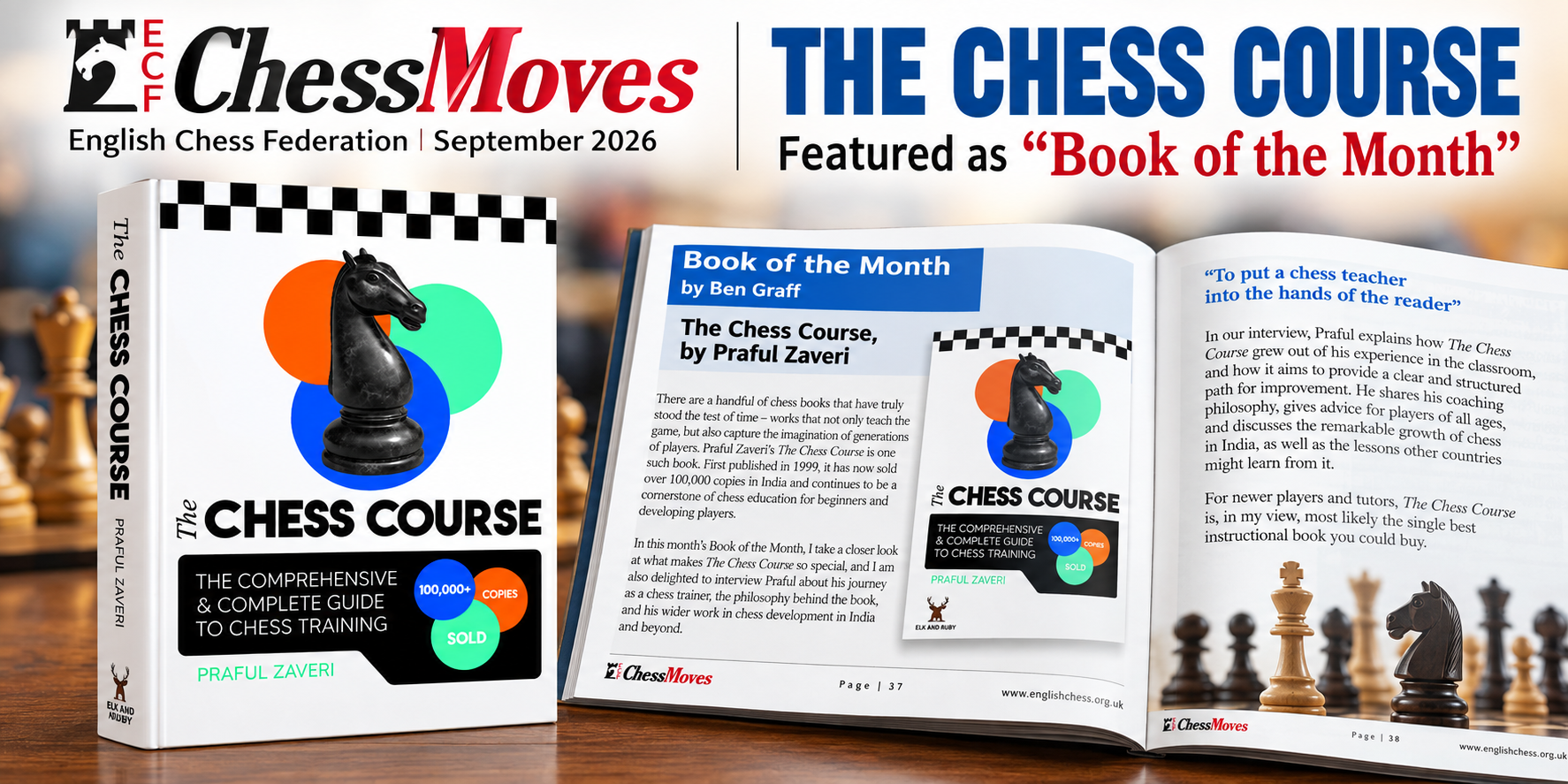
It is a moment of immense satisfaction for me personally, and for everyone associated with Indian Chess School, to see my book The Chess Course featured as the “Book of the Month” in the September 2026 edition of ChessMoves, the e-magazine of the English Chess Federation.

The feature has been written by Ben Graff and combines his review of The Chess Course with an extensive interview covering my journey as a chess trainer, the philosophy behind the book, chess development in India and my thoughts on how players of all ages can continue to improve.

Ben’s generous assessment of the book is deeply gratifying. He writes that The Chess Course belongs among the relatively small number of instructional books that have captured the imagination and helped generations learn the game. He also notes that, despite the enormous number of chess training books available today, The Chess Course has crossed 100,000 copies and continues to receive critical appreciation.

Perhaps the comment that touched me most was his conclusion that for newer players and tutors, The Chess Course is “most likely the single best instructional book you could buy.” ChessMoves-September-26

The Journey from a Classroom in Mumbai

The interview gave me an opportunity to look back at a journey that began when I started coaching chess in 1995.

What began as a passion for teaching gradually developed into an effort to create a structured method of chess education. This eventually led to the establishment of Indian Chess School, through which we have taught more than 5,000 students, trained over 100 chess trainers and introduced structured chess programmes in more than ten schools in Mumbai.

During the interview, I explained the philosophy that has guided my coaching throughout these years:

“Chess must be taught step by step, with a clear structure and purpose.”

A concept, in my view, should first be understood, then demonstrated through carefully chosen examples, and finally reinforced through exercises and practical play.

That philosophy ultimately became the foundation of The Chess Course.

Putting a Chess Teacher into the Hands of the Reader

One sentence from my interview was chosen by ChessMoves to introduce the feature:

“That became the purpose of The Chess Course: in a sense, to put a chess teacher into the hands of the reader.”

That perhaps describes the book better than anything else I could say about it.

The Chess Course grew out of lessons, examples and exercises developed for my own students over many years. These were continuously refined according to what worked in the classroom and what did not.

The book is therefore not intended simply to be read. It is designed as a complete learning programme.

It is divided into six progressive sections comprising 75 training sessions. My recommendation to readers is to begin at the start, study each lesson carefully, attempt the exercises that follow, check the answers and honestly assess their performance. Students can then record their marks in the Course Completion Report. ChessMoves-September-26

There is No Substitute for Hard Work

Ben also asked me what advice I would give players who want to improve and whether adults can continue improving at chess.

My answer was simple: there is no substitute for hard work.

Whatever one’s age or playing strength, improvement comes through consistent and purposeful effort – studying one’s own games, especially losses, identifying weaknesses, working on calculation and fundamental positions, and playing regularly in serious competition.

Age should never become a psychological barrier. Chess history itself contains examples of players who developed comparatively late, including the great Mikhail Chigorin. Improvement itself has no age limit.

India’s Chess Revolution

The interview also gave me an opportunity to discuss the extraordinary growth of chess in India.

Viswanathan Anand was the great catalyst who made generations of Indian children believe that reaching the very top of world chess was possible. Today, players such as Gukesh, Praggnanandhaa and Divya Deshmukh are providing fresh inspiration.

But champions alone do not create a chess culture. India also has a robust competitive structure, with national championships across age groups and a huge number of FIDE-rated tournaments providing young players with regular competitive opportunities.

In discussing British chess, I recalled the formidable tradition represented by players such as Nigel Short, John Nunn and Michael Adams, while also pointing to the exciting new generation represented by Shreyas Royal and Bodhana Sivanandan.

The central message is one I strongly believe in: talent needs opportunity.

Chess Has Given Me Far More Than I Could Give Back

Towards the end of the interview, I was asked for my final thoughts on chess and chess development.

My answer came from the heart:

“Chess has given me far more than I could ever give back to it.”

Even after more than three decades as a coach, author and organiser, I still experience the same excitement when a child understands a chess idea for the first time.

Champions inspire us, but lasting chess cultures are built at the grassroots – through good teachers, structured learning, schools, clubs and regular opportunities to play.

Ultimately, chess is much more than sixty-four squares and thirty-two pieces. It teaches us to think before we act, accept responsibility for our decisions, respect our opponents and begin again after defeat.

These are lessons not merely for becoming better chess players, but perhaps for becoming better human beings as well. ChessMoves-September-26

My Gratitude

I extend my heartfelt thanks to Ben Graff for his extremely generous review and for giving me the opportunity to share my journey and thoughts with the readers of ChessMoves.

My sincere thanks also go to Ilan Rubin and Elk and Ruby Publishing House for taking The Chess Course to readers across the UK, Europe and the USA. There can be few greater satisfactions for a chess trainer and author than seeing lessons that began in a classroom in Mumbai reaching chess enthusiasts thousands of miles away.

The complete feature, including Ben Graff’s review and my interview, can be read in the September 2026 edition of ChessMoves.

Read the September 2026 ChessMoves feature

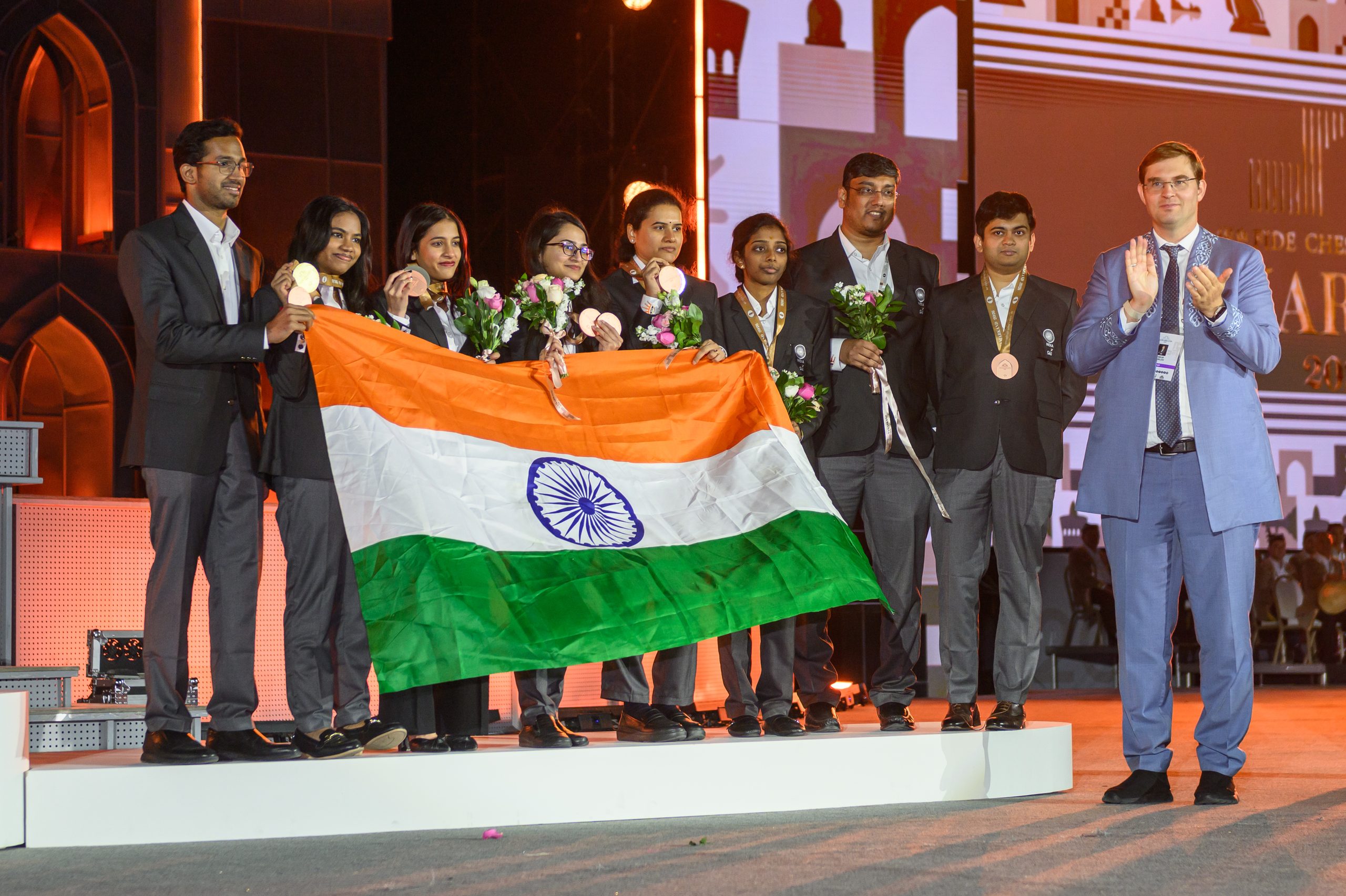
♟️ INDIA ON THE PODIUM IN BOTH SECTIONS AT THE 46th CHESS OLYMPIAD!

♟️ INDIA ON THE PODIUM IN BOTH SECTIONS AT THE 46th CHESS OLYMPIAD!

We may not have been able to defend the historic double gold won at Budapest 2024, but India has once again returned from the Chess Olympiad with plenty to celebrate!

At the 46th FIDE Chess Olympiad in Samarkand, India finished on the podium in both sections:

🥈 OPEN – SILVER
🥉 WOMEN – BRONZE

FIDE Chess Olympiad 2026 – Samarkand Credit: Michal Walusza / FIDE

The margins at the top were extremely small. In the Open section, hosts Uzbekistan produced a superb performance to win gold with 20 match points. India and Germany finished with 18 points each, with India taking silver on tiebreak.

OPEN PODIUM
🥇 Uzbekistan – 20 points
🥈 India – 18 points
🥉 Germany – 18 points

One of the most encouraging signs for India was the return to strong form of World Champion D. Gukesh. Playing on Board 4, Gukesh scored an excellent 8.5/11 to win the individual Silver Medal. His form comes at an important time with his World Championship title defence just two months away.

R. Praggnanandhaa, solid as ever on the demanding top board, added an individual Bronze Medal.

In the Women’s section, there may be a little disappointment as India entered the Olympiad as the top seeds and defending champions. Nevertheless, finishing with a team bronze in such a fiercely contested Olympiad is another podium finish for Indian chess.

WOMEN’S PODIUM
🥇 China – 20 points
🥈 Kazakhstan – 18 points
🥉 India – 17 points

FIDE Chess Olympiad 2026 – Samarkand Credit: Michal Walusza / FIDE

🌟 And what a tournament for Savitha Shri!

The find of the Olympiad for India was undoubtedly IM Savitha Shri B, who produced a phenomenal 8.5/9 on Board 5 — eight wins, one draw and no losses — to capture the individual GOLD MEDAL! 🥇

India also collected three more individual medals in the Women’s section:

🥉 Koneru Humpy – Bronze, Board 1
🥈 Divya Deshmukh – Silver, Board 3
🥉 Vantika Agrawal – Bronze, Board 4
🥇 Savitha Shri B – Gold, Board 5

Together with the Open medals:

🥉 R. Praggnanandhaa – Bronze, Board 1
🥈 D. Gukesh – Silver, Board 4

That makes it two team medals and six individual board medals for India! 🇮🇳

And there is another achievement to celebrate — India retained the Nona Gaprindashvili Trophy for the best combined performance across the Open and Women’s sections, making it three consecutive Olympiads that India has won this prestigious honour.

Budapest 2024 gave us an unforgettable double gold. Samarkand 2026 has given us another reminder of the extraordinary depth of Indian chess!!

Congratulations Team India! 🇮🇳♟️

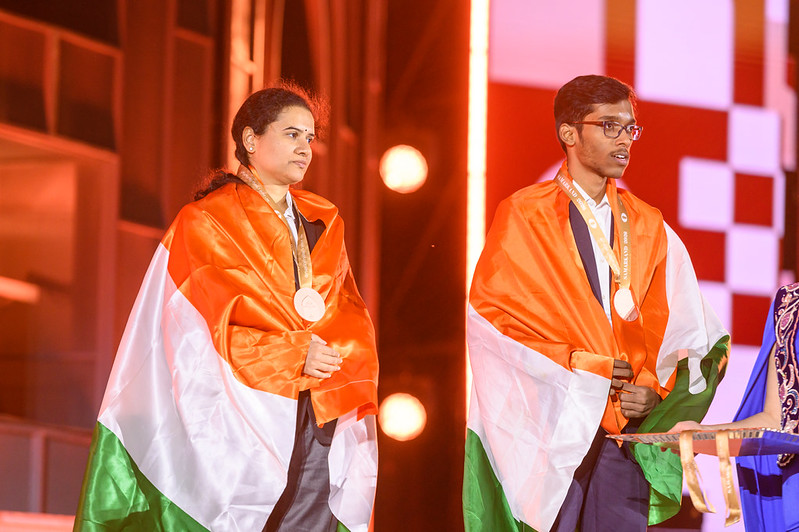
📸 Photo: IM Savitha Shri B — India’s individual Gold Medal winner on Board 5

The Chess Course Reaches Readers in the UK, Europe and USA

The Chess Course Reaches Readers in the UK, Europe and USA

More than 200 copies sold in the first three months of its international publication

A book that began as part of my work teaching chess in India is now reaching readers across the world. Elk and Ruby Publishing House has taken up the publication of The Chess Course for the UK, Europe and USA, and more than 200 copies have sold in the first three months. I am grateful to every reader who has welcomed it.

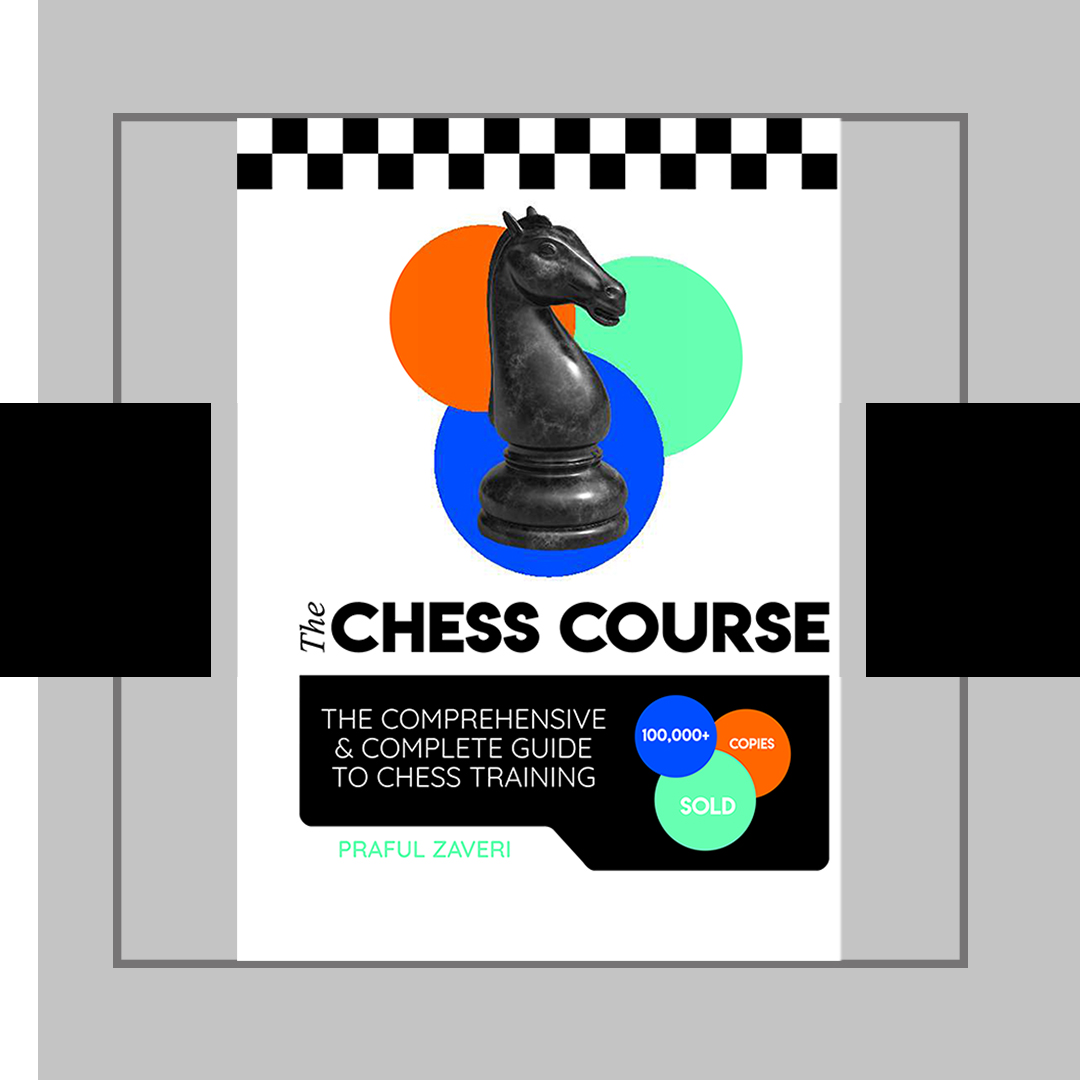
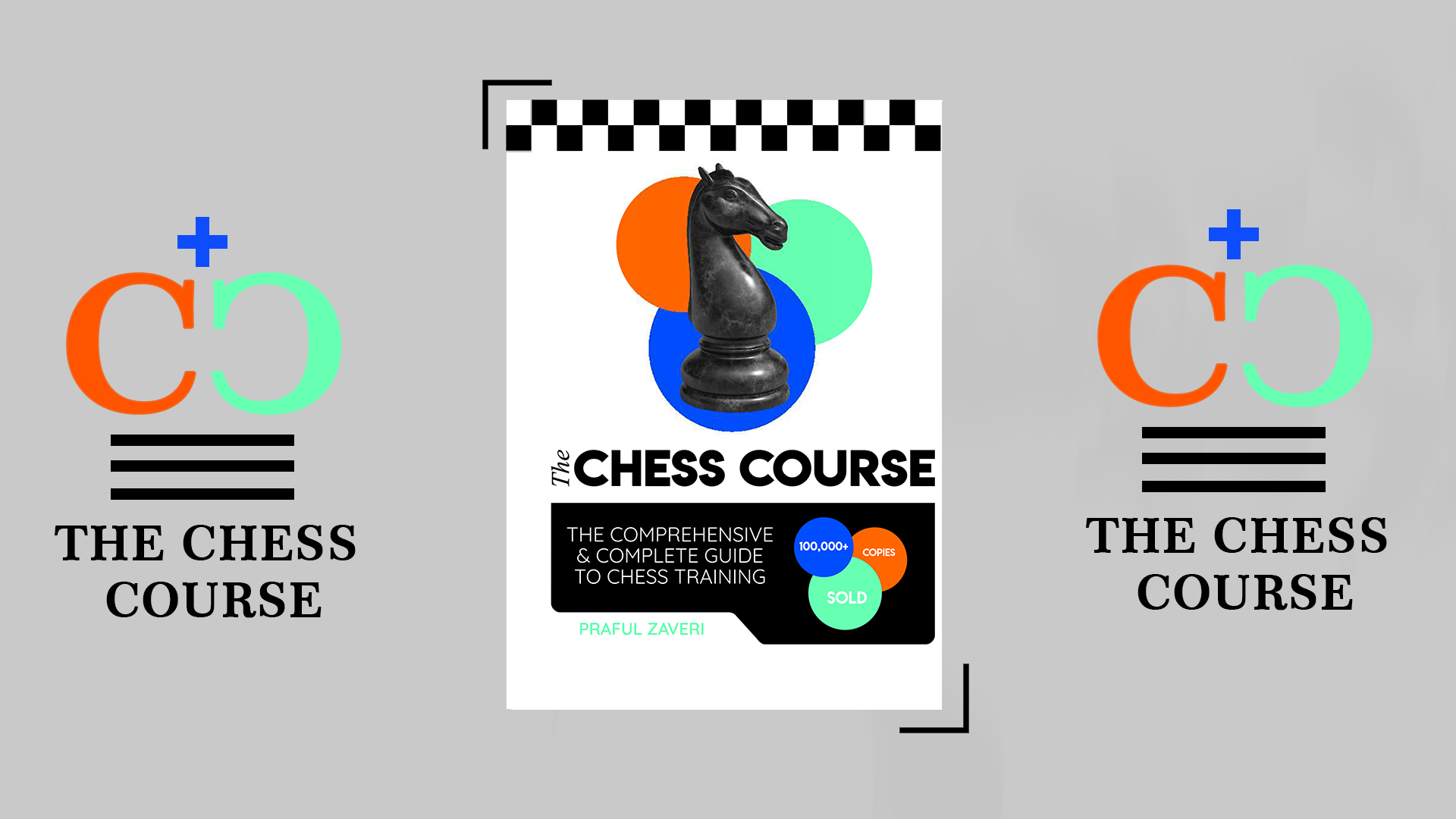
The book being published internationally is the 25th anniversary edition of The Chess Course, which I released in 2024–25. Readers in India may recognise it with a different cover. The white cover pictured above identifies the international publication by Elk and Ruby.

A course built around learning step by step

I first wrote The Chess Course in 1999. My aim was to give learners a clear path through the game: understand an idea, see how it works on the board, and then practise applying it. That approach has guided my chess teaching for more than three decades.

The 25th anniversary edition brings that teaching experience together in a 424-page training manual. It contains 75 lessons, 628 illustrative examples and 650 exercises, taking readers from the fundamentals through key areas of chess, including checkmates, openings, the middlegame and the endgame.

The exercises are central to the book. Chess improvement comes from learning to recognise a position, consider the possibilities and make a reasoned decision. Each lesson gives readers an opportunity to test what they have understood before moving forward.

Who is the book for?

The Chess Course is designed for children beginning their chess journey, players who want to strengthen their foundations, parents supporting a young learner, and trainers or schools looking for structured teaching material. It can be used for guided lessons or independent study.

A learner can start with the basics and progress through the lessons in sequence. A trainer can use the examples to explain a concept and the exercises to check whether students can apply it. My hope is that, in either setting, the book helps readers develop a thoughtful approach to playing chess.

Bringing more Indian Chess School books to international readers

I am thankful to Ilan Rubin and the team at Elk and Ruby for bringing The Chess Course to readers in the UK, Europe and USA.

We are also working towards making my other books available through Elk and Ruby: The Chess Course – a Curriculum (Volumes 1–6) and The Chess Course for Schools. I look forward to sharing more information as those publications become available.

Explore The Chess Course

The international publication is available in paperback, and the publisher also lists an Amazon Kindle option. Visit Elk and Ruby’s book page for details and buying links:

https://elkandruby.com/books/the-chess-course

To everyone who has purchased the book, taught from it or recommended it to another chess learner: thank you. I hope The Chess Course helps many more readers enjoy learning and improving at this remarkable game.

Praful Zaveri
Founder, Indian Chess School

Before You Move: Ask These Three Important Questions

Chess is not merely about finding good moves. It is about developing the habit of thinking before acting.

Many games—particularly at the beginner and intermediate levels—are lost because a player moves too quickly without understanding what has changed on the board.

Before playing your next move, pause and ask yourself these three important questions:

1. What is my opponent threatening?

Always examine your opponent’s last move carefully.

Did it attack one of your pieces?
Did it create a checkmate threat?
Did it open a line for the queen, rook or bishop?
Is your opponent preparing a tactical combination?

Understanding your opponent’s idea is the first step towards finding the correct response.

2. Are any pieces undefended?

Look at every piece on the board—both yours and your opponent’s.

An undefended or inadequately protected piece can become an easy tactical target. Before making your move, check whether any piece is attacked, overloaded or left without sufficient protection.

This simple habit can prevent many avoidable losses.

3. Do I have a check, capture or threat?

Checks, captures and threats are forcing moves. They should always be examined before considering quieter alternatives.

However, do not play a forcing move automatically. Calculate what happens next:

  • How will your opponent respond?
  • Is the move safe?
  • Does it win material or improve your position?
  • What will the position look like after the exchange?

Good chess requires both observation and calculation.

Develop the Habit of Thinking

Beginners often focus only on what they want to do. Improving players learn to consider both sides of the board.

Before every move, remember this simple routine:

Observe. Think. Calculate. Move.

At Indian Chess School, students are taught not only what to play, but also how to think. Our structured curriculum develops observation, calculation, decision-making and confidence—skills that are valuable both on and off the chessboard.

Chess improvement begins with one good habit: think before you move.

To learn chess through a structured programme, book a free trial class with Indian Chess School.

Visit: www.indianchessschool.com or call Prisha on +91-9372975330

ST. KITTS AND NEVIS SHOW PROMISE DESPITE TOUGH START AT CHESS OLYMPIAD

ST. KITTS AND NEVIS SHOW PROMISE DESPITE TOUGH START AT CHESS OLYMPIAD

Samarkand, 20 September 2026:

St. Kitts and Nevis may have lost their opening five matches at the 46th FIDE World Chess Olympiad, but the final scorelines do not fully reflect the opportunities created by this inexperienced team.

Seeded 203rd among 206 participating teams, St. Kitts and Nevis entered the Olympiad with only one rated player and practically no tournament experience. The results were therefore not unexpected. However, the team repeatedly reached promising positions, only to miss winning or drawing chances at critical moments. These missed opportunities proved costly, but they also demonstrated the players’ potential.

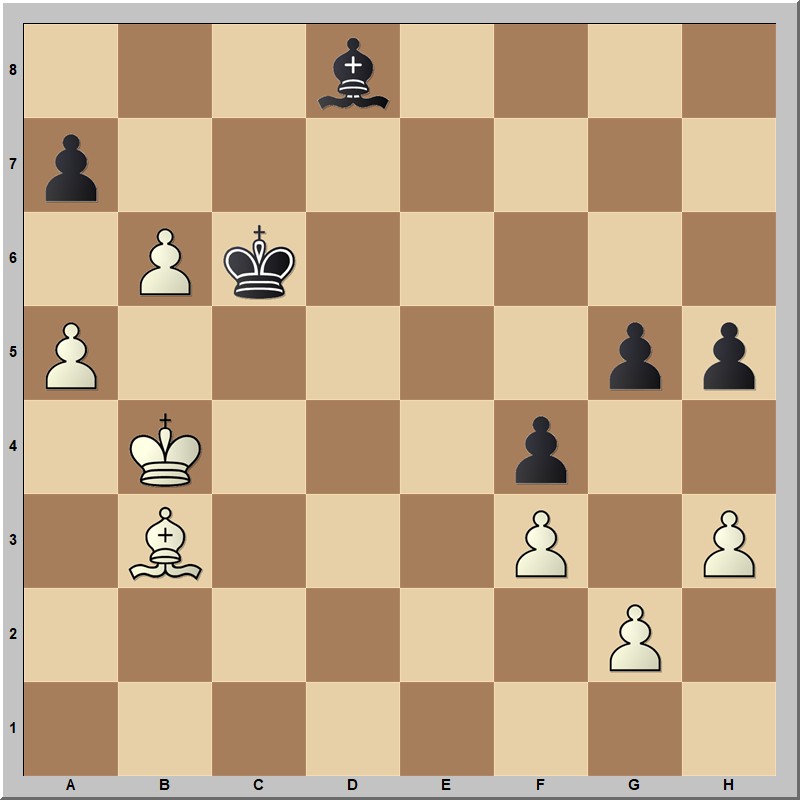
The team has collected 2½ individual board points from the opening five rounds. Carl Adams has produced an excellent performance on the top board, displaying confidence and resilience against considerably more experienced opponents. His victory over Christian Guanzon of Bermuda in Round 3 was an important highlight.

TEST YOUR CHESS — POSITION 1

Carl Adams vs Christian Guanzon
Round 3 | White to play and win

Black has just played 51…Kxc6. Can you find the winning move played by Carl Adams?

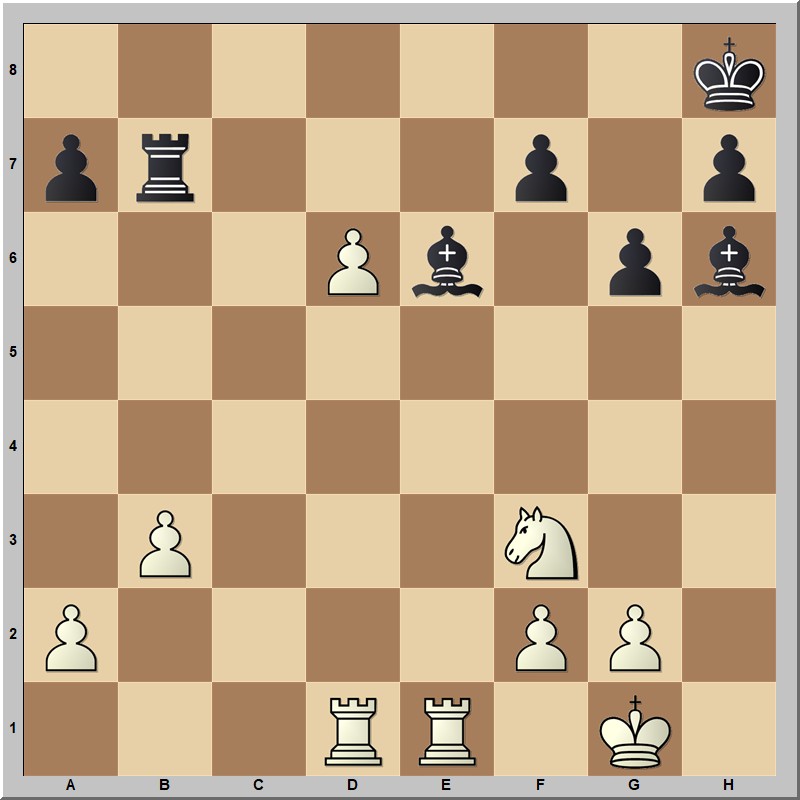
Kaeden Fyfield-Jones has also impressed on Board 3. His determined victory over Junior Lui of the Solomon Islands in Round 5 earned the team a valuable point and underlined his growing confidence at the international level.

TEST YOUR CHESS — POSITION 2

Kaeden Fyfield-Jones vs Junior Lui
Round 5 | White to play and win

Black has just committed a serious error with 23…Rb7?? Can you find the winning move played by Kaeden Fyfield-Jones?

David Jeetlall, the team’s only rated player, secured his first draw of the tournament in Round 5 after missing a winning opportunity in the previous round. Nohar Anganoo has also gained invaluable experience while facing stronger and more seasoned opposition.

One of the most encouraging aspects of the team’s performance has been the players’ patience and willingness to remain at the board for long periods. They are learning to calculate carefully, defend difficult positions and compete with greater discipline. In many ways, they are gradually being moulded to meet the demands of classical chess.

Although the first five rounds have not brought a match victory, the tournament is about much more than results alone. Every game is providing lessons that cannot be replicated in a classroom or an online training session. With better conversion of advantageous positions and improved decision-making at crucial moments, the team can look forward to stronger results in the remaining rounds.

For this developing St. Kitts and Nevis team, Samarkand represents an important step in a much longer chess journey. The foundations are being laid—and the signs of progress are already visible.

Round-by-round results:
https://s1.chess-results.com/tnr1469895.aspx?lan=1&art=3&rd=1&turdet=YES&flag=30&SNode=S0

♟️ SAMARKAND OLYMPIAD DIARY – DAY 1

♟️ SAMARKAND OLYMPIAD DIARY — DAY 1 15 September 2026 | A Dream Fulfilled

For any chess player, the journey feels complete when one gets an opportunity to be part of the FIDE World Chess Olympiad. Today, I too feel that my lifelong journey in chess has reached a deeply fulfilling milestone, as I have been honoured to serve as the Coach-cum-Captain of St. Kitts and Nevis at the 46th FIDE World Chess Olympiad in Samarkand.

After landing in Tashkent, I travelled to Samarkand by high-speed train. The atmosphere at Tashkent Railway Station was nothing short of a chess club in action! Players were enjoying blitz games, while others were playing online on Lichess and Chess.com.

I was also delighted to meet Indian Grandmaster K. Priyadharshan and FIDE Master Sohan Phadke, who have been entrusted with captaincy roles for Namibia and Dominica, respectively.

Upon reaching Samarkand, Nilufar, the volunteer assigned to our delegation, promptly arranged my transportation to the team hotel. It was a delight to finally meet the St. Kitts and Nevis team in person. Our Head of Delegation, Ms. Della Stanley, welcomed me warmly and presented me with the official team T-shirt—a moment that filled me with immense pride and gratitude.

The opening ceremony was simply brilliant, offering magnificent glimpses of Uzbekistan’s rich history, culture and chess heritage. It was an especially proud moment when our hero, five-time World Champion Viswanathan Anand, formally declared the Olympiad open.

The evening concluded with team photographs, memorable interactions and interviews with several media organisations, including ChessBase India.

We returned to our hotel with countless memories to cherish. Day 1 in Samarkand was not merely an arrival—it was the fulfilment of a cherished dream and the beginning of an unforgettable new chapter in my chess journey!!

A Day I Will Cherish Forever!!

A Day I Will Cherish Forever!!

Some moments in a teacher’s life are simply beyond words.

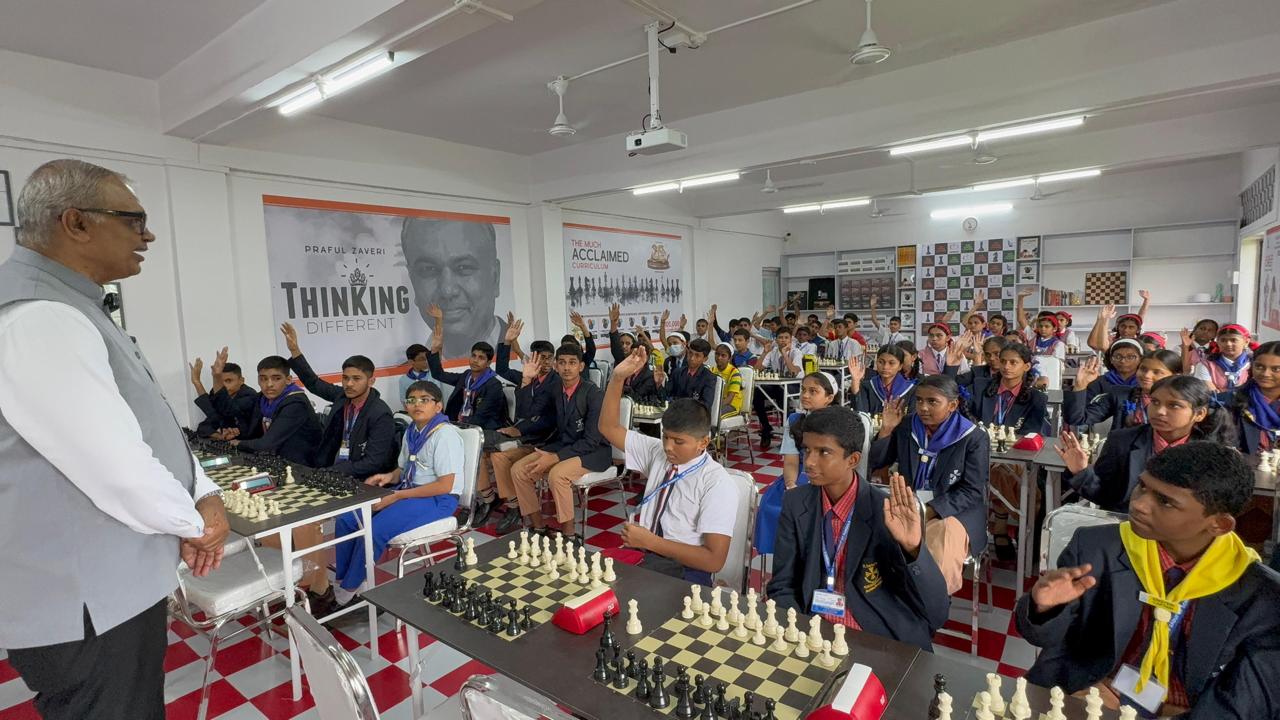
Today, I had the privilege of visiting Greenwood High International School, Bengaluru, where nearly 1,000 students of Grades I to IV are now learning chess through my curriculum, “The Chess Course for Schools.”

Walking into a classroom filled with bright young minds using a book that I had envisioned, researched and authored was an incredibly humbling experience. Seeing the students actively participating, answering questions with enthusiasm and enjoying every moment of the lesson reminded me why I chose this journey more than three decades ago.

It was an absolute joy interacting with the Grade IV students. Their curiosity, enthusiasm and eagerness to learn made the session truly memorable.

The most touching moment came after the lesson.

As the class concluded, students queued up with their copies of The Chess Course for Schools, eagerly requesting my autograph. One after another, book after book, I signed more than 300 copies! Every signature felt like a blessing! Every smiling face reminded me that a book can inspire far beyond the pages on which it is written!!

For an author, there can be no greater joy than seeing children embrace your work with such affection and excitement. It was an unforgettable celebration of learning, curiosity and the timeless beauty of chess!

My heartfelt gratitude to the management of Greenwood High International School for reposing their faith in our vision of making chess an integral part of education. A special word of appreciation to Somanath Krishnarao, whose passion and dedication have played a significant role in building the school’s vibrant chess culture!

As I left the school today, my heart was filled with immense gratitude and happiness.

Moments like these remind me that writing a book is only the beginning. The real reward comes when it reaches young minds, inspires them to learn, and becomes a part of their educational journey!

I truly feel blessed!! 🙏❤️

♟️ A Landmark Milestone for Indian Chess School ♟️

♟️ A Landmark Milestone for Indian Chess School ♟️

I am delighted to share that Greenwood High International School, Sarjapur, Bengaluru, has adopted the Indian Chess School (ICS) Chess-in-Schools Curriculum – The Chess Course for Schools for nearly 1,000 students of Grades I and IV.

For Indian Chess School, this is much more than the adoption of a curriculum—it is a significant endorsement of our vision to make structured chess education an integral part of school learning.

Over the last three decades, we have worked towards developing a scientific and age-appropriate chess curriculum that goes beyond teaching the game. Our objective has always been to use chess as a powerful educational tool to nurture:

• Logical Thinking
• Critical Analysis & Decision-Making
• Problem-Solving Skills
• Concentration & Memory
• Creativity & Strategic Thinking
• Confidence & Self-Discipline

These are life skills that extend far beyond the chessboard and contribute meaningfully to a child’s overall development.

What makes this collaboration particularly inspiring is that Greenwood High has embraced chess as a part of its curriculum across Grades I to XII. Such a visionary approach reflects the school’s commitment to holistic education and the development of future-ready learners.

We are grateful to Mr. K. Somanath, In-charge of Chess Activities at Greenwood High, for the confidence he has reposed in the ICS curriculum and for his unwavering commitment to promoting chess education. My sincere appreciation also goes to the Management of Greenwood High for placing their trust in Indian Chess School.

This partnership is only the beginning. Together, we look forward to building a comprehensive Chess-in-Schools ecosystem through teacher training, heritage programs, after-school coaching, tournaments and talent identification—creating opportunities for young minds to excel both academically and competitively.

We are excited to witness the emergence of many future champions from this remarkable group of young learners.

India gave chess to the world. Together, let us bring chess back to every classroom!!