

The Chess Course Featured as “Book of the Month” in UK’s ChessMoves
The Chess Course Featured as “Book of the Month” in UK’s ChessMoves
It is a moment of immense satisfaction for me personally, and for everyone associated with Indian Chess School, to see my book The Chess Course featured as the “Book of the Month” in the September 2026 edition of ChessMoves, the e-magazine of the English Chess Federation.
The feature has been written by Ben Graff and combines his review of The Chess Course with an extensive interview covering my journey as a chess trainer, the philosophy behind the book, chess development in India and my thoughts on how players of all ages can continue to improve.

Ben’s generous assessment of the book is deeply gratifying. He writes that The Chess Course belongs among the relatively small number of instructional books that have captured the imagination and helped generations learn the game. He also notes that, despite the enormous number of chess training books available today, The Chess Course has crossed 100,000 copies and continues to receive critical appreciation.
Perhaps the comment that touched me most was his conclusion that for newer players and tutors, The Chess Course is “most likely the single best instructional book you could buy.” ChessMoves-September-26
The Journey from a Classroom in Mumbai
The interview gave me an opportunity to look back at a journey that began when I started coaching chess in 1995.
What began as a passion for teaching gradually developed into an effort to create a structured method of chess education. This eventually led to the establishment of Indian Chess School, through which we have taught more than 5,000 students, trained over 100 chess trainers and introduced structured chess programmes in more than ten schools in Mumbai.
During the interview, I explained the philosophy that has guided my coaching throughout these years:
“Chess must be taught step by step, with a clear structure and purpose.”
A concept, in my view, should first be understood, then demonstrated through carefully chosen examples, and finally reinforced through exercises and practical play.
That philosophy ultimately became the foundation of The Chess Course.
Putting a Chess Teacher into the Hands of the Reader
One sentence from my interview was chosen by ChessMoves to introduce the feature:
“That became the purpose of The Chess Course: in a sense, to put a chess teacher into the hands of the reader.”
That perhaps describes the book better than anything else I could say about it.
The Chess Course grew out of lessons, examples and exercises developed for my own students over many years. These were continuously refined according to what worked in the classroom and what did not.
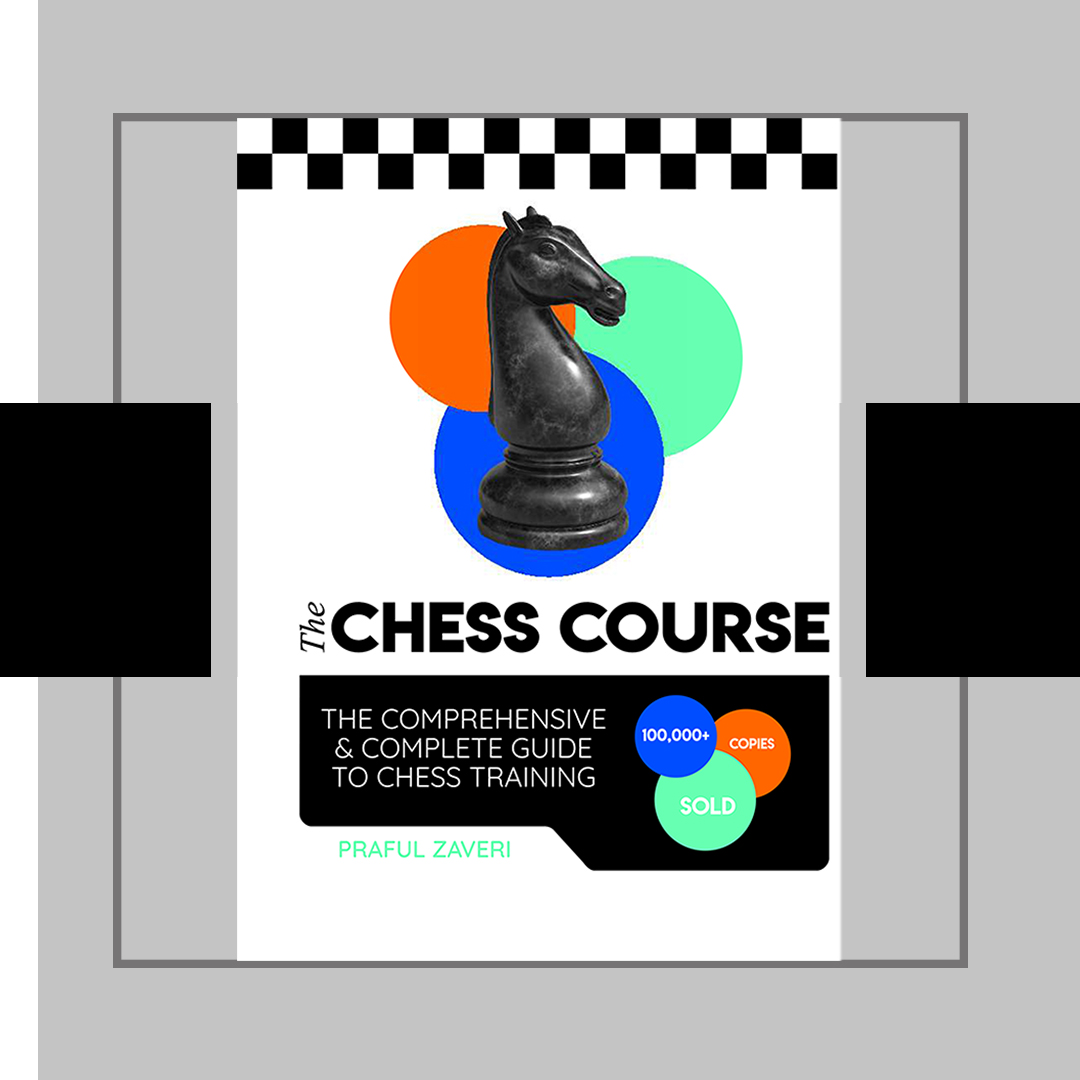
The book is therefore not intended simply to be read. It is designed as a complete learning programme.
It is divided into six progressive sections comprising 75 training sessions. My recommendation to readers is to begin at the start, study each lesson carefully, attempt the exercises that follow, check the answers and honestly assess their performance. Students can then record their marks in the Course Completion Report. ChessMoves-September-26
There is No Substitute for Hard Work
Ben also asked me what advice I would give players who want to improve and whether adults can continue improving at chess.
My answer was simple: there is no substitute for hard work.
Whatever one’s age or playing strength, improvement comes through consistent and purposeful effort – studying one’s own games, especially losses, identifying weaknesses, working on calculation and fundamental positions, and playing regularly in serious competition.
Age should never become a psychological barrier. Chess history itself contains examples of players who developed comparatively late, including the great Mikhail Chigorin. Improvement itself has no age limit.
India’s Chess Revolution
The interview also gave me an opportunity to discuss the extraordinary growth of chess in India.
Viswanathan Anand was the great catalyst who made generations of Indian children believe that reaching the very top of world chess was possible. Today, players such as Gukesh, Praggnanandhaa and Divya Deshmukh are providing fresh inspiration.
But champions alone do not create a chess culture. India also has a robust competitive structure, with national championships across age groups and a huge number of FIDE-rated tournaments providing young players with regular competitive opportunities.
In discussing British chess, I recalled the formidable tradition represented by players such as Nigel Short, John Nunn and Michael Adams, while also pointing to the exciting new generation represented by Shreyas Royal and Bodhana Sivanandan.
The central message is one I strongly believe in: talent needs opportunity.
Chess Has Given Me Far More Than I Could Give Back
Towards the end of the interview, I was asked for my final thoughts on chess and chess development.
My answer came from the heart:
“Chess has given me far more than I could ever give back to it.”
Even after more than three decades as a coach, author and organiser, I still experience the same excitement when a child understands a chess idea for the first time.
Champions inspire us, but lasting chess cultures are built at the grassroots – through good teachers, structured learning, schools, clubs and regular opportunities to play.
Ultimately, chess is much more than sixty-four squares and thirty-two pieces. It teaches us to think before we act, accept responsibility for our decisions, respect our opponents and begin again after defeat.
These are lessons not merely for becoming better chess players, but perhaps for becoming better human beings as well. ChessMoves-September-26
My Gratitude
I extend my heartfelt thanks to Ben Graff for his extremely generous review and for giving me the opportunity to share my journey and thoughts with the readers of ChessMoves.
My sincere thanks also go to Ilan Rubin and Elk and Ruby Publishing House for taking The Chess Course to readers across the UK, Europe and the USA. There can be few greater satisfactions for a chess trainer and author than seeing lessons that began in a classroom in Mumbai reaching chess enthusiasts thousands of miles away.
The complete feature, including Ben Graff’s review and my interview, can be read in the September 2026 edition of ChessMoves.
