

25 Years of The Chess Course – Part 1: How It All Began
25 Years of The Chess Course – Part 1: How It All Began
The story of how simple classroom notes planted the seed for a book that would go on to sell more than 1,00,000 copies
Some journeys begin with a carefully drawn-out plan. Others begin almost by accident.
The journey of The Chess Course belongs to the latter.
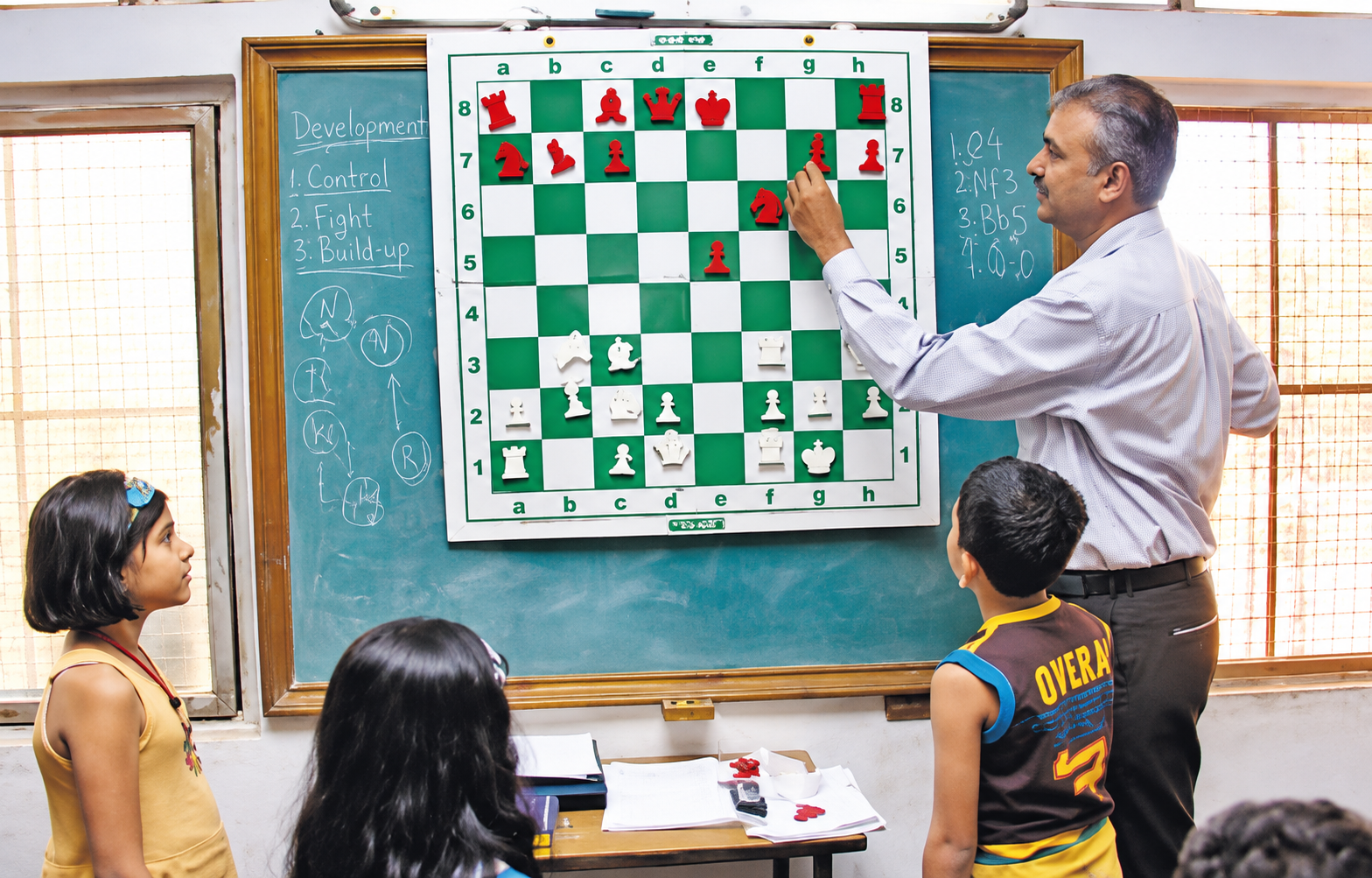
When I started chess training in 1995, I had no ambition to become an author. In fact, the thought of writing a chess book had never crossed my mind.
All I wanted to do was teach chess as well as I possibly could.
It Started With a Simple Thought
I have always believed in striving for perfection in whatever I do.
When I started training students in 1995, one thought came to my mind: if I taught a particular chapter in class, shouldn’t my students also have proper notes that they could take home, revise and refer to later?
The idea was simple.
Putting it into practice in the mid-1990s was not.
Today, a chess trainer can create a position, add annotations, export diagrams and prepare professional-looking study material within minutes. At that time, I had no idea how to produce even a single page containing chess diagrams and explanatory text.
So I began experimenting.
Fritz, a Floppy Disk and Print Screen!
Around the same period, I obtained a copy of Fritz, the chess-playing computer program, on a floppy disk.
I started using the program and gradually discovered a rather rudimentary way of creating chess diagrams.
I would set up the required position on the computer screen and use the Print Screen function to capture it. The diagram would then be saved as a bitmap image, which I could print.
That solved one part of the problem.
The next challenge was adding the lesson itself.
For the explanatory text, I began using Microsoft Word. With a combination of the chess diagrams and my written explanations, I was eventually able to prepare an A4 page containing three chess diagrams along with notes.
Looking back from today’s world of sophisticated chess software and publishing tools, the process sounds almost primitive.
But to me, that first page was special.
I had created my first chess note!
From One Page to Nearly 200
I continued preparing notes for the chapters I taught.
A typical chapter consisted of around 18 chess positions spread over six A4 pages. Once a chapter was completed, I would make photocopies according to the number of students in my class and distribute them.
The students liked the notes.
That encouraged me to continue.
One lesson became another. One chapter became another. Slowly, the collection kept growing.
By the end of 1998, I had accumulated nearly 200 pages of chess lessons.
And then the success of the notes created an unexpected problem.
Whenever a new student joined my classes, he or she naturally wanted the notes from the lessons that had already been taught. I would have to search through my growing collection, locate the relevant pages, print them and make photocopies again.
As the volume of material increased, this became increasingly difficult to manage.
Yet even then, I was thinking about how to organise my teaching material.
I was still not thinking about writing a book.
Then Came a Suggestion I Had Never Expected
At the time, I was working at the Sports Desk of the Life Insurance Corporation of India (LIC).
My friend and colleague, International Master Vishal Sareen, happened to see the chess notes I had prepared.
After going through the material, he made a suggestion that took me completely by surprise.
“Why don’t you bring this out as a book?”
I laughed.
The suggestion seemed almost absurd to me.
I was a modest chess player. I did not even have a FIDE rating at the time. I asked Vishal not to make fun of an ordinary chess player by suggesting that I should write a chess book.
His reply was something I would never forget:
“Prafulbhai, I have not seen better content than this for a chess player who wants to start his chess journey.”
For nearly four years, I had looked at those pages simply as notes for my students.
Vishal Sareen looked at the same pages…
and saw a book!
That suggestion would soon change the course of my life in chess!
To be continued…
In Part 2: What happened when I finally took Vishal’s suggestion seriously? How did hundreds of individual classroom notes begin taking the shape of a structured book? And there is an interesting story behind how the book eventually got its name — The Chess Course.
